







Nobody has ever called fiber sexy. It does not have the brand appeal of collagen peptides or the mystique of adaptogens. It sits quietly at the bottom of the nutritional hierarchy, associated with regularity and bran muffins and the kind of health advice your grandmother did not need a study to believe. And yet, fiber, specifically prebiotic fiber, may be doing more for your cognitive function than any nootropic stack on the market. The science emerging in 2026 suggests that feeding the right bacteria in your gut with the right fibers can sharpen memory, lower stress hormones, and protect your brain from the inflammatory damage that drives cognitive decline.
If probiotics are the workers in your gut’s neurochemical factory, prebiotics are the raw materials and the electricity. Without them, the operation stalls. And for anyone who has been following how the gut-brain connection shapes mood and mental wellness, prebiotics are the missing chapter that ties the whole story together.
What prebiotics actually are (and what they are not)
There is a common misconception that all dietary fiber is prebiotic. It is not. Prebiotics are a specific subset of non-digestible compounds that selectively stimulate the growth or activity of beneficial microorganisms in the gut. The key word is “selectively.” Regular fiber adds bulk and supports motility. Prebiotic fiber goes further by functioning as targeted fuel for bacteria that produce neuroactive metabolites.
The most well-studied prebiotic fibers include fructo-oligosaccharides (FOS), galacto-oligosaccharides (GOS), inulin, and resistant starch. Each one feeds slightly different bacterial populations, which is why dietary diversity matters so much. A gut microbiome fed only one type of prebiotic fiber is like a garden planted with only one species. It might grow, but it will not be resilient.
The butyrate pathway: from your plate to your prefrontal cortex
When beneficial gut bacteria ferment prebiotic fibers, they produce short-chain fatty acids, primarily butyrate, propionate, and acetate. Of these three, butyrate has attracted the most attention from neuroscientists, and for good reason. Its effects on the brain are remarkably direct for a molecule produced in the colon.
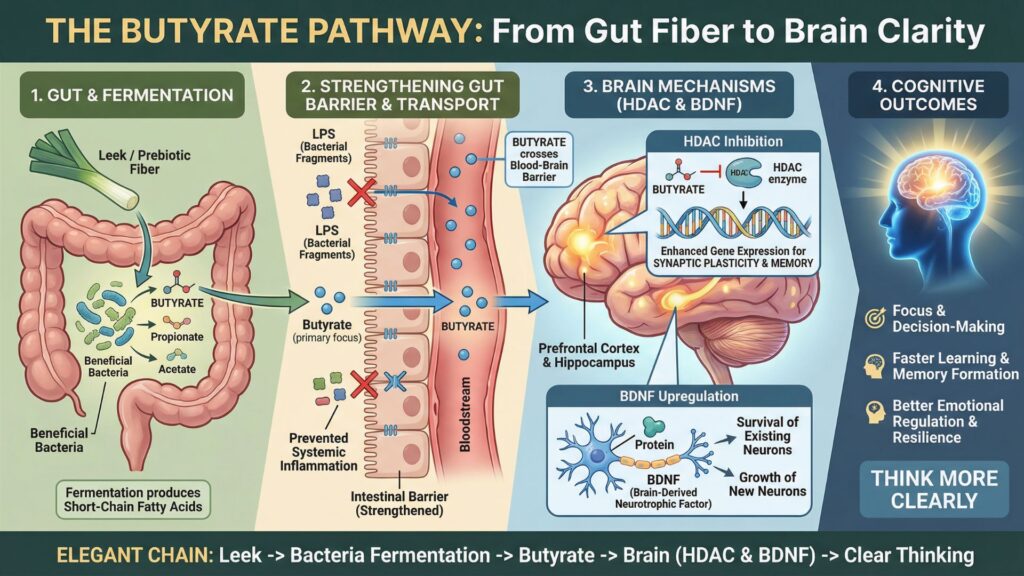
Butyrate strengthens the intestinal barrier. This matters for cognition because a compromised gut lining allows bacterial fragments (lipopolysaccharides) to enter the bloodstream and trigger systemic inflammation. That inflammation reaches the brain, impairing the prefrontal cortex and hippocampus, the very regions responsible for focus, decision-making, and memory formation.
But butyrate does not stop at the gut wall. It crosses the blood-brain barrier and acts as a histone deacetylase (HDAC) inhibitor. Without diving too deep into molecular biology, HDAC inhibition is a mechanism that enhances gene expression related to synaptic plasticity and memory consolidation. In plain language: butyrate helps your brain form and retain memories more effectively.
It also upregulates brain-derived neurotrophic factor (BDNF), a protein that supports the survival of existing neurons and encourages the growth of new ones. Low BDNF levels have been consistently linked to depression, cognitive decline, and Alzheimer’s disease. High BDNF levels are associated with faster learning, better emotional regulation, and cognitive resilience under stress.
The chain is remarkably elegant. You eat a leek. Bacteria in your colon ferment the inulin in that leek. They produce butyrate. Butyrate crosses into your brain. Your brain makes more BDNF. You think more clearly. It sounds almost too simple, but the biochemistry holds up across dozens of published studies.
The GOS study that got neuroscientists’ attention
In 2015, a research team at Oxford University published a study in Psychopharmacology that remains one of the cleanest demonstrations of prebiotics affecting brain function in humans. They gave healthy volunteers either a galacto-oligosaccharide (GOS) prebiotic or a placebo for 21 days.
The results were striking on two fronts. First, the GOS group showed a significantly reduced cortisol awakening response, the spike in the stress hormone cortisol that occurs within the first 30 to 60 minutes after waking. Elevated cortisol awakening response is a biomarker for chronic stress, anxiety, and impaired cognitive performance. Lowering it suggests a genuine shift in the body’s stress physiology, not just a subjective feeling of calm.
Second, participants in the GOS group demonstrated an attentional bias toward positive stimuli in a computerized dot-probe task. In other words, their brains were selectively processing positive information over negative information. This pattern is the opposite of what researchers see in anxiety and depression, where the brain preferentially locks onto threats and negative cues.
No drug was involved. No therapy. Just three weeks of a prebiotic fiber supplement, and the brain’s attention system shifted in a measurable, clinically meaningful direction.
Prebiotics and aging: protecting cognitive function over time
The cognitive benefits of prebiotics are not limited to stress reduction in healthy young adults. A growing body of research is examining whether prebiotic supplementation can slow or partially reverse age-related cognitive decline.
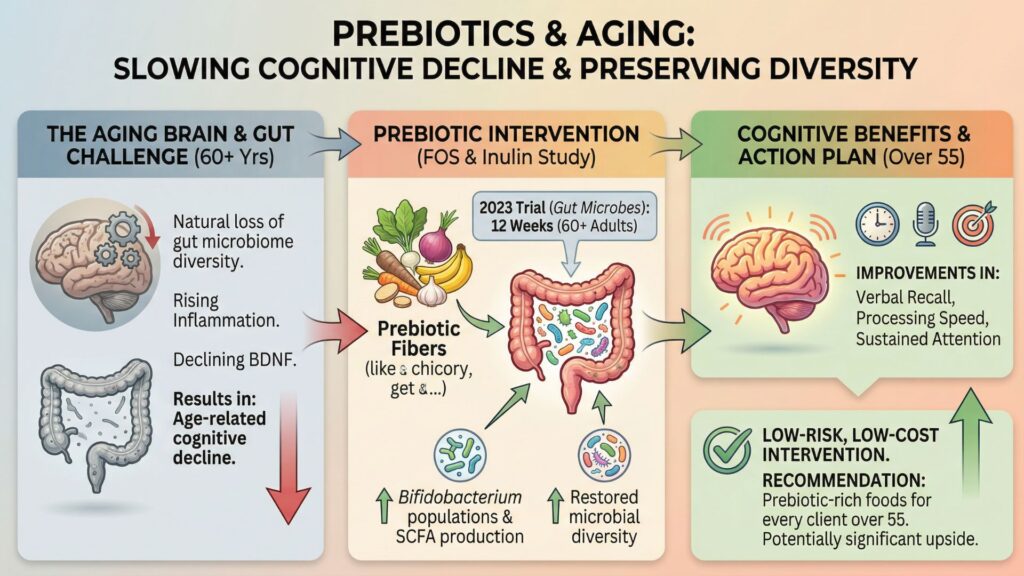
A 2023 trial published in Gut Microbes administered a combination of FOS and inulin to adults aged 60 and older for 12 weeks. Compared to placebo, the prebiotic group showed improvements in verbal recall, processing speed, and sustained attention. Fecal analysis confirmed increased populations of Bifidobacterium and elevated SCFA production, suggesting the cognitive improvements were mediated through the microbiome.
This matters because the gut microbiome naturally loses diversity with age. By the time most people reach their 70s, their microbial ecosystem has narrowed considerably, often accompanied by rising inflammation and declining BDNF. Prebiotics represent a low-risk, low-cost intervention that may help preserve the microbial diversity the aging brain depends on.
I have started recommending prebiotic-rich foods to every client over 55, regardless of their primary health concern. The risk is essentially zero. The potential upside, based on the trajectory of the evidence, is significant.
The best prebiotic foods for brain health
You do not need a supplement to increase your prebiotic intake. In fact, whole food sources deliver prebiotics alongside vitamins, minerals, polyphenols, and other compounds that supplements cannot replicate. Here are the most potent sources, organized by the type of prebiotic fiber they provide.
| Food | Primary Prebiotic Fiber | Serving Size for Meaningful Dose |
| Chicory root | Inulin | 1 tablespoon (raw or as coffee substitute) |
| Jerusalem artichoke | Inulin | 1/2 cup, cooked |
| Garlic | FOS + inulin | 2 to 3 cloves, raw or lightly cooked |
| Onions | FOS | 1/2 medium onion |
| Leeks | Inulin | 1/2 cup, cooked |
| Asparagus | FOS + inulin | 6 spears |
| Slightly green bananas | Resistant starch | 1 medium banana |
| Oats | Beta-glucan | 1/2 cup, dry |
| Flaxseeds | Mucilage + arabinoxylan | 2 tablespoons, ground |
| Cold cooked potatoes | Resistant starch (retrograded) | 1 medium potato |
One detail most articles leave out: resistant starch increases when starchy foods are cooked and then cooled. A boiled potato eaten hot contains far less resistant starch than the same potato eaten cold the next day in a salad. This simple preparation trick, cooking rice or potatoes ahead of time and refrigerating them, is one of the easiest ways to boost your prebiotic intake without changing what you buy.
Why diversity beats dosage every time
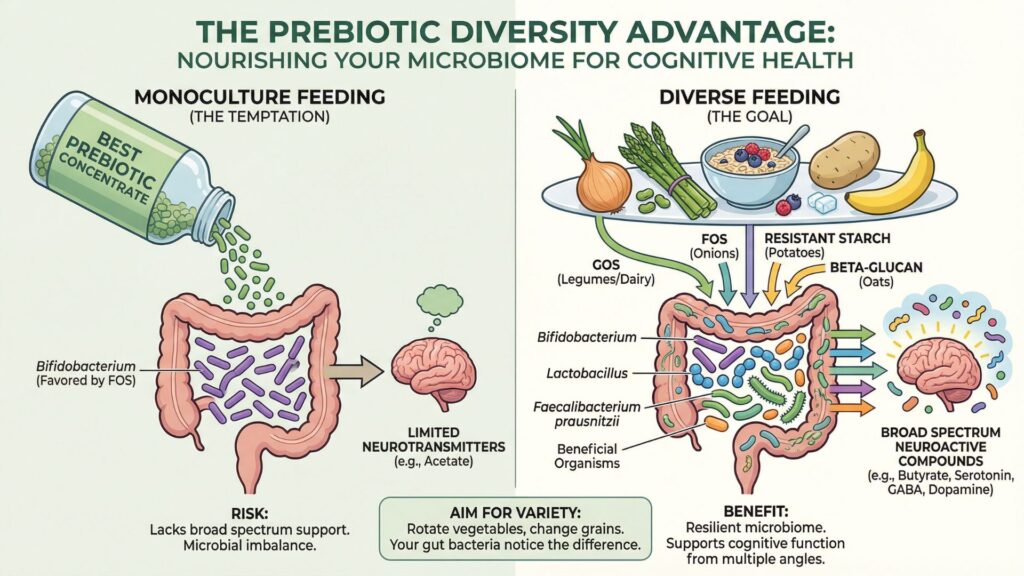
There is a temptation, especially in the supplement-focused wellness world, to identify the “best” prebiotic and take it in concentrated form. But the microbiome does not respond well to monoculture feeding. Different prebiotic fibers feed different bacterial species, and those species produce different metabolites with different effects on the brain.
FOS tends to favor Bifidobacterium growth. GOS supports both Bifidobacterium and Lactobacillus populations. Resistant starch feeds butyrate-producing Faecalibacterium prausnitzii. Beta-glucan from oats stimulates yet another set of beneficial organisms.
The goal is not to maximize one fiber type. It is to create an environment where multiple bacterial populations thrive simultaneously, generating a broad spectrum of neurotransmitters and neuroactive compounds that support cognitive function from multiple angles.
Aim for variety. Rotate your vegetables. Change your grains. Eat onions one day and asparagus the next. Your gut bacteria notice the difference even when you do not.
Feeding a smarter brain, one meal at a time
Prebiotics will probably never trend on social media. They lack the visual appeal of a vibrant smoothie bowl and the instant gratification of a caffeine hit. But beneath the surface, they are doing something those flashy interventions cannot: systematically reshaping the microbial ecosystem that your brain depends on for clarity, memory, and emotional balance.
The research is still maturing, but the direction is unmistakable. Every major review published in the last three years has concluded that prebiotic fiber intake is positively associated with cognitive performance and negatively associated with neuroinflammation. The mechanisms are plausible, the human trials are accumulating, and the risk profile is essentially nonexistent.
So the question is not whether prebiotics support brain health. The evidence says they do. The real question is this: when you sit down to eat today, are you feeding your brain’s bacterial allies, or are you leaving them hungry? And if those allies are the ones deciding how well you sleep tonight, the answer starts to feel a little more urgent.