







Indeed, The organ system with perhaps the greatest influence over your long-term health is not your heart or your brain in isolation. It is your gut, and specifically the approximately 39 trillion microorganisms living inside it. These microbial communities actively regulate your immune system and produce neurochemicals that shape your mood. They manufacture vitamins your body cannot synthesize and modulate the inflammatory pathways underlying most major chronic diseases. What you feed this microbial ecosystem every single day may be among the most consequential health decisions you make. This understanding sits at the heart of the science of using nutrition as a therapeutic tool, as outlined in this comprehensive guide to food as medicine and disease prevention.
The gut microbiome: a brief introduction
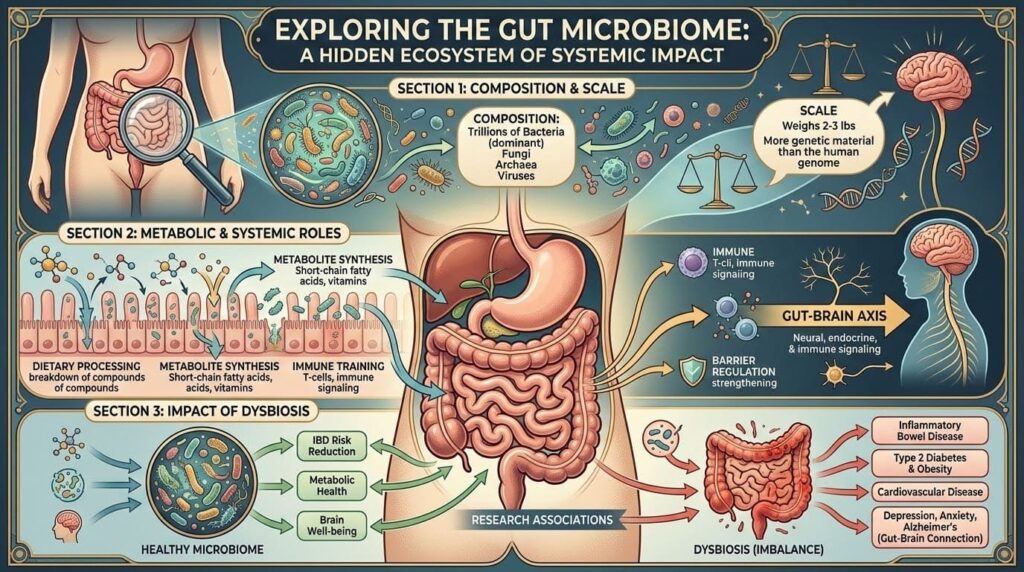
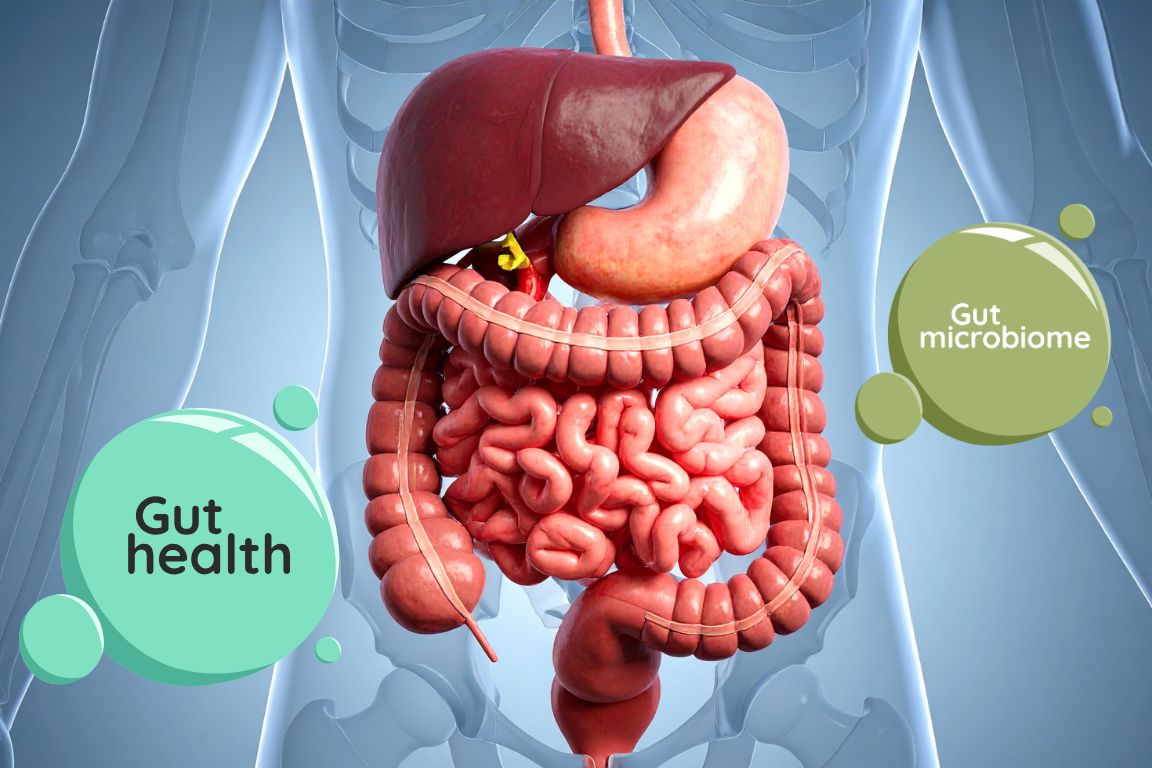
The human gastrointestinal tract is home to microorganisms that collectively weigh between two and three pounds and contain more combined genetic material than the entire human genome. This community, known as the gut microbiome, is dominated by bacteria. It also includes fungi, archaea, viruses, and other microorganisms, each playing roles that researchers are still actively characterizing.
The microbiome is not a passive resident. It is metabolically active. It continuously processes dietary compounds, synthesizes metabolites, and regulates intestinal barrier function. It also trains immune cell populations and communicates with the enteric and central nervous systems through neural, endocrine, and immune signaling pathways.
Disruption of this ecosystem is called dysbiosis. Research has associated it with conditions including inflammatory bowel disease, type 2 diabetes, obesity, cardiovascular disease, depression, anxiety, autism spectrum disorder, and Alzheimer’s disease. The direction of causality in many of these associations is still being established. However, the evidence that microbiome composition has functional consequences for systemic health is now overwhelming.
How diet shapes the microbiome
Furthermore, Among all the factors known to influence the microbiome, diet is the most powerful modifiable variable. These factors include genetics, birth mode, infant feeding history, antibiotic exposure, geographic location, and age. Controlled dietary interventions demonstrate that microbiome composition changes measurably within 24 to 48 hours of significant dietary shifts.
The most consistent finding across microbiome research is that dietary diversity predicts microbial diversity, and microbial diversity predicts microbiome health. Populations eating highly diverse plant-forward diets harbor dramatically more diverse microbial communities than those eating predominantly ultra-processed foods. This is the same mechanism at the root of a chronic anti-inflammatory eating pattern being disrupted by poor food quality. Research from the Human Food Project compared the gut microbiomes of the Hadza hunter-gatherer community in Tanzania to Western populations. Hadza individuals harbored twice the microbial diversity and entirely different bacterial families, reflecting radically different dietary exposures.
Additionally, Diversity is protective because different bacterial species perform different metabolic functions. A diverse microbiome is a resilient one. It adapts to dietary shifts and resists pathogen colonization. It also maintains consistent metabolite production across varying conditions.
Dietary fiber: the microbiome’s primary fuel source
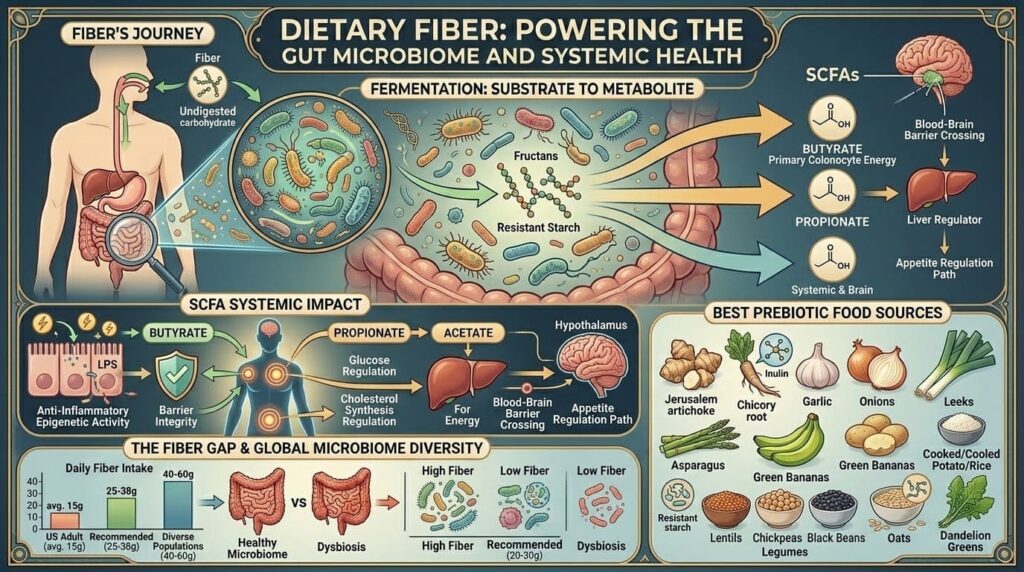
In fact, Dietary fiber is the single most important dietary input for gut microbiome health. Specifically, the types that matter most are fermentable prebiotic fibers. These pass through the small intestine undigested and reach the colon, where they serve as substrate for fermentation by beneficial bacterial species.
For example, When gut bacteria ferment prebiotic fiber, they produce short-chain fatty acids (SCFAs) including butyrate, propionate, and acetate. These are not waste products. They are biologically potent metabolites with systemic effects that extend far beyond the gut.
Butyrate is the primary energy source for colonocytes, the cells lining the colon. It maintains intestinal barrier integrity, preventing the translocation of bacterial fragments including lipopolysaccharide (LPS) into systemic circulation. LPS translocation, often called “leaky gut” in popular media, drives systemic inflammation linked to metabolic disease, cardiovascular disease, and neuroinflammation. Butyrate also demonstrates anti-tumor effects in colorectal cancer cell lines and has epigenetic activity that suppresses inflammatory gene expression.
Similarly, Propionate is transported to the liver, where it regulates glucose production and cholesterol synthesis. Acetate circulates systemically and crosses the blood-brain barrier, where it influences appetite-regulating pathways in the hypothalamus.
The Best Prebiotic Foods
The most potent prebiotic fiber sources include: chicory root and inulin-rich Jerusalem artichokes, garlic and onions providing fructooligosaccharides, leeks and asparagus, green bananas and cooked-then-cooled potatoes and rice providing resistant starch, legumes including lentils, chickpeas, and black beans, oats providing beta-glucan, and dandelion greens.
Moreover, Most adults in the United States consume 15 grams of total fiber daily, significantly below the recommended 25 to 38 grams. Populations with the highest rates of diverse microbiome composition typically consume 40 to 60 grams of fiber daily. This comes through abundant legume, vegetable, and whole grain consumption.
Fermented foods: live cultures with measurable impact
Fermented foods deliver live microorganisms that can temporarily colonize the gut, modulate immune responses, and contribute to a favorable microbiome environment. Indeed, They represent one of humanity’s oldest food preservation technologies, and their health value is increasingly supported by rigorous clinical research.
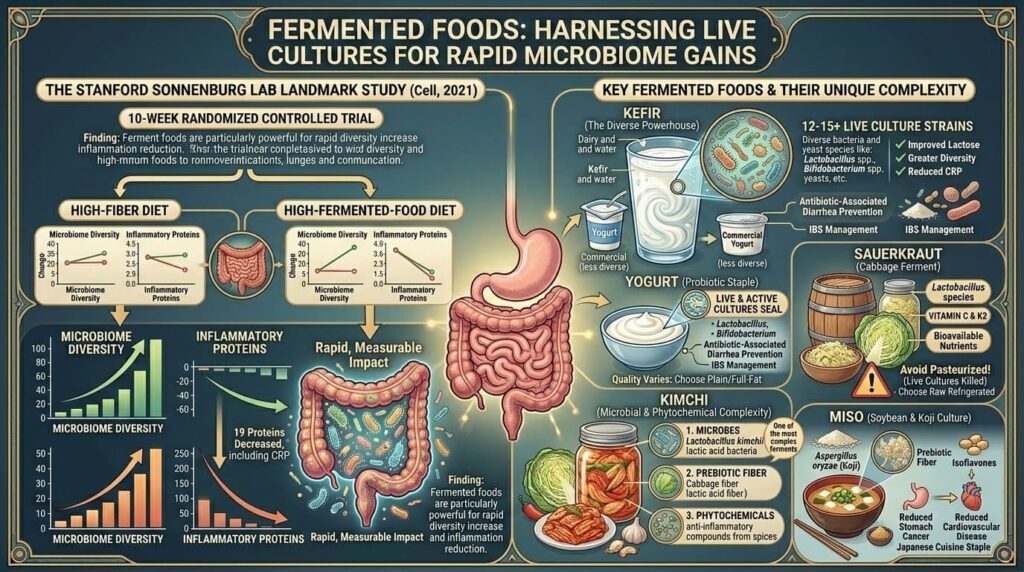
A landmark 2021 study from the Sonnenburg lab at Stanford University, published in Cell, addressed a critical question in gut health research: which dietary strategy is more effective for improving the microbiome, a high-fiber diet or a high-fermented-food diet? In a ten-week randomized controlled trial, adults assigned to a high-fermented-food diet showed significantly greater increases in microbiome diversity. They also showed greater decreases in 19 inflammatory proteins compared to the high-fiber group. The fermented foods included yogurt, kefir, cottage cheese, kimchi, sauerkraut, and kombucha.
Still, These findings do not suggest that fiber is unimportant. They suggest that fermented foods may be particularly powerful for improving microbiome diversity and reducing inflammation. The practical implications for dietary guidance are significant.
The Key Fermented Foods
Therefore, Kefir is a fermented dairy beverage containing a diverse consortium of bacterial species and yeasts, typically 12 to 15 distinct live culture strains. It has demonstrated measurable improvements in lactose tolerance, gut microbiome diversity, and reductions in CRP in randomized trials. Kefir is substantially more diverse in live culture content than most commercial yogurts.
Yogurt with live and active cultures provides Lactobacillus and Bifidobacterium species. These have documented effects on antibiotic-associated diarrhea prevention, IBS management, and immune modulation. Furthermore, The quality of commercial yogurts varies dramatically. Plain, full-fat yogurts with the live and active cultures seal contain meaningfully more viable organisms than heavily processed flavored varieties.
As a result, Kimchi typically features cabbage and radish with chili, garlic, and ginger. It delivers Lactobacillus kimchii and other lactic acid bacteria alongside prebiotic fiber and anti-inflammatory phytochemicals. It is among the most complex fermented foods from both a microbial and phytochemical standpoint.
Sauerkraut, traditionally fermented cabbage, provides Lactobacillus species along with vitamin C, vitamin K2, and bioavailable nutrients enhanced by the fermentation process. Additionally, Unlike pasteurized commercial sauerkraut, which kills live cultures, raw refrigerated sauerkraut retains live organisms.
Indeed, Miso, a fermented soybean paste central to Japanese cuisine, delivers Aspergillus oryzae alongside prebiotic fiber and isoflavones. Epidemiological research from Japan links regular miso soup consumption to reduced rates of stomach cancer and cardiovascular disease.
The gut-brain axis: your second brain
The gut is sometimes called the second brain, and the title is anatomically justified. The enteric nervous system, the network of neurons embedded throughout the gastrointestinal tract, contains more than 500 million nerve cells, more than the entire spinal cord.
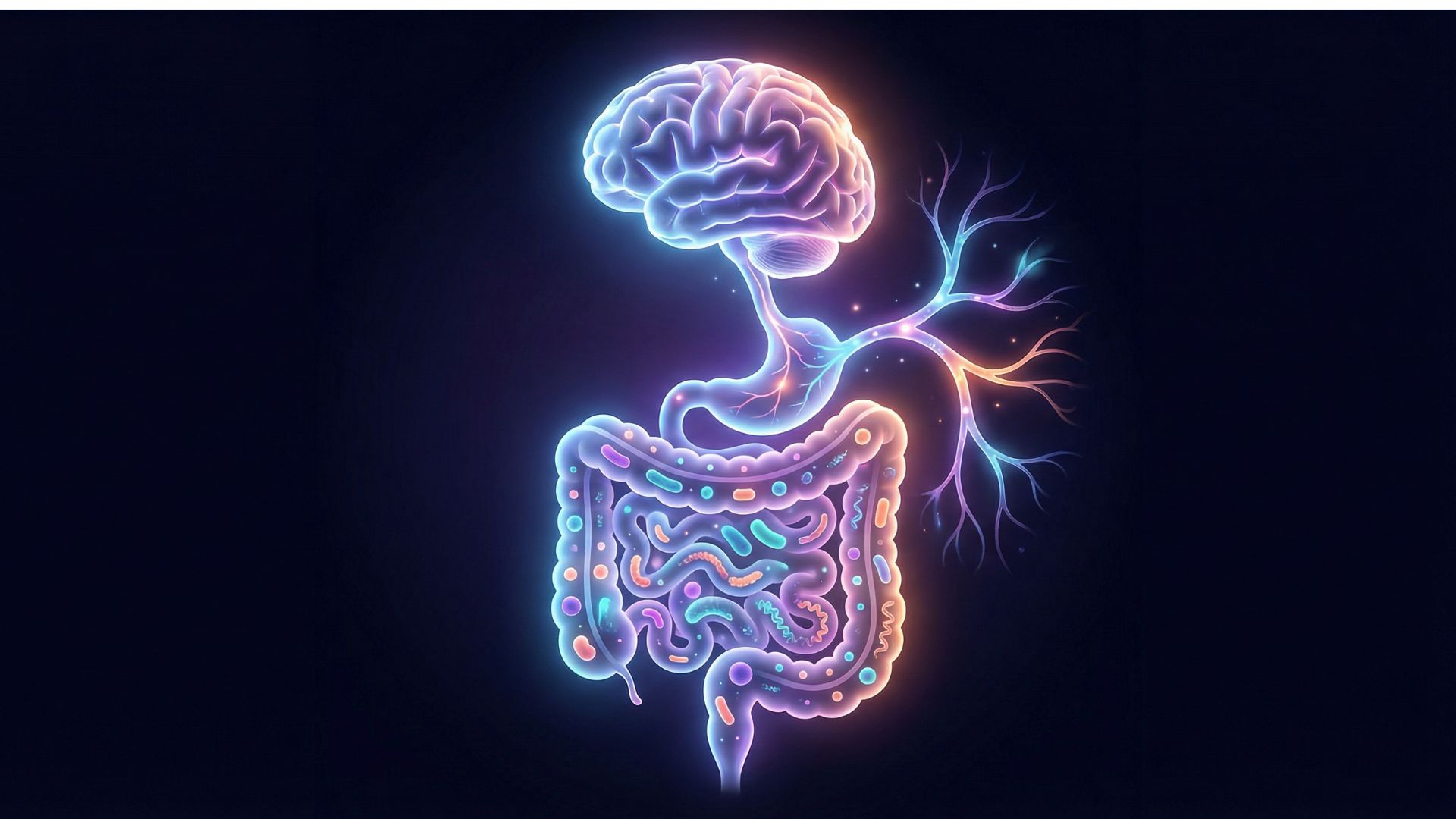
Furthermore, The vagus nerve connects the gut and the brain bidirectionally. Approximately 90 percent of the information traveling along the vagus nerve moves from the gut upward to the brain, not the other way around. Gut bacteria communicate through this highway using neurotransmitters and their precursors, including serotonin, GABA, acetylcholine, and dopamine precursors.
Critically, more than 90 percent of the body’s total serotonin is produced in the gut by enterochromaffin cells in response to stimulation by gut bacteria. This gut serotonin does not directly cross the blood-brain barrier. However, it influences central serotonin systems through vagal signaling and by affecting systemic tryptophan availability, the amino acid precursor to serotonin in the brain.
Nutritional psychiatry: the diet-depression connection
The emerging field of nutritional psychiatry has begun generating randomized controlled trial evidence linking dietary quality directly to mental health outcomes.

The SMILES trial was published in BMC Medicine in 2017. It was one of the first major randomized controlled trials to test a dietary intervention as a treatment for depression. Sixty-seven adults with moderate to severe depression were randomized to either a Mediterranean-style dietary intervention supported by a clinical dietitian, or a social support control condition, for 12 weeks. The dietary intervention group showed significantly greater improvements in depression scores on the Montgomery-Asberg Depression Rating Scale. Thirty-two percent of participants in the dietary group achieved full remission criteria, compared to eight percent in the social support group.
Additionally, This effect size is clinically meaningful. It replicates findings from large epidemiological studies showing that dietary quality is as strong a predictor of depression risk as established psychosocial risk factors.
In fact, The mechanisms are multiple and interactive. Gut bacteria produce neurotransmitter precursors and metabolites that influence central nervous system function. They regulate the hypothalamic-pituitary-adrenal (HPA) axis, the body’s stress response system. Chronic gut dysbiosis elevates systemic inflammation, including neuroinflammation, which is increasingly recognized as a central feature of treatment-resistant depression.
Building a gut-supportive daily routine
For example, Improving your gut microbiome does not require dramatic overnight changes. Small, consistent additions to your daily diet produce measurable microbial shifts within days to weeks.
Indeed, Add one to two servings of prebiotic vegetables or legumes daily, starting modestly to minimize gas and bloating as your microbiome adjusts. Incorporate one fermented food serving daily. Options include a small bowl of plain yogurt at breakfast, a serving of kefir, or kimchi and sauerkraut as a condiment with lunch or dinner. Diversify your plant foods by aiming for at least 30 different plant-derived foods per week. This benchmark links to significantly higher microbiome diversity in the American Gut Project. Minimize ultra-processed foods, which consistently associate with reduced microbial diversity and increased populations of pathobionts.
Furthermore, Reduce unnecessary antibiotic use where clinically appropriate. Discuss probiotic co-prescription with your healthcare provider when antibiotics are necessary. Every food choice you make is a choice about your microbial community. Through it, you also shape your immune system, your metabolic health, and your mental wellbeing.
If the gut microbiome is this central to systems ranging from immunity to mental health, what does that suggest about the most foundational place to start when trying to improve overall health through diet?