





The supplement that made a Nigerian shrub famous overnight did not come from a laboratory. It came from a podcast.
Somewhere around 2022, fadogia agrestis went from a name nobody outside of ethnobotany could pronounce to a product stacked on shelves next to protein powder and pre-workout. The speed of that transition was remarkable. The evidence behind it was not.
In 2026, fadogia agrestis is still selling well. The clinical picture, however, has not changed as fast as the marketing has. And for men who are seriously trying to support their hormonal health rather than just follow a trend, that gap between popularity and proof is exactly the kind of thing worth examining carefully.
This is not a takedown. It is an honest look at what the science shows, what it does not show, and what the safety questions actually mean in practice. If you have been following the broader conversation around natural testosterone support, fadogia agrestis is the entry in that space that demands the most scrutiny.
Where the hype came from
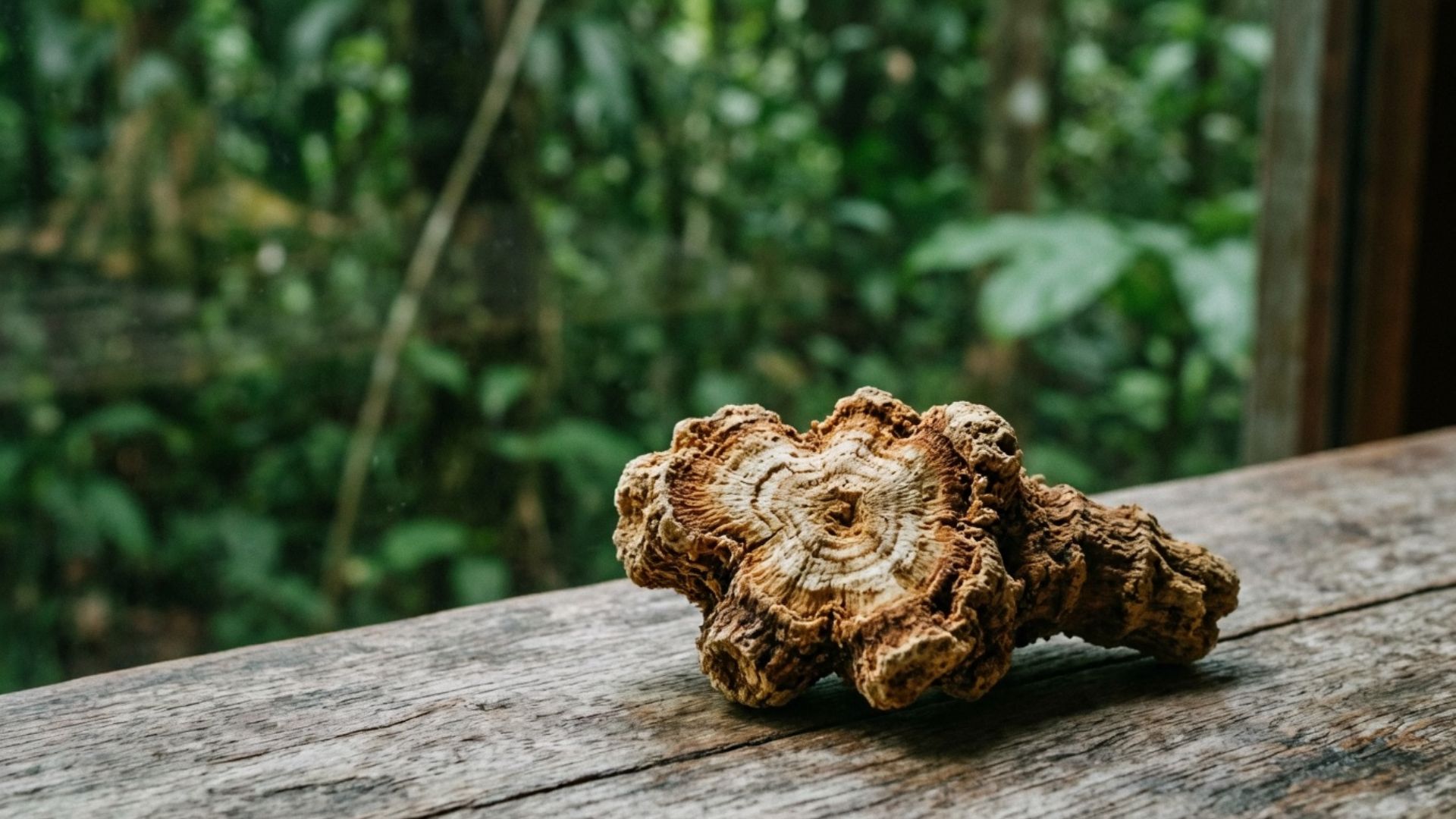
Fadogia agrestis is a shrub native to Nigeria, where it has traditional use as a general tonic and aphrodisiac. Its scientific name is straightforward. Its journey into Western supplement culture is less so.
The spark was a series of animal studies, primarily from Nigerian research institutions in the early 2000s, that showed striking increases in testosterone levels in male rats following administration of fadogia agrestis extract. One widely cited 2005 study published in the Asian Journal of Andrology reported that rats receiving the extract showed dose-dependent increases in serum testosterone within days. The proposed mechanism was intriguing: the extract appeared to mimic or stimulate luteinizing hormone (LH) activity, essentially telling the testes to produce more testosterone directly.
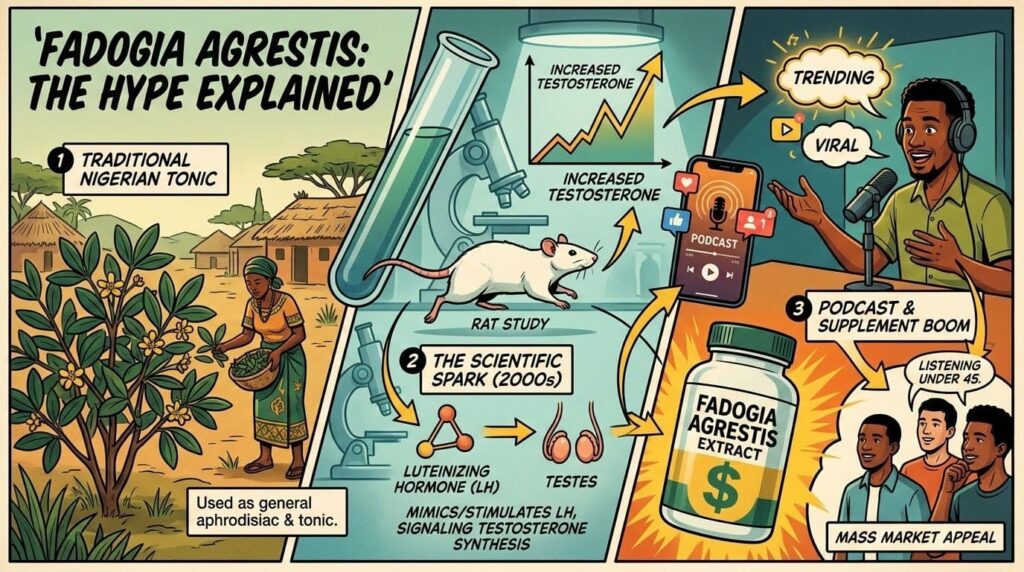
For anyone who understands how testosterone production works, that mechanism sounds significant. LH is the primary signal that drives testosterone synthesis in Leydig cells. Anything that amplifies that signal could, in theory, produce meaningful hormonal effects. That rat data landed in the right hands at the right moment, specifically in the podcasting ecosystem that drives a substantial portion of supplement purchasing decisions for men under 45.
The rest, as they say, is supplement history.
The animal data: what it actually found
Here is where the story gets more complicated, and more honest.
The same body of animal research that showed testosterone increases also flagged something that rarely made it into the highlight reels. At higher doses, fadogia agrestis extract produced evidence of testicular toxicity in rodent models. Specifically, some studies observed structural changes in Leydig cells, the very cells responsible for testosterone production, at elevated doses.
Let that sit for a moment. The cells that make testosterone showed signs of damage from the same extract that was supposed to be boosting it.
That is not automatically disqualifying. Dose-dependent toxicity exists for virtually every compound, including water and vitamin A. The question is always about dose thresholds, exposure duration, and whether those findings translate to humans at typical supplemental doses. Those are legitimate questions. The problem is that nobody has answered them yet, at least not in published human trials.
One 2005 study from the Asian Journal of Andrology reviewed in this PubMed entry documented both the testosterone-raising and the potentially toxic effects in the same experimental model. Reading only the abstract’s positive finding without engaging with the full data is how a lot of supplement mythology gets built.
The human data problem
This is the core issue, and it is not a minor one.
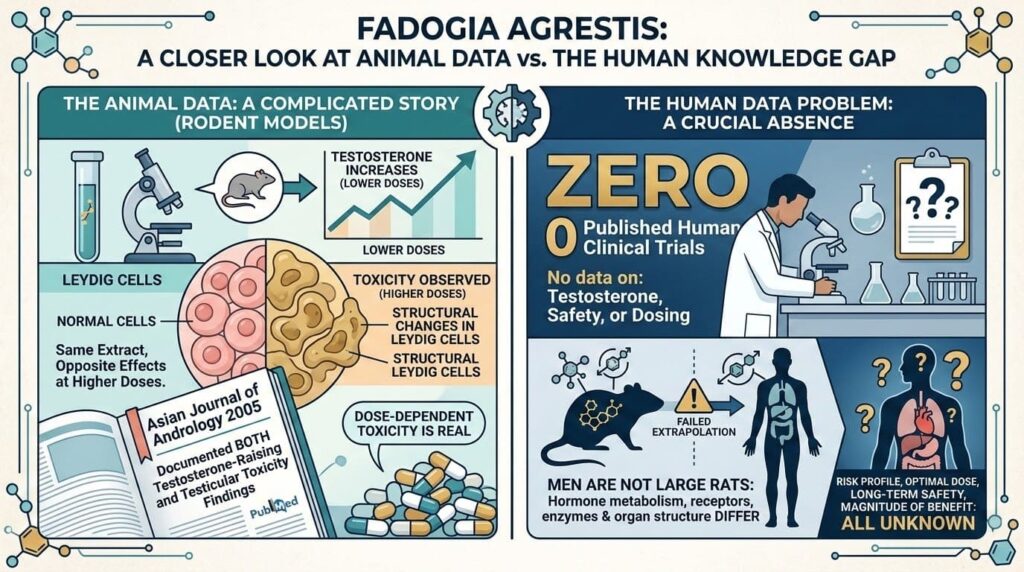
As of 2026, there are no published, peer-reviewed human clinical trials evaluating fadogia agrestis for testosterone support, safety profiling, or optimal dosing in men. Zero. The entire commercial case for this supplement rests on extrapolation from rodent models.
Rodent models are genuinely useful in early-stage research. They help identify mechanisms worth investigating and narrow down compounds for further study. But they are not a substitute for human data, and they fail to predict human outcomes with troubling frequency. This is not a niche caveat. It is a foundational principle of evidence-based medicine.
Men are not large rats. Hormone metabolism, receptor sensitivity, enzyme activity, and organ structure differ meaningfully between species. A compound that raises testosterone dramatically in rodents may do nothing in humans, or may produce effects that look completely different at the cellular level.
The absence of human trials does not prove that fadogia agrestis is dangerous. It means we genuinely do not know the risk profile, the effective dose range, the long-term safety, or the realistic magnitude of any benefit in human males. That is a significant knowledge gap to be filling with your own body.
What cycling protocols actually mean
The supplement community’s response to the safety uncertainty has largely been to recommend cycling: using fadogia agrestis for a defined period, typically four to eight weeks, followed by an equal or longer break. The logic is that limiting cumulative exposure reduces the theoretical risk of the testicular toxicity observed in animals.
That reasoning is not unreasonable. It is also not validated.
No clinical trial has tested whether cycling fadogia agrestis in humans prevents any form of organ stress. The cycling recommendation is harm reduction built on inference, not data. It may well be the right approach. But anyone presenting it as a safety guarantee is working beyond the boundaries of the available evidence.
I want to be direct here: the cycling protocol is worth following if you choose to use this supplement. But do not mistake a community-derived precaution for a clinically established safety measure. Those are different things.
The comparison that matters
To understand why the fadogia agrestis situation is worth taking seriously, it helps to compare it to other herbal options in the same category.
| Supplement | Human Clinical Trials | Safety Data in Humans | Proposed Mechanism |
| Tongkat ali | Multiple RCTs published | Generally well-tolerated | HPG axis + aromatase inhibition |
| Ashwagandha | Multiple RCTs published | Extensively documented | Cortisol reduction, HPG support |
| Zinc | Decades of controlled trials | Well understood | Enzymatic cofactor in hormone synthesis |
| Fadogia agrestis | None published | Unknown in humans | LH mimicry (animal data only) |
The contrast is stark. The supplements with the strongest human evidence are not the ones getting the most podcast time. That mismatch is worth noticing.
Who is taking it and what they report
Anecdotal reports from men using fadogia agrestis are genuinely mixed. Some report increased energy, libido, and a sense of heightened drive within the first few weeks. Others notice nothing at all. A smaller subset report side effects including testicular discomfort, mood changes, and disrupted sleep, though causation is impossible to establish without controlled conditions.
The placebo effect in hormonal supplements is substantial and well-documented. Expecting to feel more energized after starting a testosterone-adjacent supplement is a powerful enough expectation to produce a subjective sense of benefit independent of any biological mechanism. This does not mean everyone reporting benefits is imagining them. It means anecdote cannot carry the same weight as controlled trial data.
What responsible use actually looks like
If someone has read all of this and still wants to try fadogia agrestis, that is a personal decision. Adults make choices with incomplete information all the time. The relevant guidance is practical.
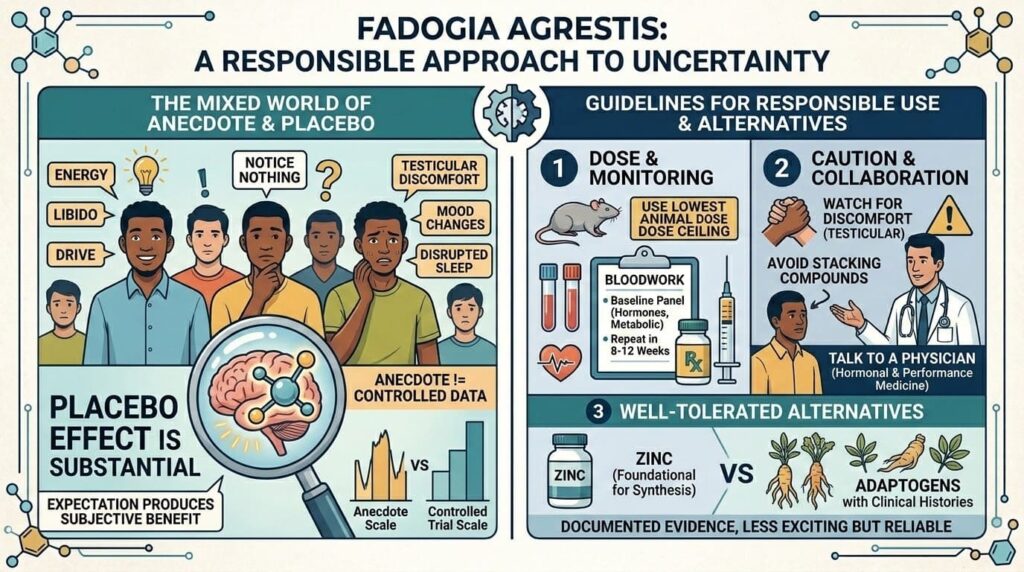
Use the lowest studied dose range from animal literature as a rough ceiling, not a starting point. Baseline bloodwork before starting, including a full hormone panel and basic metabolic markers, gives you a comparison point. Repeat bloodwork after eight to twelve weeks of use. Watch for any testicular discomfort, which is not a symptom to dismiss or push through. Avoid stacking multiple experimental compounds simultaneously, which makes it impossible to identify what is causing what.
Most importantly: talk to a physician who is familiar with performance and hormonal medicine before starting. That sentence shows up in every responsible supplement article because it is actually true, not because it protects the writer legally.
For men whose primary interest is supporting healthy testosterone levels with documented, well-tolerated options, the evidence still points more clearly toward zinc’s foundational role in hormone synthesis and established adaptogens with clinical trial histories. Those are not as exciting to talk about. That is a feature of the evidence, not a bug.
Watching the research
Here is what is genuinely encouraging: the interest in fadogia agrestis has been significant enough to motivate research investment. Human trials are being designed. Some are in early stages. The next few years may produce the data that either validates the hype or definitively reframes the risk conversation.
That is how good science is supposed to work. A promising animal finding generates interest, which generates funding, which generates human trials, which generates actual answers. The problem is that the commercial cycle moved several laps ahead of the research cycle, and millions of men started using a compound before the researchers had finished asking the basic questions.
Staying informed as that data emerges is the most useful thing anyone in this space can do right now. The conversation around fadogia agrestis is not over. It is, more accurately, just beginning.
What is worth asking in the meantime: at what point does excitement about a supplement’s potential become a good enough reason to accept unknown risk?