






Most diets do not fail because people are weak. They fail because people are hungry. You can white-knuckle your way through a few days of smaller portions, maybe a couple of weeks if you are stubborn, but eventually your body wins that argument. It always does. Hunger is not a character flaw you can shame into submission. It is a biological signal, loud and relentless, and fighting it head-on is a losing game. Which is exactly why fiber deserves a starring role in any honest weight conversation, and why the crash-diet industry would rather you not notice. For the bigger picture on how a nationwide fiber shortfall quietly shapes our health, that backdrop matters. This is the part where it gets personal.
The fullness trick your body cannot argue with
Here is the mechanism, stripped of jargon. Fiber takes up space. It absorbs water, swells in your stomach, and slows how fast everything empties into your intestines. Your stomach stretches, sends a signal upstairs, and your brain registers a simple message: we are full, stand down.
That signal is powerful precisely because it is physical, not psychological. You are not talking yourself out of a second helping through willpower. Your body is telling you it does not want one. A meal built around fiber does that work for you, quietly, before dessert temptation even shows up.
Why “eat less” is terrible advice
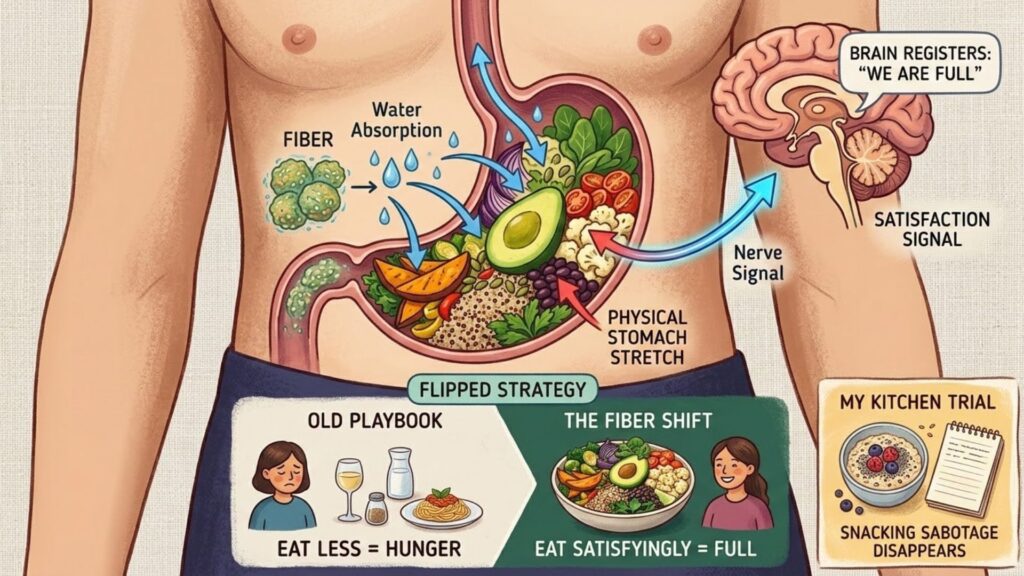
The old weight-loss playbook told people to simply eat less and move more. Technically true, uselessly incomplete. Telling a hungry person to eat less is like telling someone gasping for air to breathe less. The instruction ignores the driver.
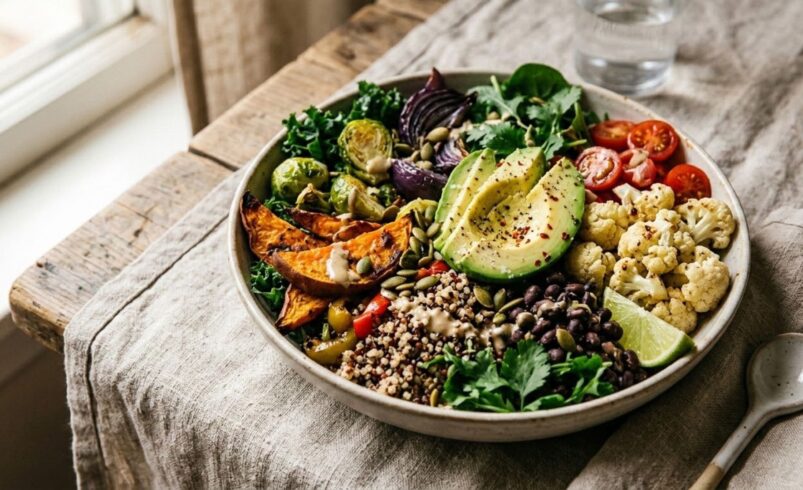
Fiber flips the strategy. Instead of eating less food, you eat food that satisfies more per bite. A plate of vegetables, beans, and whole grains carries fewer calories but far more volume and staying power than the refined stuff it replaces. You end up eating a satisfying amount, feeling full, and consuming fewer calories almost by accident. That last part is the magic. The calorie reduction happens without the constant negotiation that torpedoes most diets.
I saw this in my own kitchen years ago; I was not trying to lose weight so much as stop feeling ravenous by mid-morning. I swapped my usual breakfast for oats loaded with chia and berries. The scale change was slow and unremarkable. The hunger change was immediate. I simply stopped thinking about food two hours after eating, and the snacking that used to sabotage me quietly disappeared.
The numbers behind the feeling
Fiber’s effect on appetite is not folklore. Researchers have measured it, and the “energy density” concept is the clearest way to see it. Foods high in fiber and water deliver fewer calories for the same amount of chewing and stomach-filling.
| Food swap | Roughly equal fullness | Calorie difference |
| Potato chips vs air-popped popcorn | 1 oz chips vs 3 cups popcorn | Popcorn saves ~60 percent |
| White rice vs lentils | 1 cup each | Lentils, more protein and fiber, similar calories, far more filling |
| Fruit juice vs whole fruit | 1 orange vs 8 oz juice | Whole orange, more fiber, less sugar rush |
| White bread vs bean-heavy soup | 2 slices vs a bowl | Soup, more volume, longer satiety |
The pattern is consistent. Trade energy-dense, low-fiber foods for high-fiber, water-rich ones, and you feel just as satisfied on fewer calories. No app required, no macros to obsess over.
The Ozempic elephant in the room
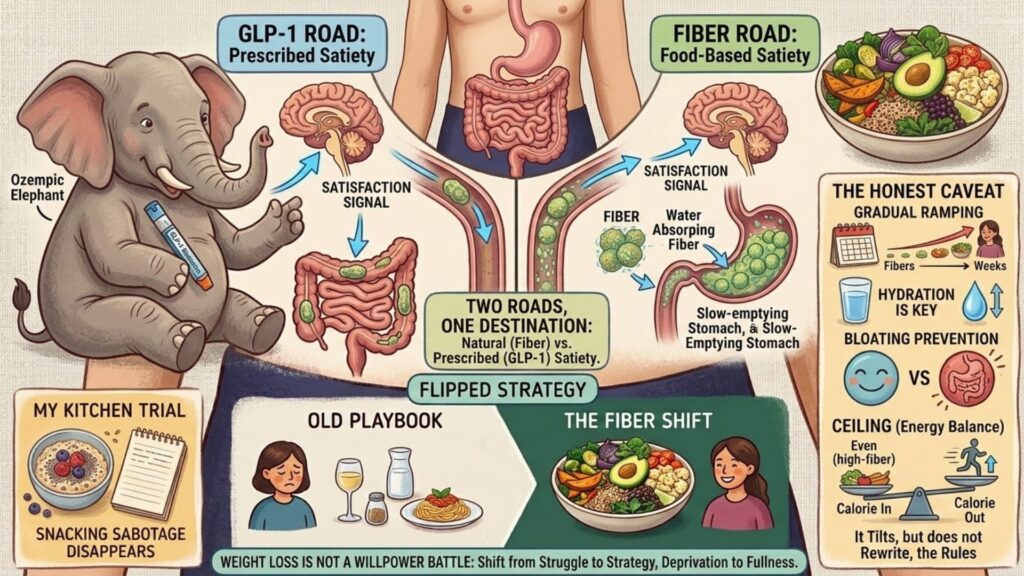
We cannot talk about weight in 2026 without mentioning the drugs. GLP-1 medications have reshaped the entire conversation, and they work by, among other things, slowing stomach emptying and dialing down appetite. Sound familiar? That is roughly what fiber does, gently and for free, through food. As one obesity researcher I spoke with put it, “Fiber is not a replacement for these medications, but it is running on some of the same roads. People are paying a fortune to slow gastric emptying that a bowl of oats does for pennies.” I am not suggesting fiber competes with a prescription for someone who genuinely needs one. I am suggesting most people never gave the cheaper, quieter tool a fair shot first.
The part nobody loves
Now the honest caveat. Fiber is not a magic bullet, and anyone selling it that way is selling something. Load up too fast and you will trade cravings for bloating, which is its own kind of misery. The satiety benefit only shows up when your gut has adapted and when you are drinking enough water to let all that fiber do its job. Ramp gradually. Hydrate. Let the habit build.
There is also a ceiling. Fiber helps you eat less without suffering, but it does not erase the basics of energy balance or license unlimited portions of anything. It tilts the odds in your favor. It does not rewrite the rules. Anyone promising effortless transformation from a single fiber powder is skipping the part where consistency, sleep, and movement still matter.
Weight loss has always been sold as a battle of willpower, a test of how much discomfort you can endure. Fiber quietly rejects that entire premise. It suggests the smarter move is not to suffer more, but to eat in a way that makes suffering unnecessary. Fullness, not deprivation. Strategy, not struggle. That reframe alone changes how sustainable the whole thing feels, and it pairs beautifully with keeping your blood sugar steady so cravings never spike in the first place. If you are ready to actually build the habit without the digestive drama, easing into more fiber the smart way is where it starts. So let me leave you with the question I wish someone had asked me years ago: what if the reason your last diet failed had nothing to do with your willpower, and everything to do with what was missing from your plate?