




Walk through any supplement store in 2026, and tongkat ali has earned premium shelf real estate. It sits alongside far flashier products, usually in a modest bottle with a long scientific name printed underneath: Eurycoma longifolia. It does not have the marketing budget of creatine or the cultural mythology of ginseng. What it does have, increasingly, is a clinical record worth taking seriously.
I first came across tongkat ali about five years ago while researching herbal options for men dealing with low-normal testosterone. Not clinically deficient, just operating below their own baseline. The category of men who feel off without a blood test that confirms why. At the time, the human research was thin but promising. What has happened since then is genuinely interesting.
Before reaching for any supplement, though, it helps to understand what you are actually trying to support. The science behind natural testosterone boosters is more nuanced than most labels suggest, and tongkat ali is a good case study in what honest evidence looks like in this space.
Quick Definition
Tongkat Ali (Eurycoma longifolia)
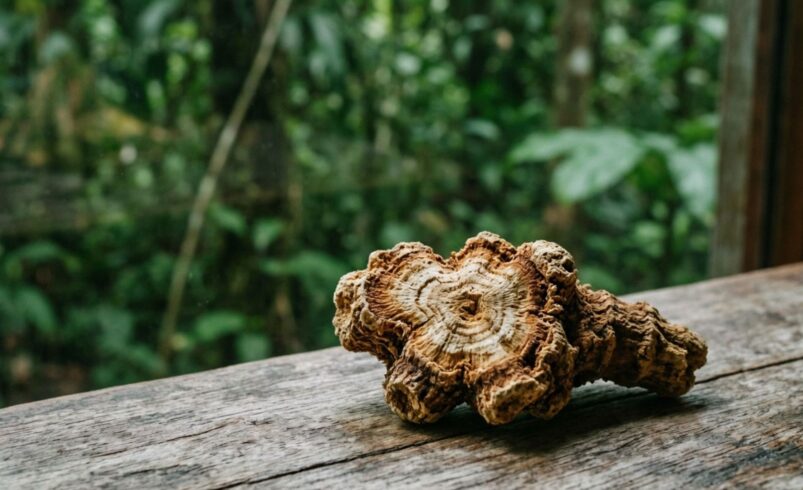
A flowering root plant native to the rainforests of Malaysia and Indonesia, used for centuries as a traditional vitality tonic. The name translates roughly to “Ali’s walking stick” in Malay. In modern nutrition science, it is classified as an adaptogenic herb and studied primarily for its effects on free testosterone, cortisol, and male physical performance.
A root with a long history
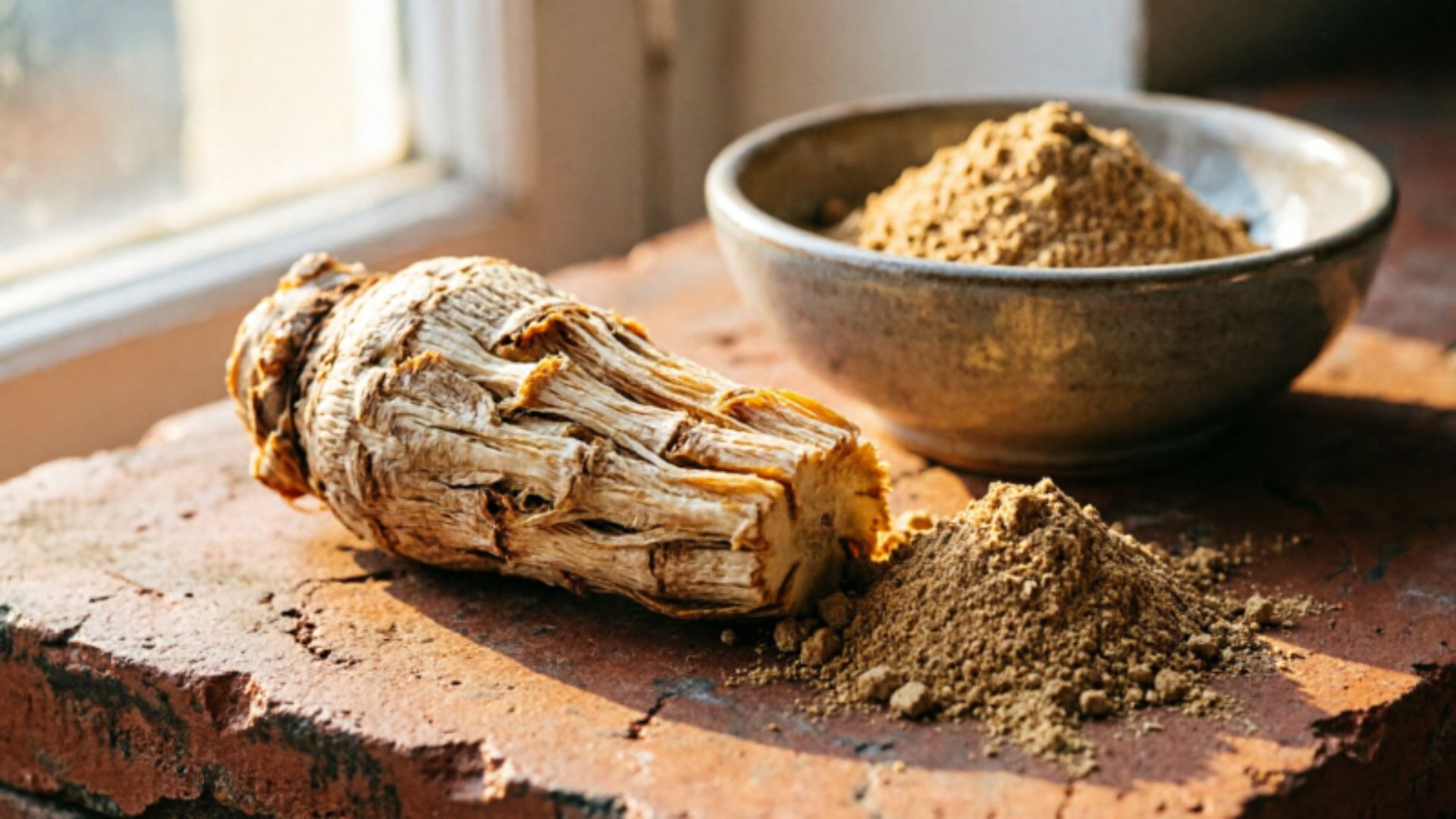
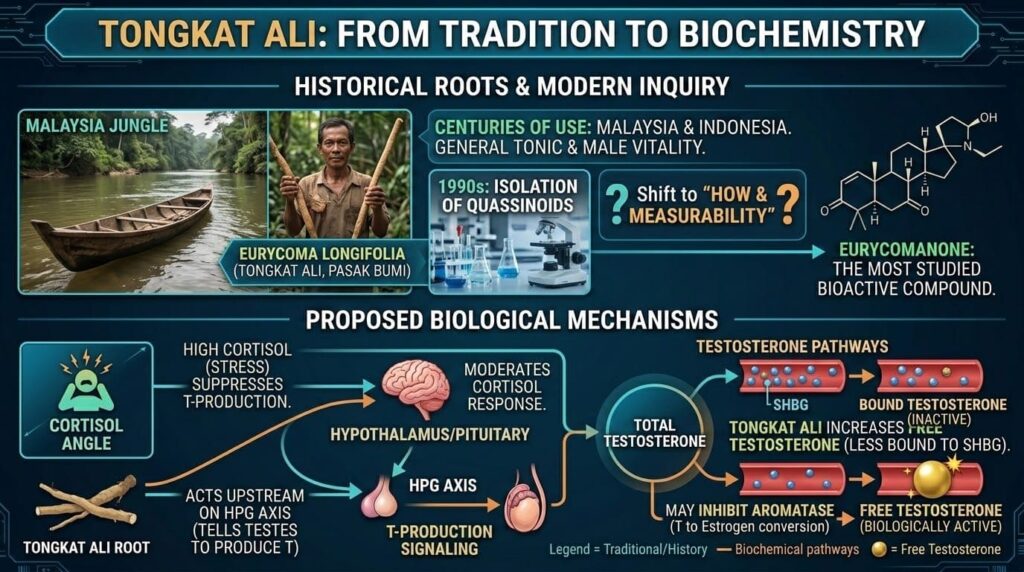
Tongkat ali is not new. In Malaysia and Indonesia, it has been used for centuries as a general tonic, an energy herb, and a traditional remedy for male vitality. Local names include pasak bumi in Indonesia and tongkat ali in Malaysia, which translates roughly to “Ali’s walking stick.” The imagery is deliberate.
Modern interest picked up in the 1990s when Malaysian researchers began isolating bioactive compounds from the root, particularly a group called quassinoids, with eurycomanone being the most studied. The question shifted from “does this plant do something?” to “exactly how does it do it, and can we measure that?”
How it actually works?
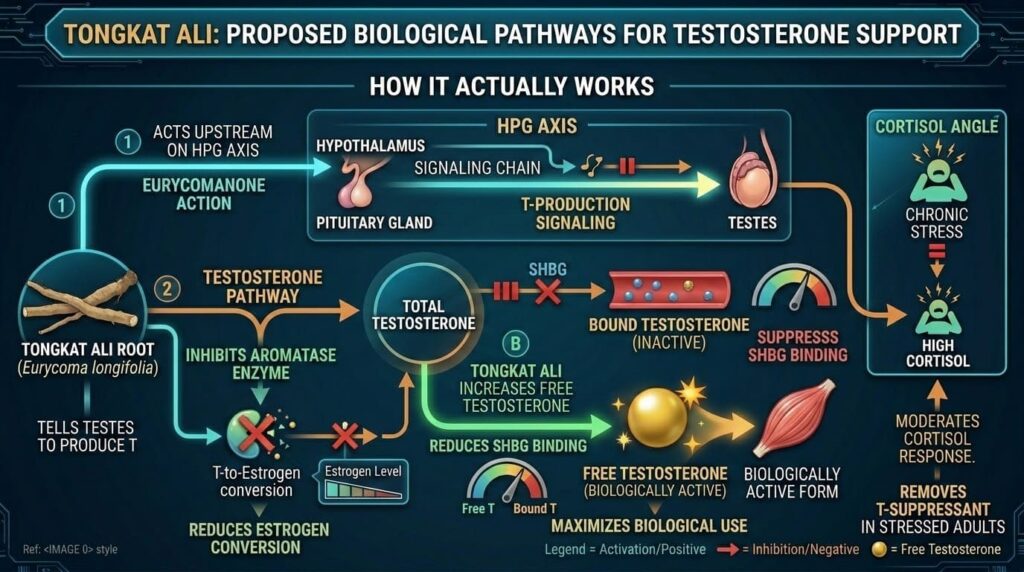
Tongkat ali does not flood the body with testosterone directly. That is not how it operates. The proposed mechanism is more upstream: eurycomanone appears to act on the hypothalamic-pituitary-gonadal (HPG) axis, the signaling chain that tells the testes to produce testosterone in the first place. It may also inhibit the aromatase enzyme, which converts testosterone into estrogen.
The net effect, when the biology cooperates, is an increase in free testosterone specifically. Free testosterone is the fraction not bound to carrier proteins like sex hormone-binding globulin (SHBG). It is the biologically active form. Total testosterone can look acceptable on paper while free testosterone remains low if SHBG is elevated. That distinction matters more than most people realize.
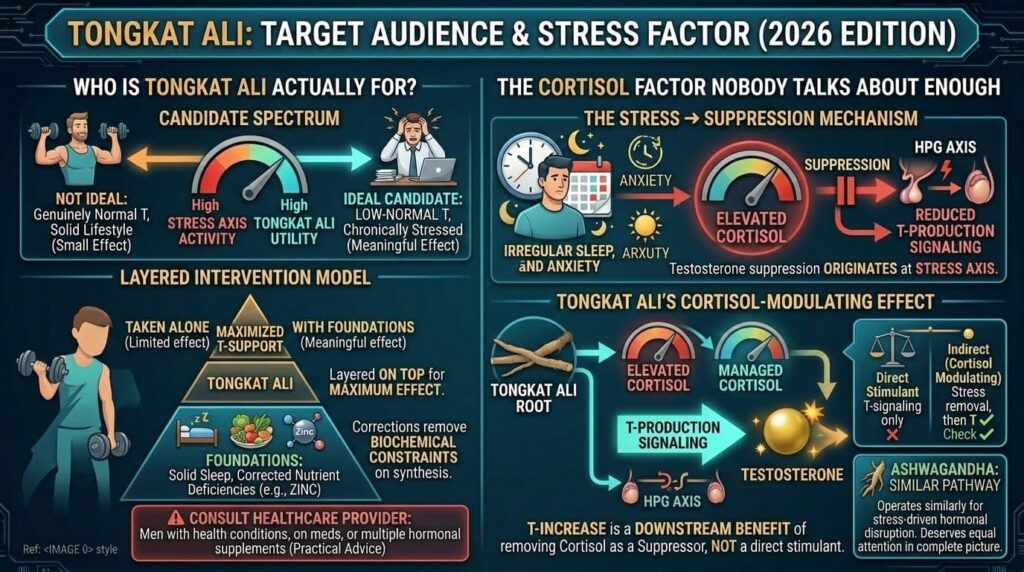
There is also a cortisol angle. Chronic stress raises cortisol, and elevated cortisol suppresses testosterone production at the HPG axis level. Some research suggests tongkat ali helps moderate the cortisol response, which removes one of the most common suppressants of testosterone in stressed adults.
What the research actually shows?
This is where things get genuinely compelling. A 2013 study published in Phytotherapy Research examined moderately stressed adults who supplemented with a standardized tongkat ali extract for four weeks. The results showed significant increases in free testosterone alongside a meaningful reduction in cortisol. That study used a water-soluble standardized extract at 200 mg per day, not a generic powder.
A 2022 systematic review compiled data from multiple human clinical trials and found consistent associations between tongkat ali supplementation and improvements in testosterone levels, sexual function, and physical performance metrics. Importantly, the positive results clustered around trials using standardized extracts with documented eurycomanone content.
That last point is critical. Many negative or inconclusive tongkat ali studies used poorly characterized preparations. You cannot draw conclusions about an herb when you are not certain what bioactive content was actually delivered.
| Study Type | Extract Used | Key Outcome |
| 2013 RCT (stressed adults) | Standardized, 200 mg/day | Increased free testosterone, lower cortisol |
| 2014 pilot (active men) | Standardized, 400 mg/day | Improved muscle strength and testosterone |
| 2022 Systematic Review | Multiple standardized forms | Consistent testosterone and libido benefits |
| Mixed quality trials | Non-standardized powders | Inconclusive or negative results |
The pattern is consistent: quality of extract predicts quality of outcome.
Not all tongkat ali is the same
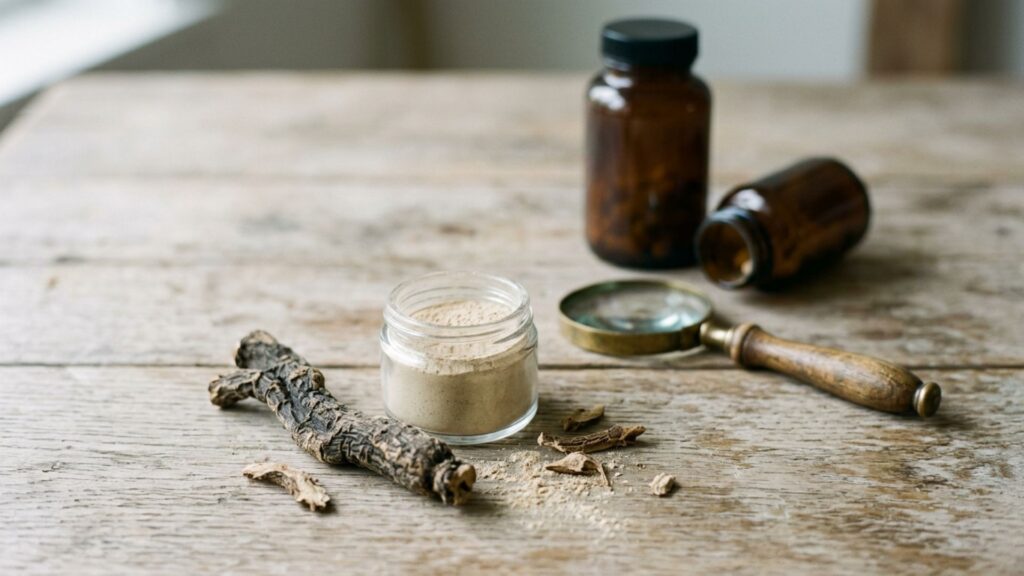
This deserves its own section because the supplement market is genuinely confusing here. Products labeled “100:1” or “200:1” describe concentration ratios relative to raw herb, but they say nothing about eurycomanone percentage. A 200:1 concentrate of low-quality root could contain less active compound than a 50:1 concentrate from high-grade Malaysian source material.
What you want to see on a label: a standardized water-soluble extract, eurycomanone content disclosed (typically 0.8% to 2%), third-party testing documentation, and ideally Malaysian or Indonesian sourcing with origin verification. Brands that invest in clinical-grade raw material tend to publish those details. The ones that do not usually have a reason.
Dose ranges studied in trials generally fall between 200 and 400 mg of standardized extract per day. Some formulas recommend cycling, using it for five days and resting for two, though no clinical data specifically validates this as superior to continuous use.
Who is tongkat ali actually for?
Honest answer: not everyone. If your testosterone is genuinely normal and your lifestyle is solid, the effect size you will notice from tongkat ali may be modest. The herb appears most useful for men who are stressed, whose cortisol is chronically elevated, and who sit in the low-normal testosterone range without meeting criteria for clinical intervention.
It also makes more sense as part of a broader approach. Addressing zinc deficiency, for instance, removes a direct biochemical constraint on testosterone synthesis, and zinc’s role in testosterone production is far better established than most people realize. Tongkat ali layered on top of corrected nutrient deficiencies and managed sleep is a meaningfully different intervention than tongkat ali taken alone with none of those foundations addressed.
Men with diagnosed health conditions, those taking medications that affect hormone metabolism, or anyone considering combining multiple hormonal supplements should talk to a healthcare provider before starting. That is not a liability disclaimer. It is practical advice.
The cortisol factor nobody talks about enough
One underappreciated application of tongkat ali is stress-related testosterone suppression specifically. Men who are burning the candle at both ends, running on disrupted sleep, skipping meals, carrying chronic anxiety, or working under sustained pressure are often dealing with testosterone suppression that originates at the stress axis. No amount of zinc or herbal supplementation fixes a cortisol problem that is not being managed.
For these men, tongkat ali’s cortisol-modulating properties may be the more clinically relevant part of its profile. The testosterone increase becomes a downstream benefit of removing cortisol as a suppressor, not a direct stimulant effect. That distinction changes how you think about timing, cycling, and who the ideal candidate actually is.
Ashwagandha operates through a similar pathway, and for men dealing primarily with stress-driven hormonal disruption, ashwagandha’s cortisol and testosterone evidence deserves equal attention as part of a complete picture.
The bottom line on tongkat ali
The research does hold up, with qualifications. Tongkat ali is not a replacement for testosterone therapy in men with clinical deficiency. It is not a miracle. But as herbal options for natural hormonal support go, it has earned its position at the front of the shelf based on clinical evidence, not marketing.
What the trials show, consistently, is a modest but real effect on free testosterone and cortisol in men who are stressed or operating at suboptimal baseline. That is a meaningful population. And in a category flooded with products built on animal studies and borrowed credibility, an herb with actual human trial data is worth paying attention to.
The question worth sitting with: if the research on tongkat ali is this available and this readable, why do so many people still make supplement decisions based on podcast recommendations alone?