








Of all the dietary patterns studied in clinical nutrition over the past half century, one consistently rises to the top of the evidence base. The Mediterranean diet has been validated in hundreds of randomized controlled trials, prospective cohort studies, and mechanistic laboratory investigations. Its benefits span cardiovascular health, cognitive function, blood sugar regulation, cancer risk reduction, and healthy aging at a cellular level. Understanding why it works requires looking beyond the food list to the biological mechanisms that make it so clinically powerful. That science is part of a broader conversation about using nutrition to prevent and manage disease, which this comprehensive guide to food as medicine explores across every major dietary category.
What the Mediterranean diet actually is?
Decades of media coverage have created some confusion about what the Mediterranean diet actually means. It is frequently reduced to pasta, olive oil, and red wine. That simplification misses the depth of what makes this dietary pattern therapeutically effective.
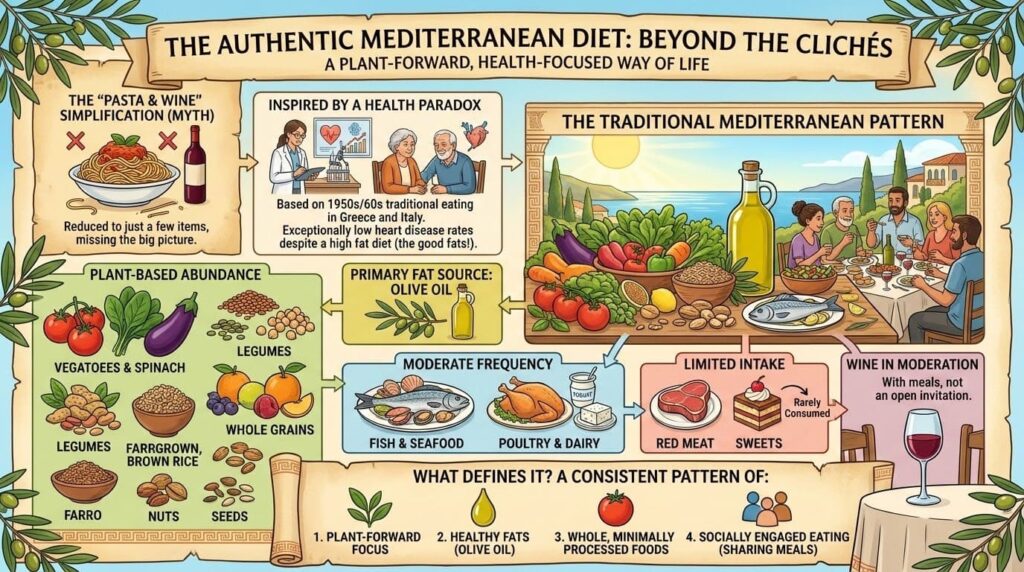
The Mediterranean diet reflects the traditional eating habits of populations bordering the Mediterranean Sea. Researchers focused particularly on Greece and Southern Italy during the 1950s and 1960s. These populations showed dramatically lower rates of heart disease despite high overall fat consumption. That paradox directly challenged the dominant low-fat dietary hypothesis of the time.
The traditional Mediterranean dietary pattern is characterized by an abundance of plant foods including vegetables, legumes, fruits, whole grains, nuts, and seeds. Olive oil is the primary fat source. Fish and seafood are consumed frequently. Dairy appears primarily as fermented products such as yogurt and cheese. Poultry is eaten in moderate amounts. Red meat and sweets appear rarely. Wine, when consumed, accompanies meals in moderate quantities.
What defines it is not any individual food but the consistent pattern: plant-forward, healthy-fat-centered, minimally processed, socially engaged eating.
The Clinical Trial evidence
The PREDIMED Trial
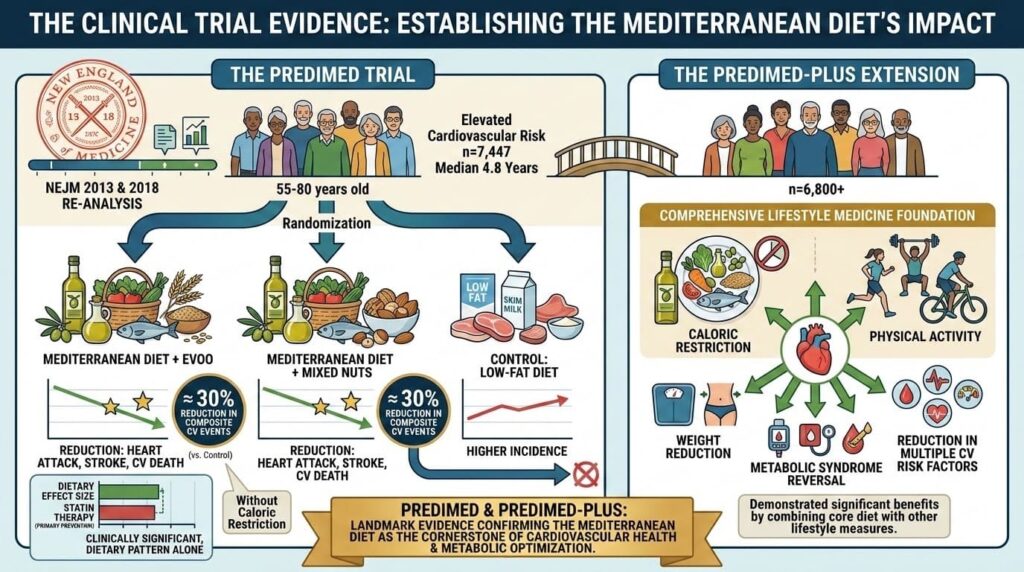
No discussion of the Mediterranean diet can omit the PREDIMED study. Published in the New England Journal of Medicine in 2013 and subsequently re-analyzed and confirmed in 2018, PREDIMED followed 7,447 adults between the ages of 55 and 80 at elevated cardiovascular risk over a median of 4.8 years.
Participants were randomized to one of three groups: a Mediterranean diet supplemented with extra-virgin olive oil, a Mediterranean diet supplemented with mixed nuts, or a control low-fat diet. Both Mediterranean diet groups showed approximately 30 percent reductions in the composite endpoint of major cardiovascular events including heart attack, stroke, and cardiovascular death compared to the control group.
That effect size is clinically significant. It compares favorably to the primary prevention benefit of statin therapy and was achieved through dietary pattern change alone, without caloric restriction.
The PREDIMED-Plus extension
PREDIMED-Plus, a subsequent large-scale trial involving more than 6,800 participants, combined the Mediterranean dietary pattern with caloric restriction and physical activity. It demonstrated additional benefits in weight reduction, metabolic syndrome reversal, and reduction in multiple cardiovascular risk factors, further establishing the Mediterranean diet as a foundation for comprehensive lifestyle medicine.
Cardiovascular protection: the mechanisms
The cardiovascular benefits of the Mediterranean diet cannot be attributed to any single component. They emerge from the combined biological effects of its key elements.
Extra-virgin olive oil delivers oleic acid, a monounsaturated fat that replaces saturated fats in cell membranes, improving membrane fluidity and receptor function. More importantly, it delivers polyphenols including oleocanthal, oleuropein, and hydroxytyrosol. These compounds inhibit LDL oxidation, improve endothelial function, and reduce platelet aggregation through mechanisms that parallel pharmaceutical anti-inflammatory and anticoagulant agents.
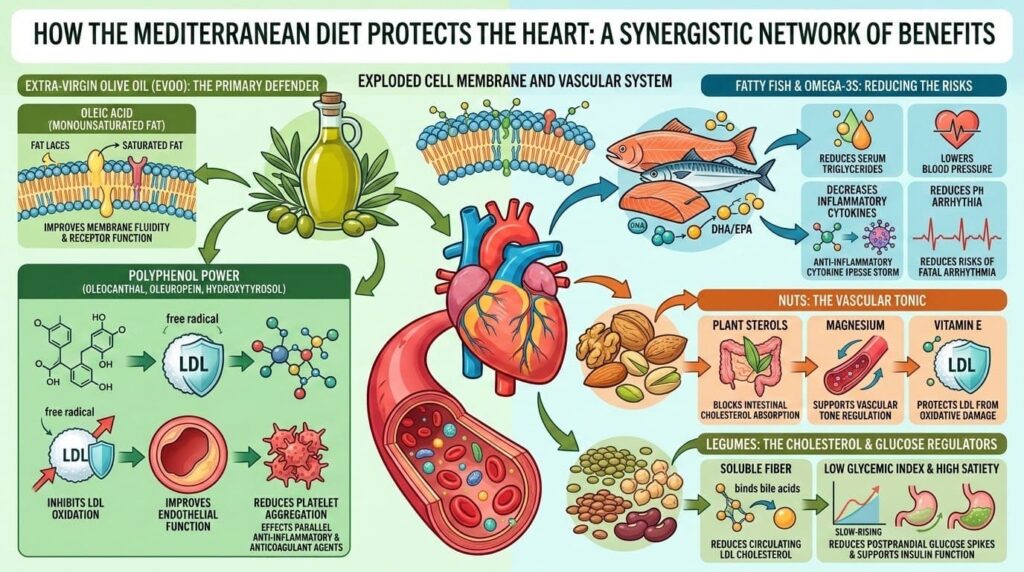
Fatty fish eaten twice a week or more provides EPA and DHA. These marine omega-3 fatty acids lower triglycerides, reduce blood pressure, decrease inflammatory cytokines, and cut the risk of fatal arrhythmia.
Regular nut consumption delivers several protective compounds. Plant sterols compete with dietary cholesterol for intestinal absorption. Magnesium supports vascular tone regulation. Vitamin E protects LDL from oxidative damage.
Legumes, consumed daily or near-daily in the traditional Mediterranean pattern, provide soluble fiber that binds bile acids and reduces circulating LDL cholesterol. Their low glycemic index and high satiety value reduce postprandial glucose spikes and support healthy insulin function.
Cognitive protection and brain aging
The Mediterranean diet’s emerging frontier is neuroprotection. The evidence linking Mediterranean diet adherence to cognitive health has strengthened considerably in the past decade.
The MIND diet, developed by nutritional epidemiologist Dr. Martha Clare Morris at Rush University, synthesizes Mediterranean and DASH diet principles with specific emphasis on foods linked to brain health. A major cohort study in Chicago found that participants with high MIND diet adherence had a 53 percent lower rate of Alzheimer’s disease development compared to those with low adherence. Moderate adherence still showed 35 percent risk reduction.
Separate longitudinal research from Spain, Greece, and the United States consistently links Mediterranean diet adherence to slower rates of cognitive decline across aging populations. A 2021 study in Neurology found that every one-point increase in Mediterranean diet adherence score corresponded to a meaningful delay in cognitive aging.
The proposed mechanisms involve reduced neuroinflammation from omega-3 fatty acids and polyphenols, improved cerebral blood flow from cardiovascular benefits, and direct neuroprotective effects of resveratrol, quercetin, and oleocanthal on amyloid precursor protein processing.
Metabolic health and type 2 diabetes
For individuals managing or seeking to prevent type 2 diabetes, the Mediterranean diet consistently outperforms conventional low-fat dietary guidelines in clinical trials.
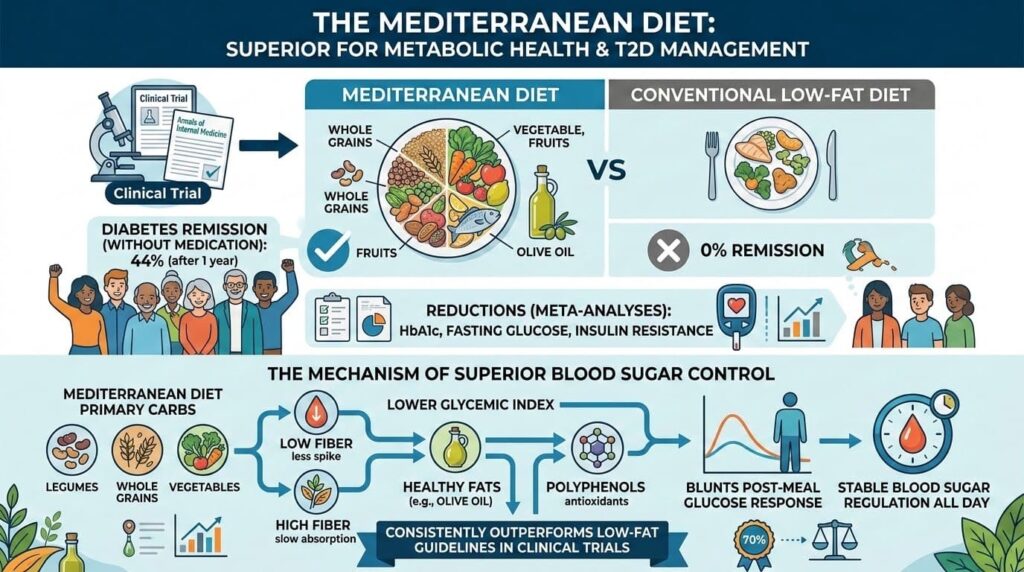
A study in Annals of Internal Medicine tested the Mediterranean diet against a low-fat diet in newly diagnosed type 2 diabetics. After one year, 44 percent of Mediterranean diet participants achieved remission without medication. None in the low-fat group did. Multiple meta-analyses since then confirm the pattern. Mediterranean diet adherence consistently reduces HbA1c, fasting glucose, and insulin resistance more effectively than standard dietary guidelines for diabetic patients.
The mechanism is straightforward. The Mediterranean diet delivers carbohydrates primarily through legumes, whole grains, and vegetables, all of which have significantly lower glycemic indices than refined grains and sugars. Combined with the fiber load, healthy fats, and polyphenols that blunt post-meal glucose response, the Mediterranean pattern keeps blood sugar regulation more stable throughout the day.
Mental health and longevity at the cellular level
The SMILES trial, published in BMC Medicine in 2017, was one of the first randomized controlled trials to directly test a dietary intervention for depression. Participants with moderate to severe depression assigned to a Mediterranean-style diet showed significantly greater improvements in depression scores over 12 weeks than those receiving social support alone. Thirty-two percent of the dietary intervention group achieved remission, compared to 8 percent in the control group.
Telomere length, a cellular marker of biological aging, has been positively associated with Mediterranean diet adherence in multiple observational studies. Telomeres protect chromosomes from degradation during cell division. Their erosion is associated with accelerated aging and increased chronic disease risk. Dietary patterns that support cellular antioxidant defenses and reduce inflammatory telomere damage appear to slow this process.
How to start: a practical framework
The Mediterranean diet does not require a kitchen overhaul. It requires a systematic reorientation of food choices.
Replace butter and refined vegetable oils with extra-virgin olive oil as your primary cooking and finishing fat. Eat legumes in some form every day, whether as lentil soup, hummus, bean salads, or chickpeas added to grains. Build every dinner plate around vegetables first, then add protein and whole grains. Eat fatty fish at least twice per week. Snack on a small handful of mixed unsalted nuts instead of processed snacks. Add a Greek yogurt to your breakfast rotation. Incorporate fresh or dried herbs and spices generously into every savory dish.
These are not radical changes. They are systematic substitutions that cumulatively shift your dietary pattern toward the one with the strongest evidence base in clinical nutrition. Legumes and fermented dairy products central to this pattern also profoundly support gut microbiome composition.
Is there a specific chronic condition or health goal that would make the Mediterranean diet particularly relevant to your situation right now?