






Keith Krehbiel has broken more ribs than he can count. Falls during pickleball matches, bike crashes, blacking out at the top of his stairwell. For the estimated 1.1 million Americans living with Parkinson’s disease, falling is just one symptom in a constellation that includes tremors, stiffness, and the slow erosion of fluid movement. But Krehbiel volunteered to become the first patient in a pivotal international clinical trial that would change how we treat this progressive disorder.
The technology he tested: a brain pacemaker that actually listens.
From one-size-fits-all to real-time response
Deep brain stimulation has transformed Parkinson’s care since its FDA approval in 2002. Surgeons implant thin electrodes, about the size of angel hair spaghetti, into targeted brain regions and connect them to a pulse generator in the chest. Electrical signals help quiet the misfiring neurons that cause tremors and movement problems.
The catch? Traditional DBS operates like a car stuck in one gear. It delivers constant stimulation regardless of what the brain actually needs at any given moment. Too much stimulation causes involuntary movements called dyskinesias. Too little leaves patients stiff and slow.
Adaptive deep brain stimulation (aDBS) changes this calculus entirely. The FDA-approved Medtronic BrainSense system, which received clearance in February 2025, reads brain signals in real time and adjusts stimulation accordingly. Think of it as the difference between a thermostat that just blasts heat versus one that senses room temperature and adjusts automatically.
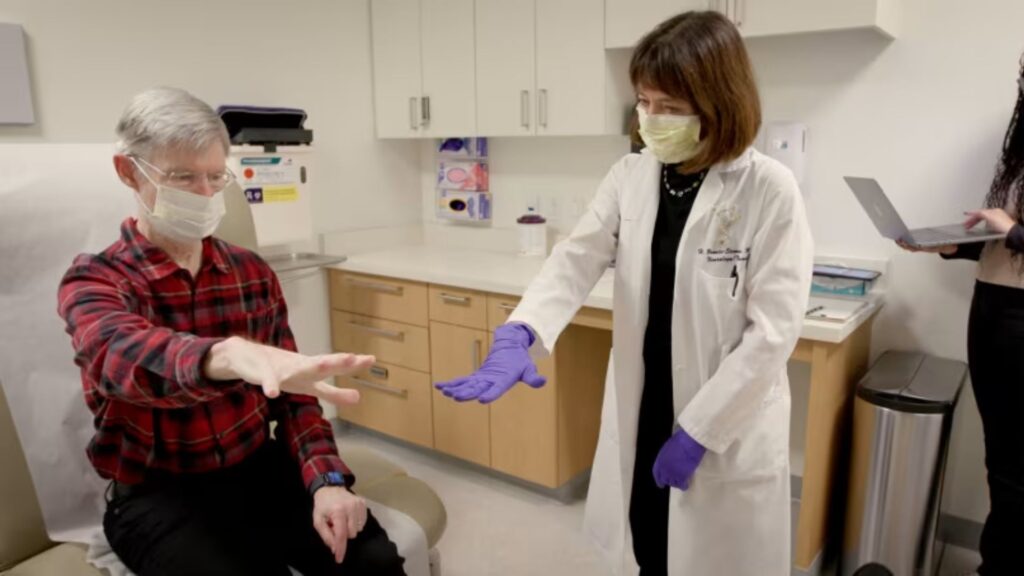
“When pacemakers became adaptive, they started turning on only when a person’s heart rate dropped below a certain threshold,” explained Dr. Helen Bronte-Stewart, the Stanford neurologist who led the international multicenter trial. “That is the turning point we just reached with deep brain stimulation.”
The science behind the breakthrough
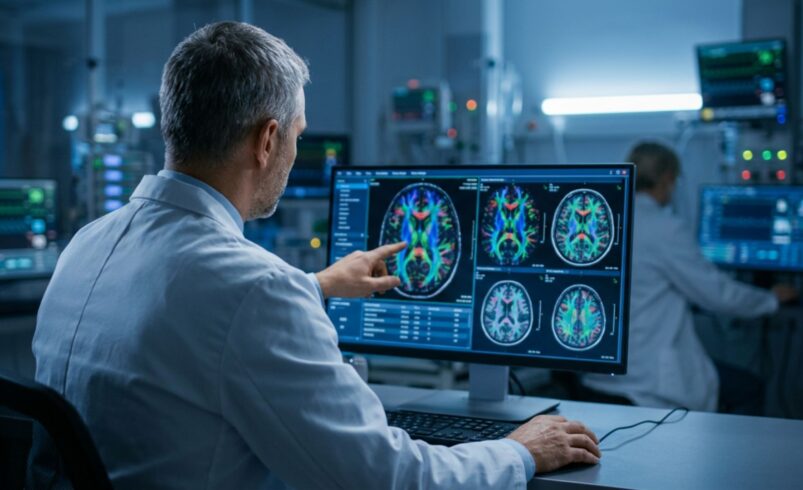
The key lies in something called beta waves. In healthy brains, these electrical rhythms coordinate movement. In Parkinson’s, they become abnormally elevated, essentially creating a brain arrhythmia that interferes with motor control.
Traditional DBS suppressed these beta waves constantly. But a patient’s levels might vary depending on medication cycles, disease progression, or simply what activity they’re engaged in at any moment. The adaptive technology adjusts stimulation based on these patterns, mimicking natural brain rhythms more closely.
The ADAPT-PD clinical trial evaluated safety and effectiveness across multiple international centers. Results showed patients using adaptive DBS experienced significant improvements in “on” time without troublesome dyskinesias, needed lower overall stimulation energy, and reported better quality of life scores.
In March 2025, Kate Goes in Center at UCHealth University of Colorado Hospital became the first patient in North America following FDA approval to receive the technology clinically. Time magazine named BrainSense one of the “Best Inventions of 2025.”
The gut connection: why nutrition still matters
For readers focused on nutrition and metabolic health, the Parkinson’s story doesn’t end with electrical stimulation. Research increasingly points to the gut-brain axis as a player in disease progression.
Alpha-synuclein proteins, which misfold and form the characteristic clumps in Parkinson’s brains, have also been found along the gastrointestinal tract. Constipation affects up to 70% of Parkinson’s patients and often appears before motor symptoms emerge. This has led researchers to investigate whether dietary interventions might complement treatments like DBS.
A randomized controlled trial found that both ketogenic and low-fat diets improved disease severity in Parkinson’s patients, with the ketogenic diet showing superiority in reducing non-motor symptoms. The Mediterranean diet remains the most intensely studied dietary intervention, with its anti-inflammatory effects potentially supporting brain health.
The practical takeaway: nutrition may not replace advanced therapies like adaptive DBS, but it appears to play a supporting role in the broader management strategy.
What patients are saying
For Krehbiel, who has had his device since summer 2020, the results speak through his daily life. His hand tremor went away “almost immediately” after implantation.
Evonne Simoff, 58, became the first Michigan patient to use adaptive DBS in May 2025 after traditional medication left her exhausted and unable to hide her tremors. Within weeks of surgery, she reduced her medications to occasional use and gained 30 yards on her golf drives.
“I thought, well, if you’re going to be cursed with something, you might as well try to contribute on your way out,” Krehbiel said. Bronte-Stewart reports that patients say their disease “goes back at least five years” when the adaptive system is working well.
The bottom line
Adaptive deep brain stimulation represents a genuine paradigm shift in Parkinson’s treatment. By responding to brain signals in real time rather than delivering constant stimulation, this technology offers more personalized symptom control with less energy expenditure and fewer side effects. With more than 40,000 patients already using Medtronic Percept devices eligible for the upgrade, this could become the largest commercial deployment of brain-computer interface technology in history.
The technology won’t stop disease progression. But for millions of patients and their families, reclaiming years of functional movement is no small thing.
As brain-computer interfaces move from science fiction to standard care, what other neurological conditions might benefit from similar adaptive approaches?