







You just finished a solid workout at the gym. The clock is ticking. You’ve got exactly 30 minutes to slam a protein shake or all those bicep curls were for nothing. Right?
That idea has been floating around fitness circles for decades. The so-called “anabolic window” supposedly closes faster than a New York subway door, leaving your muscles starving for amino acids if you miss it. But recent research tells a more nuanced story, especially for those of us who’ve blown out more than 40 candles on our birthday cakes.
The anabolic window: fact or fiction?
The concept sounds scientifically airtight. After resistance training, muscles are primed to absorb protein and rebuild stronger. Miss that narrow window, and you’ve wasted your effort. Supplement companies have made billions selling this urgency.
A landmark study by Rasmussen and colleagues tested this theory directly. Participants received a supplement containing essential amino acids and carbohydrates either one hour or three hours following leg exercises. The result? Muscle protein synthesis levels were elevated by approximately 400% in both conditions, indicating that timing was not a factor in the postexercise response.
A comprehensive meta-analysis published in the Journal of the International Society of Sports Nutrition examined 23 studies involving 525 subjects. After controlling for variables like total protein intake and training status, researchers found no significant difference between the treatment and control for strength or hypertrophy. The kicker? Any positive effects noted in timing studies were found to be due to an increased protein intake rather than the temporal aspects of consumption.
So the window may be less of a narrow crack and more of an open barn door.
Why things change after 40
Before you completely dismiss timing, there’s a catch for the over-40 crowd. Aging muscles develop what researchers call “anabolic resistance.” Your muscle tissue becomes less responsive to the protein you eat, requiring more stimulus to achieve the same rebuilding effect.
One study on elderly men averaging 74 years old found different results. Participants who consumed protein immediately after exercise showed a 7% increase in muscle cross-sectional area and 22% increase in mean fiber area over 12 weeks, while those who delayed intake by two hours showed no significant growth. However, this study had notable limitations: only 13 participants and a mere 10-gram protein dose, well below what current research suggests older adults need.
The International Society of Sports Nutrition notes that the anabolic stimulus from a 26-g dose of whey protein may not have sufficiently stimulated muscle protein synthesis in older individuals due to this resistance phenomenon. Research indicates that adults over 40 may need 40 grams of protein per feeding to maximize the muscle-building response, compared to roughly 20 grams for younger people.
Distribution matters more than you think
Here’s where the research gets practically useful. A study by Areta and colleagues examined different patterns of consuming 80 grams of protein over 12 hours of recovery. They compared 10-gram doses every 90 minutes, 20-gram doses every three hours, and 40-gram doses every six hours.
The winner? 20 g of whey protein consumed every 3 h was superior to either pulse or bolus feeding patterns for stimulating muscle protein synthesis throughout the day.
Research by Mamerow and colleagues adds another piece to the puzzle. They found that muscle protein synthesis was about 25 percent greater when protein was distributed evenly in each meal, rather than concentrated at lunch and dinner. Most Americans eat three times as much protein at dinner compared to breakfast, potentially leaving gains on the table during morning hours when muscles remain in a catabolic state.
Practical takeaways for real life
The evidence points toward a few actionable strategies:
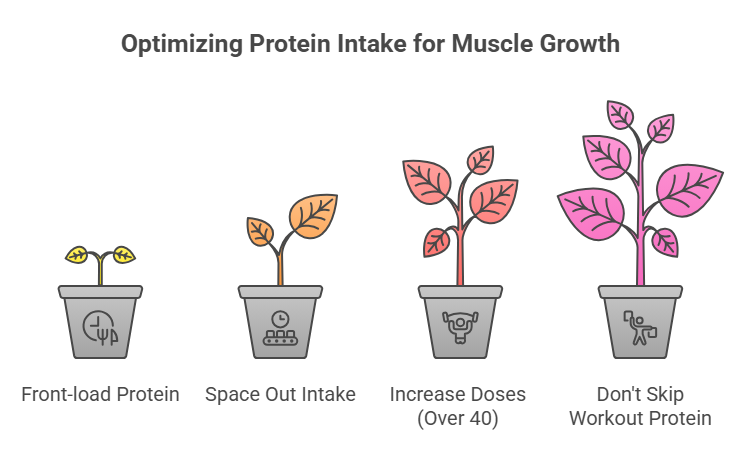
Front-load your protein. That dinner-heavy pattern most people follow may shortchange your morning muscle-building potential. Aim for at least 30 grams of quality protein at breakfast.
Space it out. Rather than obsessing over the post-workout window, focus on consuming protein every three to four hours throughout the day.
Bump up your doses. If you’re over 40, research suggests you may need 30 to 40 grams per meal to overcome anabolic resistance, compared to the 20 grams often recommended for younger adults.
Don’t skip the workout protein entirely. While the window appears wider than previously thought, consuming protein within a few hours of training still makes physiological sense. Just don’t panic if you can’t chug a shake in the locker room.
The bottom line
Total daily protein intake remains the most important factor for muscle maintenance and growth at any age. For those over 40, the evidence suggests that distributing protein evenly across meals, with adequate doses at each feeding, may offer advantages over timing it precisely around workouts. The 30-minute anabolic window appears to be more marketing myth than metabolic necessity.
That said, if having a post-workout shake helps you hit your daily protein targets, keep doing it. The best nutrition strategy is one you’ll actually follow consistently.
What’s your current approach to protein timing? Have you noticed any difference in results when you changed when you eat protein around your workouts?