





Testosterone levels in American men have been falling for decades, and the decline has nothing to do with aging alone.
A landmark study published in the Journal of Clinical Endocrinology and Metabolism tracked testosterone levels across generations and found that a man in his forties today has significantly lower testosterone than a man of the same age did in 1987. Same age. Different era. Different hormonal reality.
The causes are still being untangled by researchers, but the usual suspects are not hard to identify. Chronic stress that never fully resolves. Sleep that gets compressed by screens and schedules. Diets built around convenience rather than nutritional density. A sedentary baseline that exercise a few times a week cannot fully compensate for. All of these press down on the same hormonal system in ways that compound over time.
Testosterone replacement therapy is a legitimate clinical option for men with confirmed deficiency. But millions of men sit in the low-normal range: not deficient enough to qualify for a prescription, but symptomatic enough to notice something has shifted. The fatigue that coffee does not fix. The motivation that used to come naturally. A body that stopped responding to training the way it once did.
This is for those men. What follows is a clear-eyed look at the natural testosterone support strategies with the most credible research behind them, organized into three categories: the herbal options, the foundational nutrients, and the one lifestyle factor that outperforms everything else on this list. No inflated claims. No borrowed credibility from animal studies dressed up as human evidence. Just what the science actually shows, explained in plain language.
What Is Testosterone, Exactly?
Testosterone is the primary male sex hormone, produced mainly in the testes. It plays a central role in muscle mass, bone density, energy levels, mood, libido, and overall metabolic health. Levels naturally peak in early adulthood and gradually decline with age.
Why this matters: Many men experience low testosterone symptoms long before levels show up as clinically low on a standard lab report. This guide breaks down what the research actually supports for natural support, separating proven strategies from marketing hype.
Section 1: The herbal layer
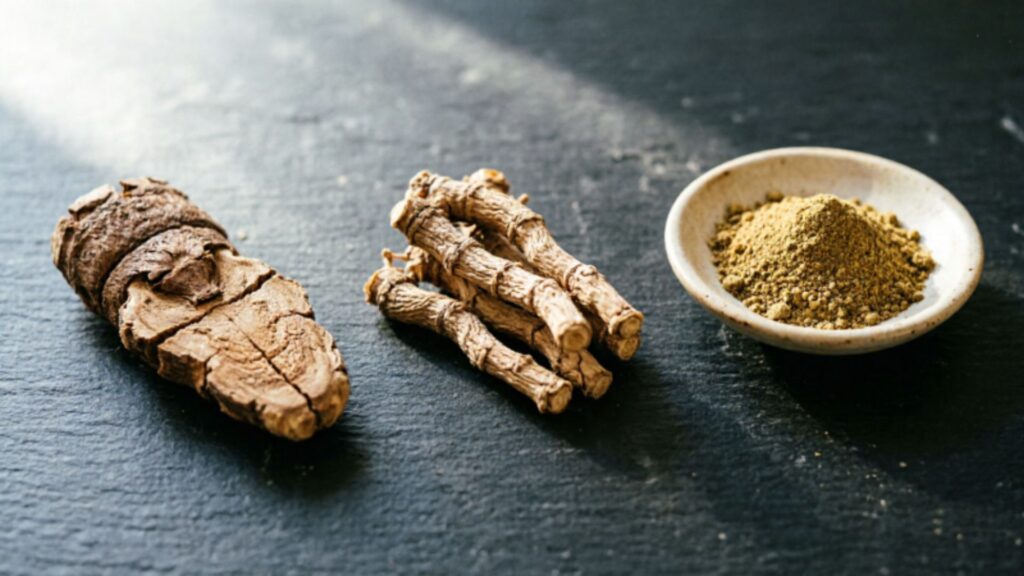
What herbs can and cannot do for testosterone
The herbal testosterone support category is crowded, noisy, and wildly uneven in terms of evidence quality. Some plants have accumulated a genuine body of human clinical research. Others are riding on rat studies and podcast recommendations. Knowing which is which matters, because the difference between the two is not always obvious from a supplement label.
Three herbs dominate this conversation in 2026: tongkat ali, fadogia agrestis, and ashwagandha. They are often grouped together in marketing and in supplement stacks, but they work through very different mechanisms, have very different evidence profiles, and are appropriate for very different situations.
Tongkat ali: the most studied option in the category
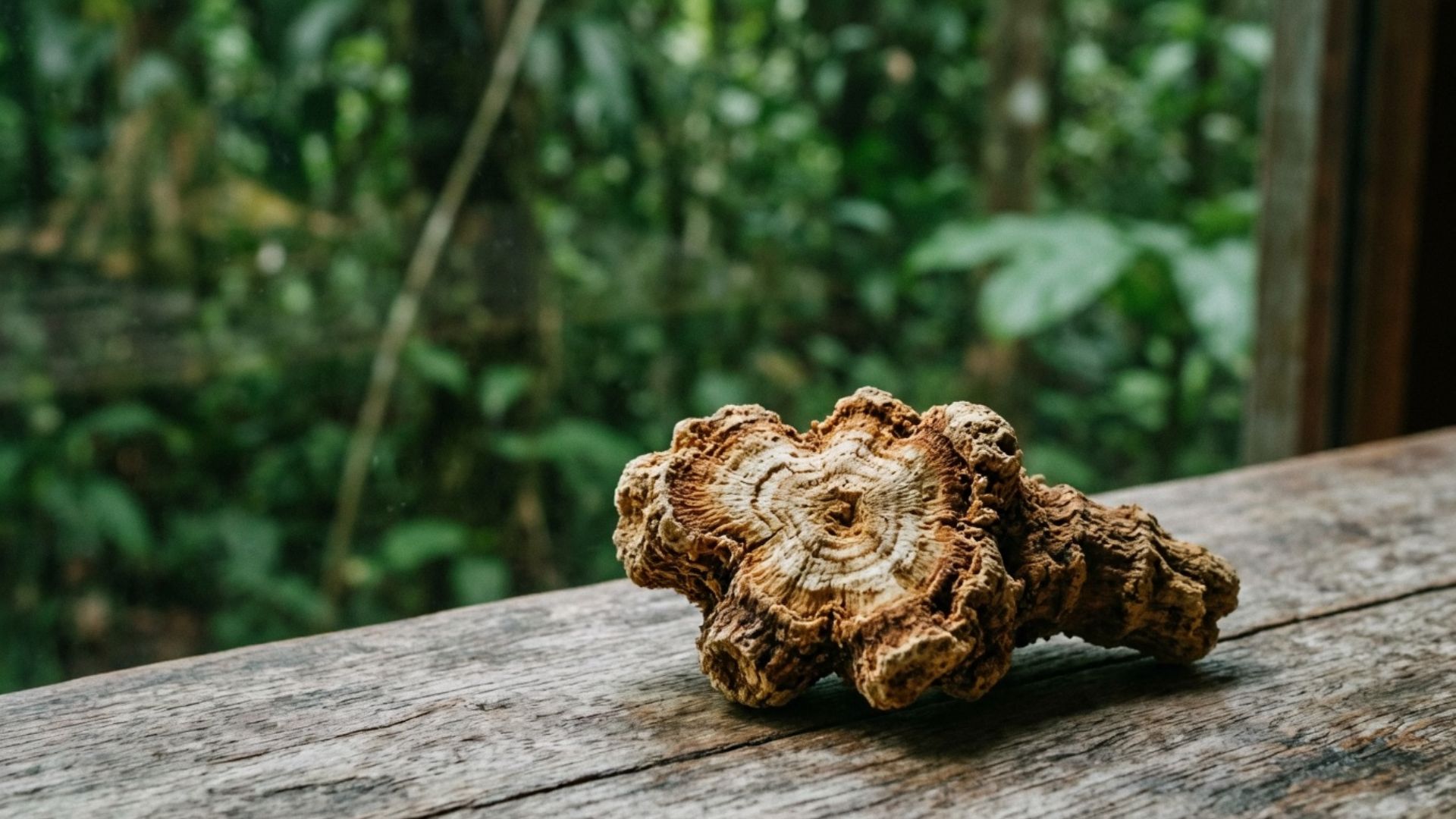
Tongkat ali, known scientifically as Eurycoma longifolia, is a root native to the rainforests of Malaysia and Indonesia. It has been used for centuries in traditional Southeast Asian medicine as a general tonic and vitality herb. What separates it from most of its competitors in the modern supplement market is that it has been the subject of multiple human clinical trials using standardized extracts with documented bioactive content.
The proposed mechanism centers on compounds called quassinoids, particularly eurycomanone, which appear to stimulate testosterone production through the hypothalamic-pituitary-gonadal axis and may also inhibit aromatase, the enzyme that converts testosterone into estrogen. The net effect, when the research works in its favor, is an increase in free testosterone specifically. Free testosterone is the biologically active form, not bound to carrier proteins, and arguably more relevant to the symptoms men actually experience than total testosterone alone.
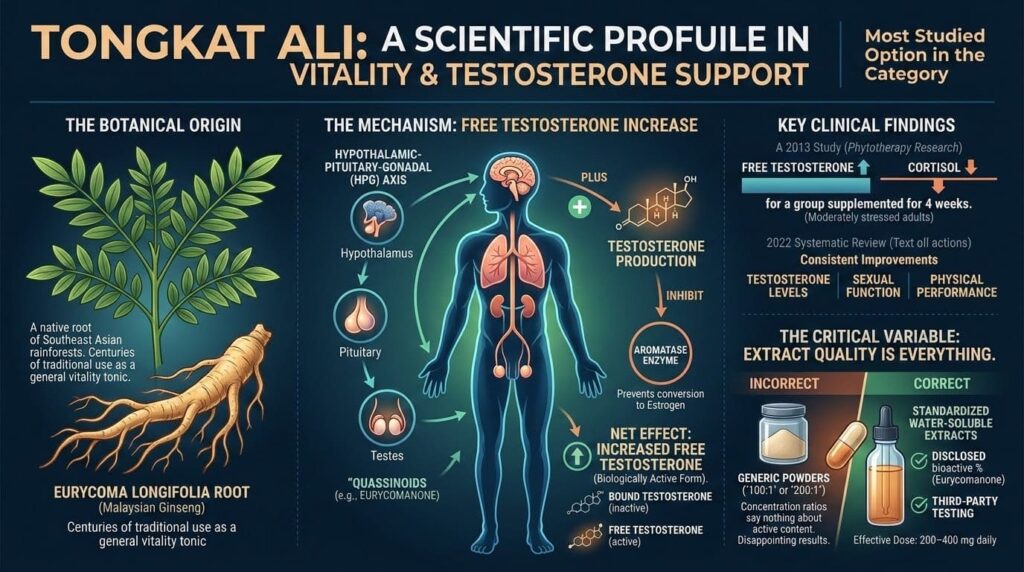
A 2013 study published in Phytotherapy Research found that moderately stressed adults who supplemented with a standardized tongkat ali extract for four weeks showed significant increases in free testosterone alongside a measurable reduction in cortisol. A 2022 systematic review compiled data from multiple human trials and found consistent improvements in testosterone, sexual function, and physical performance, with the strongest results clustering around standardized extracts at doses between 200 and 400 mg per day.
The critical variable is extract quality. Products labeled “100:1” or “200:1” describe concentration ratios relative to raw herb but say nothing about actual eurycomanone content. The trials that produced positive results used water-soluble standardized extracts with disclosed bioactive percentages and third-party testing. Generic tongkat ali powders are a different product, and treating them as equivalent is where a lot of disappointing results come from.
For men curious about the full clinical picture, the detailed breakdown of tongkat ali’s mechanisms, effective forms, and dosing is worth reading as a standalone resource on tongkat ali and testosterone research.
Fadogia agrestis: promising mechanism, missing human data
Fadogia agrestis became a mainstream supplement name almost overnight, propelled by high-profile podcast endorsements and striking animal research showing testosterone increases in rodent models. The proposed mechanism, that it may mimic luteinizing hormone or stimulate Leydig cell activity directly, is genuinely interesting if it translates to humans.
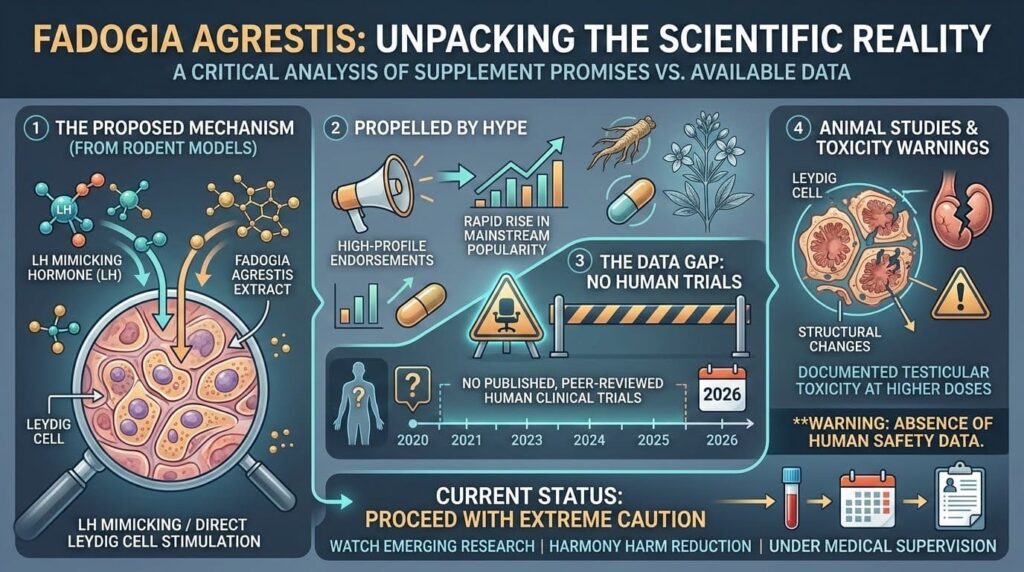
The complication is that it has not been tested in humans. As of 2026, there are no published, peer-reviewed human clinical trials evaluating fadogia agrestis for testosterone support, safety, or optimal dosing. Every claim about its effects in men is extrapolated from rodent models, which fail to predict human outcomes with troubling frequency.
More concerning is that some of the same animal studies that showed testosterone increases also documented evidence of testicular toxicity at higher doses, specifically structural changes in the Leydig cells responsible for testosterone production. That finding does not make fadogia agrestis automatically dangerous at typical supplemental doses in humans. But it does make the absence of human safety data significantly more relevant than it would be for an herb with a cleaner preclinical profile.
Cycling protocols, using the supplement for defined periods followed by breaks, are commonly recommended as a precautionary measure. That is reasonable harm reduction. It is not a validated safety guarantee. The honest position is to watch the emerging research closely, and if using it, to do so under medical supervision with baseline bloodwork and regular follow-up. The complete breakdown of fadogia agrestis safety concerns and what the animal studies actually found covers this territory in considerably more depth.
Ashwagandha: the cortisol angle most men overlook
Ashwagandha is frequently marketed as a testosterone booster, which is technically accurate and also somewhat misleading. It does not stimulate testosterone the way luteinizing hormone does. It works upstream, by reducing cortisol, which in chronically stressed men acts as a sustained brake on the entire hormonal axis responsible for testosterone production.
When cortisol is chronically elevated, the hypothalamus reduces its output of gonadotropin-releasing hormone, the pituitary responds with less luteinizing hormone, and the testes receive a weaker production signal. This is an ancient survival trade-off. A body under persistent stress prioritizes stress chemistry over reproductive chemistry. Ashwagandha addresses that suppressive mechanism directly rather than adding a stimulatory signal on top of it.
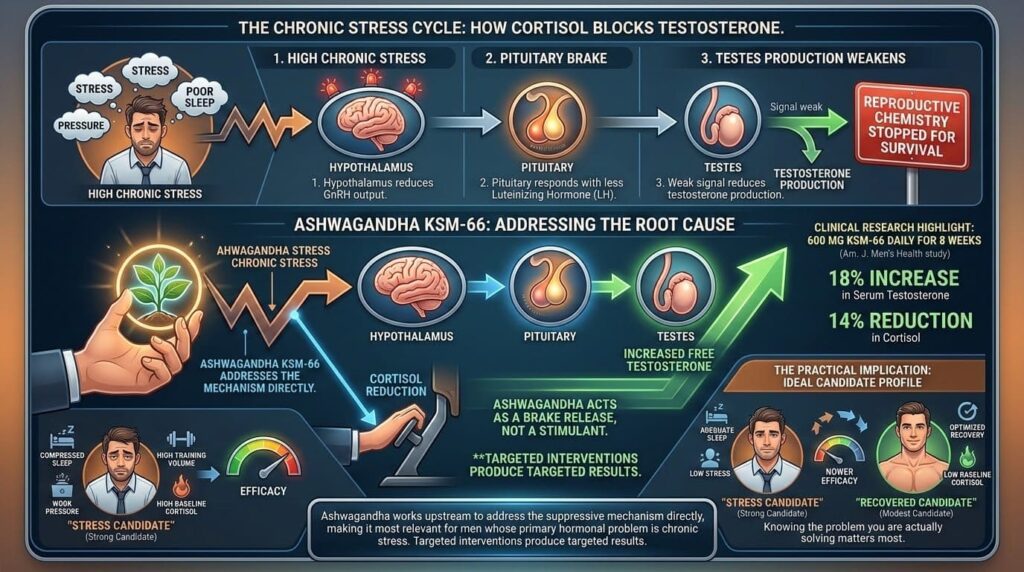
The clinical research is genuinely compelling. A double-blind, placebo-controlled study published in the American Journal of Men’s Health found that men taking 600 mg of KSM-66 ashwagandha extract daily for eight weeks showed an 18% increase in serum testosterone compared to placebo, alongside a 14% reduction in cortisol. KSM-66 is a root-only standardized extract and the form used in most testosterone-relevant trials.
The practical implication is that ashwagandha is most relevant for men whose primary hormonal problem originates in chronic stress. A man who is well-recovered, sleeps adequately, and carries low baseline cortisol may find the testosterone effect modest. A man who is running on compressed sleep, sustained work pressure, and high training volume is a much stronger candidate. Targeted interventions produce targeted results, and knowing which problem you are actually solving matters more than following a generic stack.
| Herb | Human Trials | Mechanism | Best Candidate |
| Tongkat ali | Multiple RCTs | HPG axis stimulation, aromatase inhibition | Men in low-normal range, moderately stressed |
| Fadogia agrestis | None published | LH mimicry (animal data only) | Not recommended without human safety data |
| Ashwagandha | Multiple RCTs | Cortisol reduction, HPG support | Chronically stressed men |
The herbal layer is real and, for the right person with the right product, meaningful. But it rests on a foundation that has nothing to do with herbs, and that foundation is where most men should start.
Section 2: The nutritional foundation

Before the herbs, check the basics
There is a particular kind of frustration that comes from doing everything right on the supplement side and still feeling like nothing is working. The training is consistent. The herbal extracts are high quality. The stack looks good on paper. And yet the results are underwhelming.
More often than most people expect, the explanation is not the supplements. It is what is missing underneath them. Two nutrients sit so directly inside the testosterone production pathway that their deficiency creates a hard biochemical ceiling on what any herbal intervention can accomplish. Zinc and vitamin D are not supporting actors in the hormonal health story. For a significant percentage of American men, they are the story.
Zinc: the mineral your hormones cannot function without
Zinc is involved in more than 300 enzymatic reactions in the human body. That is not a figure designed to impress. It reflects how genuinely foundational this mineral is to cellular metabolism, protein synthesis, immune signaling, and hormone production. In the specific context of testosterone, zinc does three things that matter directly.
It acts as a cofactor in the enzymatic conversion of cholesterol into steroid hormones. Testosterone is a steroid hormone. That conversion process requires zinc to run properly. A zinc-deficient system is a constrained one regardless of what else is present.
It inhibits aromatase, the enzyme responsible for converting testosterone into estradiol, a form of estrogen. Men carrying excess body fat tend to have higher aromatase activity because adipose tissue is rich in that enzyme. Zinc helps moderate that conversion at a biochemical level.
It supports healthy pituitary function, which matters because the pituitary produces luteinizing hormone, the primary upstream signal that tells the testes to make testosterone in the first place.
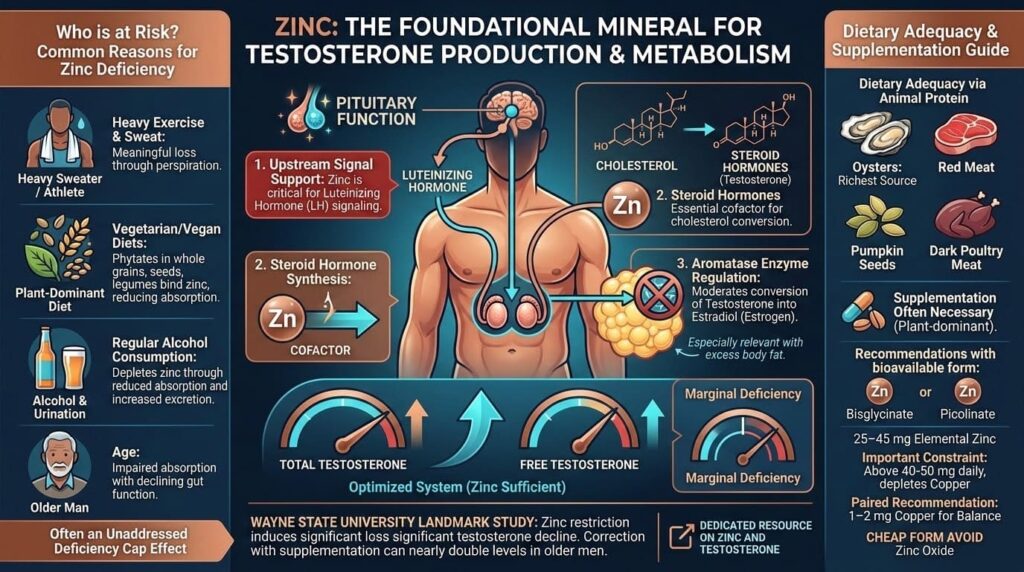
The research connecting zinc deficiency to testosterone decline is not preliminary or theoretical. A landmark study from Wayne State University demonstrated that researchers could induce significant testosterone decline in healthy young men simply by restricting their dietary zinc intake, and then nearly double testosterone levels in marginally deficient older men by correcting that deficiency through supplementation. That is a dramatic effect from a mineral most men assume they are getting enough of.
Zinc deficiency is more common than it appears, and several groups face elevated risk. Heavy exercise and regular sweating cause meaningful zinc loss through perspiration. For men on plant-dominant or vegetarian diets, a structural absorption problem exists: whole grains, legumes, and seeds contain phytates, compounds that bind zinc in the digestive tract and reduce how much reaches circulation. Regular alcohol consumption depletes zinc through both reduced absorption and increased urinary excretion. Aging also plays a role, as gut function changes reduce zinc absorption efficiency in older men.
The overlap between those groups and the men most actively researching testosterone support is not coincidental. A meaningful percentage of men shopping for hormonal supplements are doing so on top of an unaddressed deficiency that caps the effectiveness of everything they add above it.
When supplementing, form matters. Zinc bisglycinate and zinc picolinate are among the most bioavailable options. Zinc oxide, common in cheaper products and multivitamins, absorbs poorly and should generally be avoided when hormonal support is the goal. Doses studied in relation to testosterone support fall between 25 and 45 mg of elemental zinc per day. One important constraint: chronic intake above 40 to 50 mg daily depletes copper, another essential mineral. Pairing zinc with 1 to 2 mg of copper addresses that balance.
The dietary picture is straightforward. Oysters are by a significant margin the richest food source of zinc available. Red meat, pumpkin seeds, and dark poultry meat are consistent contributors. For men who eat animal protein regularly, dietary adequacy is achievable. For those who do not, supplementation is often necessary rather than optional.
The full breakdown of zinc’s role in the testosterone production pathway, including deficiency risk by demographic and a complete supplementation guide, is covered in the dedicated resource on zinc and testosterone.
Vitamin D: the hormone hiding as a vitamin
Calling vitamin D a vitamin is one of the more consequential mislabelings in nutritional science, and it has contributed to decades of underestimating its significance in hormonal health.
Vitamin D is synthesized in the skin from cholesterol in response to ultraviolet B radiation, transported to the liver and kidneys for conversion into its active form, and then distributed to receptor sites in virtually every tissue in the human body. That process describes a hormone, not a dietary micronutrient. More specifically, it describes a prohormone, a precursor compound that the body converts into a biologically active signaling molecule.
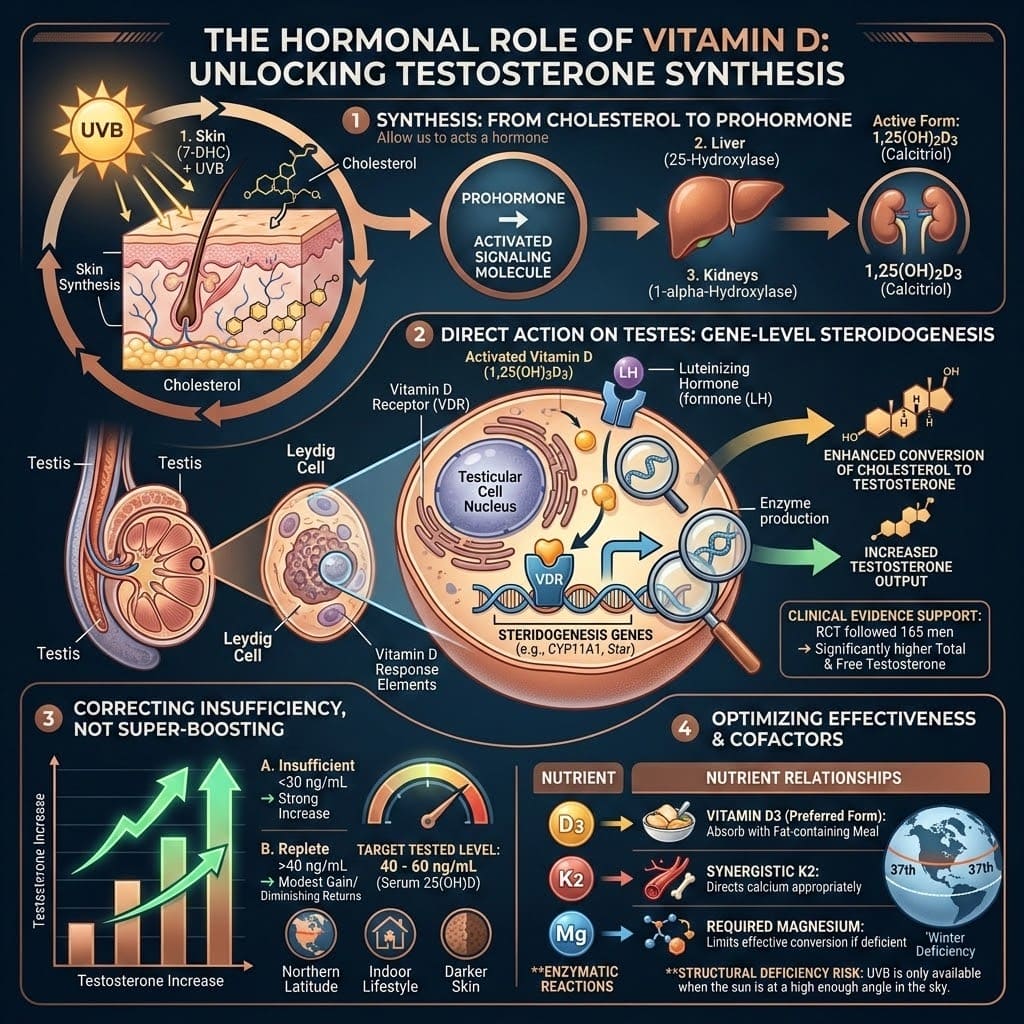
The connection to testosterone is not indirect or correlational at a surface level. Leydig cells, the specialized testicular cells that produce testosterone in response to luteinizing hormone signals, carry vitamin D receptors. Research has identified vitamin D response elements in the genes that govern steroidogenesis, which is the biological process of converting cholesterol into steroid hormones including testosterone. That is a direct mechanistic link between vitamin D status and testosterone synthesis capacity, not an association found in observational data alone.
The clinical evidence supports that mechanism. A randomized controlled trial published in Hormone and Metabolic Research followed 165 men who received either 3,332 IU of vitamin D daily or a placebo for twelve months. Men in the vitamin D group showed significantly higher total testosterone, free testosterone, and bioactive testosterone at the end of the trial. A 2023 meta-analysis confirmed the pattern: vitamin D supplementation produced statistically significant increases in testosterone in men who were insufficient at baseline, with more modest effects in men who were already replete.
That last detail is important. Like zinc, vitamin D appears to operate as a deficiency corrector rather than a supraphysiological booster. Correcting insufficiency unlocks hormonal capacity that was being constrained. Adding more beyond sufficiency produces diminishing returns.
The deficiency problem is structural and widespread. Ultraviolet B radiation sufficient for vitamin D synthesis is only available when the sun is at a high enough angle in the sky. Men living above roughly 37 degrees north latitude, which covers the majority of the continental United States north of Richmond, Virginia and the California central coast, produce virtually no vitamin D from sun exposure between November and March. Add indoor work schedules, consistent sunscreen use, and modern life spent largely in climate-controlled environments, and the conditions for chronic insufficiency are essentially built into the American lifestyle for a large portion of the year.
The standard blood test for vitamin D status measures serum 25-hydroxyvitamin D, written as 25(OH)D. The conventional threshold for deficiency sits at 20 ng/mL, but the hormonal research clusters its positive findings in populations with levels above 30 ng/mL, and some studies suggest benefits extending up to 50 to 60 ng/mL. Aiming for a tested level between 40 and 60 ng/mL is a reasonable target for men focused on hormonal health.
Vitamin D3 is the preferred supplemental form. It absorbs best with a fat-containing meal and works synergistically with vitamin K2, which helps direct calcium appropriately and is worth including in any long-term D3 supplementation protocol. Magnesium is also required for the enzymatic conversion of vitamin D into its active form, meaning magnesium deficiency can quietly limit the effectiveness of even adequate vitamin D supplementation.
| Nutrient | Testosterone Mechanism | Common Deficiency Risk | Optimal Testing Marker |
| Zinc | Steroidogenesis cofactor, aromatase inhibition | Heavy exercisers, plant-based diets, alcohol use | Serum zinc, though imperfect |
| Vitamin D | Leydig cell receptor activation, gene expression in steroidogenesis | Northern latitude, indoor lifestyle, darker skin | Serum 25(OH)D |
The deeper resource on vitamin D and its direct hormonal connection covers testing thresholds, supplementation protocols, and the co-factor relationships in full detail.
Why the nutritional foundation comes before everything else
There is a logic to the order here that the supplement industry rarely acknowledges because it does not sell well. An herbal extract operating on top of a zinc-deficient or vitamin D-insufficient system is working against a biochemical constraint that the herb was never designed to overcome.
Fix the foundation first. Verify nutritional adequacy through testing rather than assumption. Address deficiencies before adding herbal support. The research on both nutrients shows that correction of insufficiency produces meaningful hormonal changes on its own, sometimes dramatic ones, without any additional intervention.
That is not an argument against herbal support. It is an argument for sequencing intelligently rather than stacking indiscriminately.
Section 3: The lifestyle factor that outperforms everything else

The intervention nobody wants to sell you
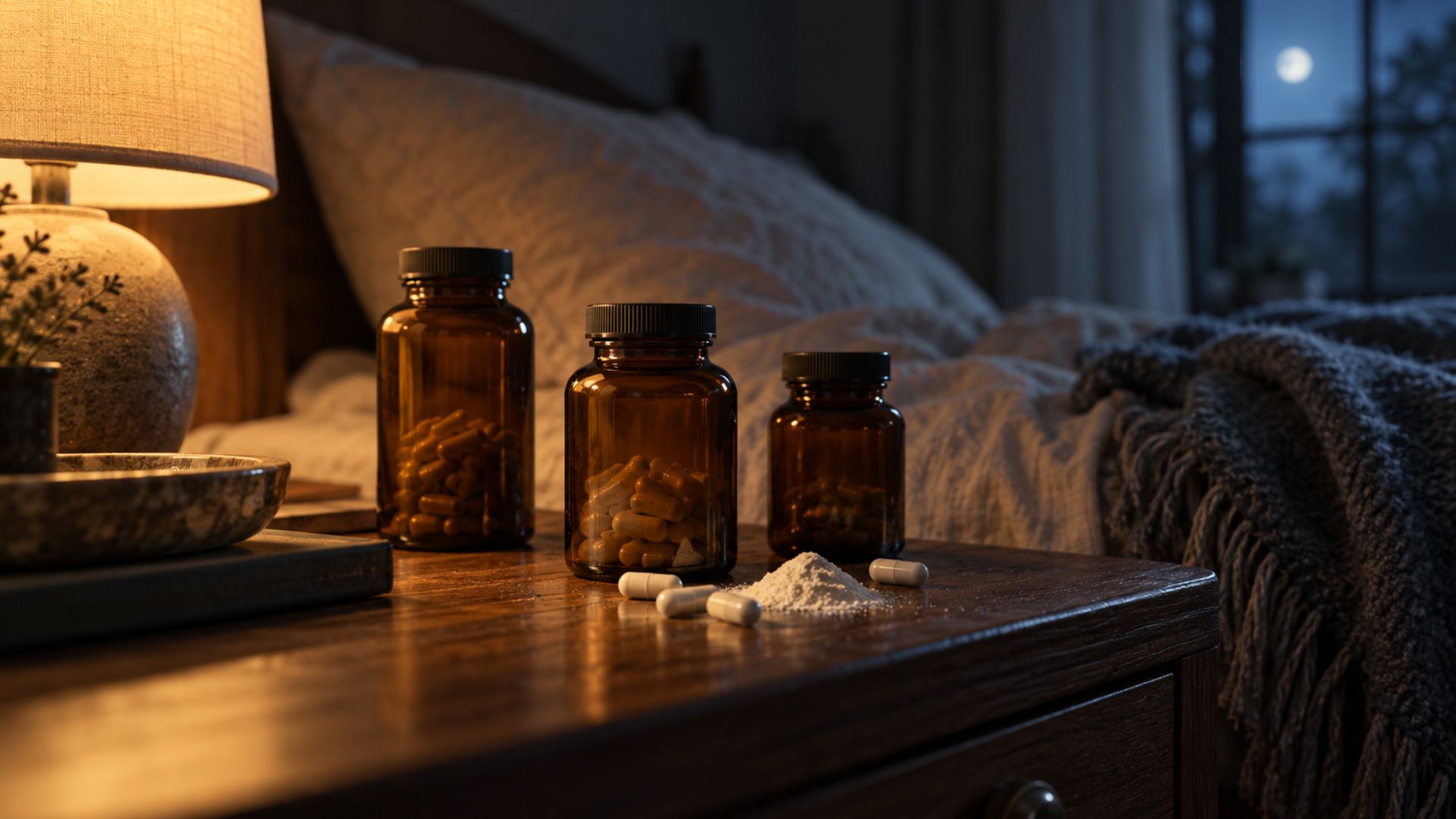
If the entire field of natural testosterone support had to be distilled into a single recommendation, it would not be an herb. It would not be a mineral. It would be sleep. Specifically: consistent, adequate, architecturally sound sleep. The evidence behind this is not subtle, and the mechanism is not speculative. Sleep is the primary hormonal manufacturing window in the male body, and treating it as a background variable while optimizing everything else is one of the more expensive mistakes a man can make with his health.
I spent years doing exactly that. Researching supplements at midnight on a phone screen, optimizing a hormonal stack while actively destroying the hormonal environment those supplements were supposed to support. The contradiction was obvious in hindsight. It was invisible in the moment, which is precisely how most men experience it.
No supplement company profits from you sleeping better. That is worth keeping in mind when evaluating where sleep sits in the hierarchy of testosterone interventions relative to how much attention it receives in the content men actually consume.
What testosterone production actually looks like during sleep
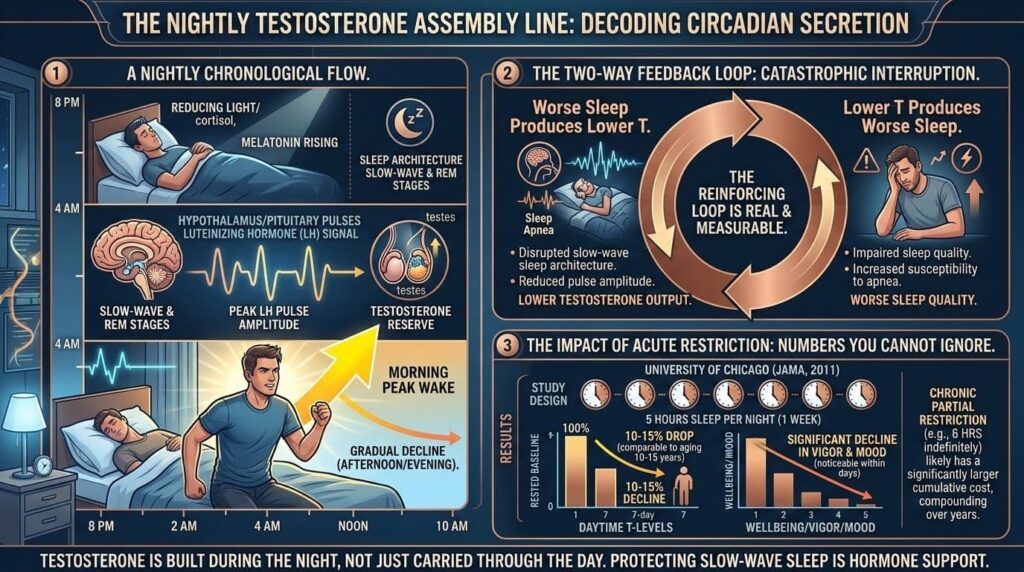
Testosterone secretion follows a circadian pattern. Levels begin rising in the early hours of the morning, peak shortly after waking, and decline gradually through the afternoon and evening. That morning peak is built during the night, primarily during slow-wave sleep and REM stages, through hormonal pulses orchestrated by the hypothalamus and pituitary.
Luteinizing hormone, the upstream signal that tells the testes to synthesize testosterone, is released in pulses during sleep. The frequency and amplitude of those pulses determine how much testosterone is available the following morning. Disrupt the sleep stages where those pulses are most concentrated, and you directly reduce testosterone output. This is a documented physiological chain of causation, not a theoretical association.
The relationship reinforces itself in both directions, which is what makes it particularly difficult to interrupt once it gets going. Declining testosterone impairs sleep quality and increases susceptibility to sleep-disordered breathing including obstructive sleep apnea. Sleep apnea fragments sleep architecture in the slow-wave stages where testosterone secretion is highest. Lower testosterone produces worse sleep. Worse sleep produces lower testosterone. The cycle is real and measurable.
The study that put numbers on what most men were ignoring
In 2011, researchers at the University of Chicago published findings in the Journal of the American Medical Association that deserved considerably more mainstream attention than they received. A group of healthy young men, average age 24, with no sleep disorders or hormonal conditions, were restricted to five hours of sleep per night for one week. Daytime testosterone levels fell by 10 to 15% compared to their own fully-rested baseline.
One week. Healthy young men at peak hormonal age. A testosterone decline comparable in magnitude to aging ten to fifteen years.
The study also documented significant declines in wellbeing, vigor, and mood over the same period. These were not subtle background changes that required sensitive measurement to detect. They were noticeable within days.
What makes that finding particularly relevant in 2026 is what it implies about chronic partial sleep restriction, the kind that is not dramatic enough to register as a problem but persistent enough to compound over months and years. The one-week trial captured an acute effect in controlled conditions. The cumulative hormonal cost of running on six hours indefinitely, layered on top of chronically elevated cortisol and disrupted circadian rhythm, is almost certainly considerably larger than any single study captures.
Cortisol: the amplifier that doubles the damage
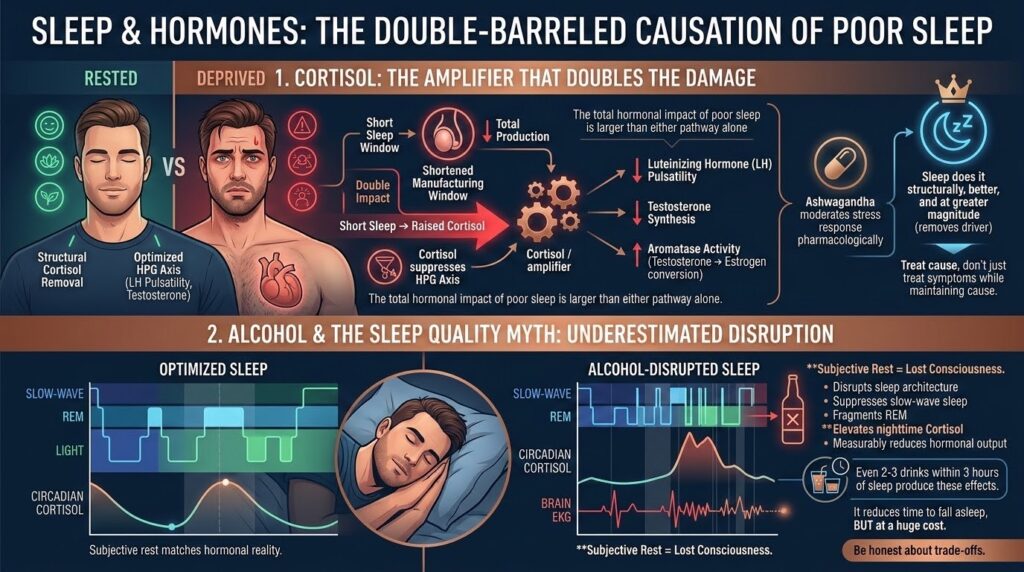
Sleep deprivation does not suppress testosterone only by shortening the manufacturing window. It simultaneously raises cortisol, and elevated cortisol suppresses the HPG axis through a completely separate mechanism. The two pathways compound each other in a way that makes the total hormonal impact of poor sleep larger than either pathway alone would suggest.
A single night of poor sleep elevates cortisol the following morning. Sustained poor sleep keeps cortisol chronically elevated. Chronically elevated cortisol reduces luteinizing hormone pulsatility, constrains testosterone synthesis, and increases aromatase activity, the enzymatic conversion of testosterone into estrogen. A man supplementing with adaptogens to lower cortisol while continuing to sleep five to six hours on a disrupted schedule is treating a symptom while maintaining the primary cause.
This is why the conversation about ashwagandha and the conversation about sleep belong together. Both address cortisol. Sleep does it structurally, by removing the primary driver. Ashwagandha does it pharmacologically, by moderating the stress response. Sleep does it better, at greater magnitude, and at zero cost. Ashwagandha is most useful when it helps the nervous system actually get there.
Alcohol and the sleep quality myth
Alcohol is the most consistently underestimated disruptor of sleep architecture in men’s health conversations, and the misunderstanding runs in a specific direction. It does reduce the time it takes to fall asleep. But it also suppresses slow-wave sleep, fragments REM, elevates nighttime cortisol, and disrupts overall sleep architecture in ways that measurably reduce the hormonal output of that night.
The sleep that follows alcohol consumption feels like rest because loss of consciousness feels like rest. The hormonal reality of that night does not reflect what the subjective experience suggests. Even two to three drinks consumed within three hours of sleep produce these effects in research conditions. This is not an argument for total abstinence. It is an argument for honesty about trade-offs when hormonal optimization is the stated goal.
Practical strategies with actual research support
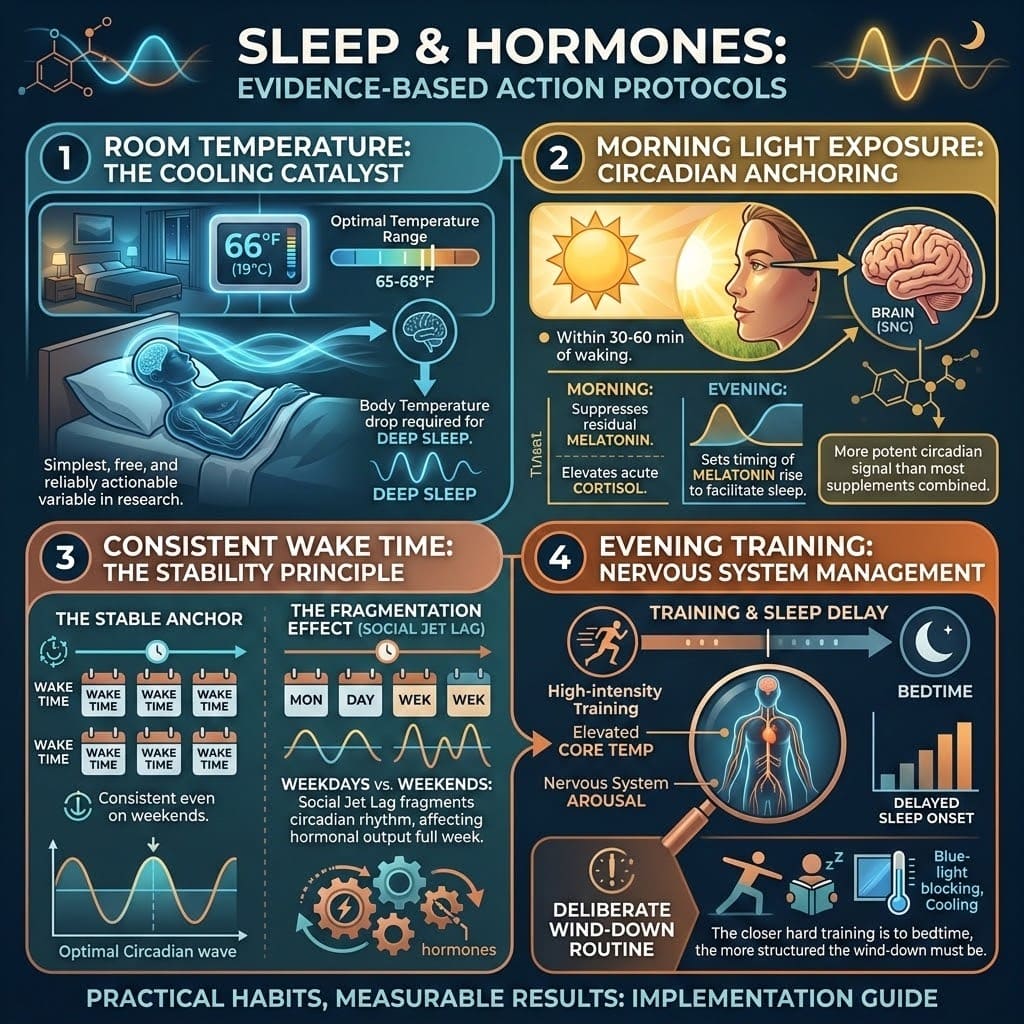
Room temperature is one of the most reliably actionable variables in sleep quality research. Core body temperature must drop to initiate and maintain deep sleep. A bedroom cooled to somewhere between 65 and 68 degrees Fahrenheit supports that process in a way that is simple, free, and consistently documented in the literature.
Morning light exposure within the first thirty to sixty minutes of waking is the most potent natural circadian signal available. Bright outdoor light suppresses residual melatonin, elevates morning cortisol in the appropriate acute way, and sets the timing of the evening melatonin rise that facilitates falling asleep later. This single habit, done consistently, does more for circadian alignment than most sleep supplements combined.
Consistent wake time, maintained even on weekends, anchors circadian rhythm more effectively than consistent bedtime. Sleep timing research consistently finds that social jet lag, the shift in sleep schedule between weekdays and weekends, fragments circadian rhythm in ways that affect hormonal output across the full week. The weekend sleep-in that feels like recovery is, hormonally speaking, more complicated than it appears.
High-intensity training within two to three hours of sleep can delay sleep onset and reduce slow-wave sleep in some men, not through cortisol alone but through core temperature elevation and nervous system arousal. This does not mean avoiding evening training. It means the closer hard training is to bedtime, the more deliberately the wind-down routine needs to be structured.
Where sleep sits in the full protocol
| Intervention | Cost | Evidence Quality | Effect on Testosterone |
| 7 to 9 hours quality sleep | Zero | Extensive human data | 10 to 15% decline from restriction in one week |
| Zinc correction (deficient men) | Low | Robust RCT data | Up to near-doubling in deficient populations |
| Vitamin D correction (insufficient men) | Low | Multiple RCTs | Significant increase vs placebo over 12 months |
| Ashwagandha KSM-66 | Moderate | Multiple RCTs | Approx. 18% increase in stressed men |
| Tongkat ali standardized | Moderate | Multiple RCTs | Consistent free testosterone increases |
| Fadogia agrestis | Moderate | No human trials | Unknown |
The table above is not a ranking of importance. It is a map of what the evidence actually supports and at what cost. Sleep sits at the top not because it has the largest effect size in a single trial, but because it is the operating environment in which every other intervention has to function. A man who is zinc-replete, vitamin D sufficient, and supplementing with high-quality herbal extracts, but sleeping six fragmented hours a night, is running every one of those interventions in a hormonally suppressed environment that they were not designed to overcome.
The resource on how sleep directly governs nightly testosterone production covers the mechanisms, the study findings, and the practical optimization strategies in considerably more depth, including the specific role of sleep architecture versus total duration and why the two are not interchangeable.
Sleep is not the unsexy recommendation that gets mentioned before the real advice starts. It is the real advice. Everything else in the natural testosterone support framework works better when the foundation it depends on is actually being honored.
What the research actually says: putting it together
There is a pattern that runs through everything covered in this article, and it is worth naming directly before closing.
The interventions with the strongest evidence are not the most exciting ones. Correcting a zinc deficiency. Getting enough vitamin D. Sleeping seven to nine hours consistently. These are not the recommendations that drive supplement sales or generate podcast episodes. They are also the ones most likely to produce meaningful hormonal changes in men who have never addressed them, which is a significant proportion of the men currently researching testosterone support.
The herbal layer is real. Tongkat ali has earned its position at the front of that category through a body of human clinical evidence that most of its competitors cannot match. Ashwagandha, particularly in KSM-66 form, addresses a specific and common problem, cortisol-driven HPG axis suppression, with a mechanism that is coherent and a research record that supports it. These are legitimate tools. They just work best when they are addressing a real identifiable problem rather than filling a gap that foundational nutrition and sleep should have covered first.
Fadogia agrestis is the honest outlier. The mechanism is interesting. The human data does not exist yet. Enthusiasm is not a substitute for clinical evidence, and in a category where some of the preclinical findings include toxicity signals, the absence of human trials is not a minor caveat to work around. It is the central fact to sit with.
The bloodwork conversation nobody is having
One of the more useful things a man can do before spending money on any of this is get a baseline hormone panel. Total testosterone, free testosterone, sex hormone-binding globulin, luteinizing hormone, estradiol, and serum 25-hydroxyvitamin D as a starting point. Zinc testing through serum levels is imperfect but useful as a rough indicator alongside dietary history.
The reason this matters is practical. Natural testosterone support without baseline data is largely guesswork. With a panel, patterns emerge. Low free testosterone paired with elevated SHBG points to a different primary problem than low total testosterone with normal SHBG. A 25(OH)D level of 18 ng/mL means vitamin D should be the priority before anything else. Chronically dysregulated cortisol makes a man a strong ashwagandha candidate in a way that a low-stress, well-recovered man simply is not.
Targeted interventions produce targeted results. The clearer the picture of what is actually constrained, the more rational the protocol becomes.
Sequencing matters more than stacking
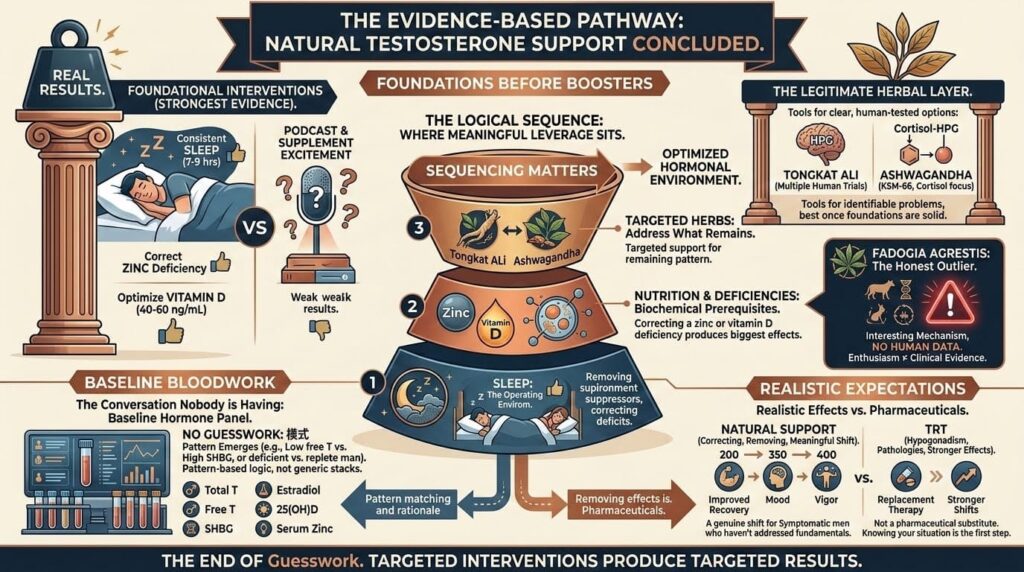
The supplement industry is built around the idea that more is better and that the right combination unlocks something no single ingredient can. The research on natural testosterone support tells a more nuanced story. The biggest effects in the literature come from correcting deficiencies and removing suppressors, not from adding stimulants on top of an already-stressed system.
Sleep is the operating environment. Zinc and vitamin D are the biochemical prerequisites. The herbal layer addresses what remains once those foundations are solid. That sequence is not arbitrary. It reflects what the evidence actually shows about where the meaningful leverage points sit.
A man who sleeps eight hours, has corrected a zinc deficiency he did not know he had, and maintains a 25(OH)D above 45 ng/mL is not the same physiological candidate for tongkat ali as a man who is deficient in all three. The herb may produce modest results for the first man and significantly more meaningful results for the second, not because of any difference in the supplement but because of the hormonal environment it is operating in.
A word on expectations
Natural testosterone support produces real effects within realistic ranges. It is not a pharmaceutical intervention, and positioning it as one does a disservice to men trying to make honest decisions about their health. What it can do, for the right person addressing the right variables, is meaningfully shift a hormonal picture that has been dragged down by deficiency, stress, and poor recovery habits. That is genuinely significant for men who are symptomatic and have not yet addressed those fundamentals.
It cannot replicate the effect of testosterone replacement therapy in a man with clinical hypogonadism. It cannot overcome years of chronic disease, severe metabolic dysfunction, or structural hormonal pathology through lifestyle and supplementation alone. Knowing which situation you are in is the first honest step.
The research on ashwagandha’s cortisol mechanism and its downstream hormonal effects is a useful place to continue building out this picture, particularly for men whose primary hormonal challenge originates in the stress axis rather than in nutritional gaps or sleep debt.
The goal, at the end of all of this, is not a number on a blood test. It is the energy, the physical capacity, the mental sharpness, and the general sense of function that healthy testosterone levels support. The research offers a credible, evidence-grounded path toward that goal for men willing to address the right variables in the right order.
That path starts with honesty about where you actually are, not where the marketing suggests you could be with the next supplement.