






Two days before my period, a different version of me would show up without warning. Irritable, bloated, exhausted by 3 pm, and completely convinced that everyone around me was being unreasonable.
It took years to connect those days to a pattern. And longer still to find the supplements that actually did something useful about it, rather than just dulling the edges.
Premenstrual syndrome affects between 20 and 40 percent of women in a clinically significant way. Broaden the definition to general premenstrual symptoms and that number climbs to roughly 80 percent of people who menstruate. In 2026, we understand the underlying biology well enough to move past vague recommendations about reducing stress and eating more vegetables. We can now point to specific mechanisms, and to specific interventions that address them directly.
If you have been exploring the complete guide to supplements for women’s hormonal balance, you already know that PMS sits at one corner of a much larger nutritional picture. This article zooms into that corner with clinical specificity.
Why the Luteal Phase hits so hard?
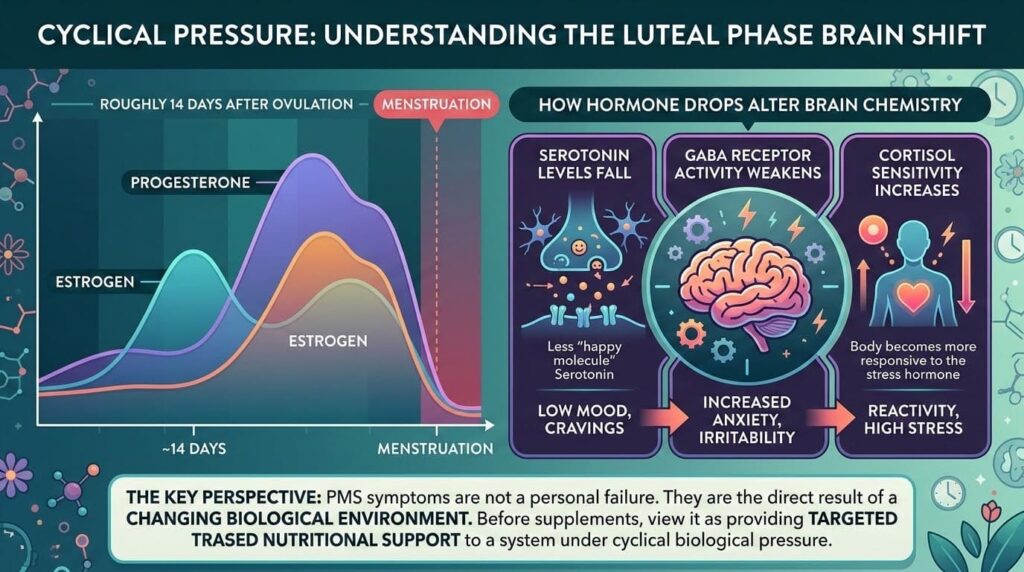
PMS symptoms belong to the luteal phase, the roughly 14 days after ovulation when progesterone rises and estrogen peaks before both drop sharply ahead of menstruation.
During this window, serotonin production falls. GABA receptor activity weakens. Cortisol sensitivity increases. The brain’s chemistry genuinely shifts toward anxiety, reactivity, and low mood, not because something is wrong with you, but because the hormonal environment creates these exact conditions every single cycle.
This is important to understand before reaching for supplements. You are not treating a deficiency in the traditional sense. You are providing targeted nutritional support to a system that is under cyclical biological pressure. That framing changes which interventions make sense and why.
Magnesium Glycinate: the most underrated fix in the protocol
Start here. Almost every evidence-based PMS protocol does.
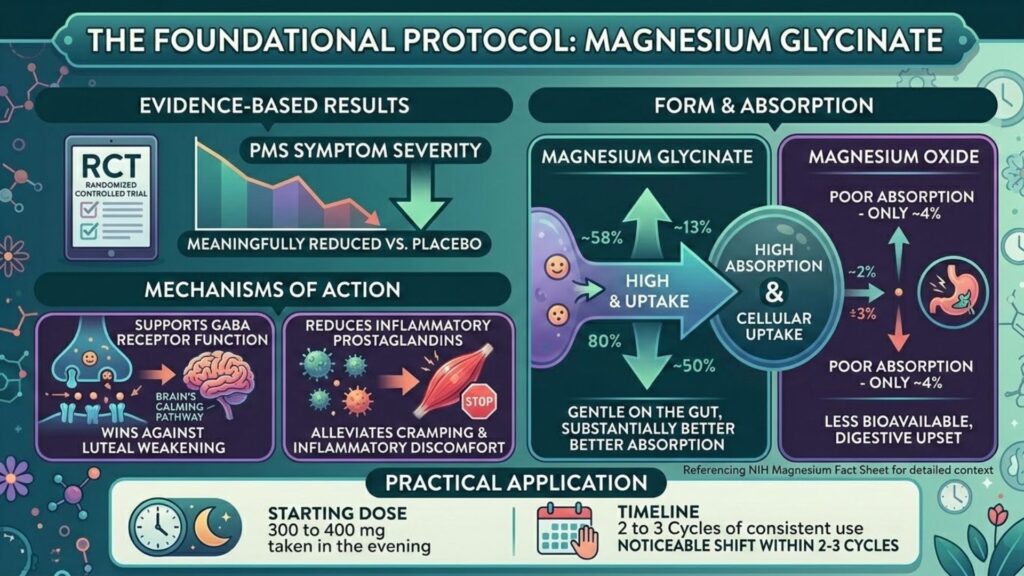
Multiple randomized controlled trials have confirmed that magnesium supplementation meaningfully reduces PMS symptom severity compared to placebo. The mechanisms are well understood. Magnesium directly supports GABA receptor function, which is the brain’s primary calming pathway and precisely the one that weakens during the luteal phase. It also reduces the production of inflammatory prostaglandins, the compounds responsible for cramping and the whole-body inflammatory discomfort that often accompanies the days before menstruation.
The form you choose determines how much of this actually reaches your cells. Magnesium oxide, which dominates the cheap supplement aisle, absorbs at somewhere around four percent. Magnesium glycinate absorbs substantially better, causes almost none of the digestive upset associated with other forms, and is noticeably gentler on the gut. For detailed context on absorption rates and the evidence base, the NIH Office of Dietary Supplements magnesium fact sheet is a solid reference point.
A practical starting dose is 300 to 400 mg taken in the evening. Most women notice a measurable shift within two to three cycles of consistent use.
Vitamin B6: the mood-serotonin bridge
If magnesium is the calming agent, B6 is the construction material for the neurotransmitters the luteal phase depletes.
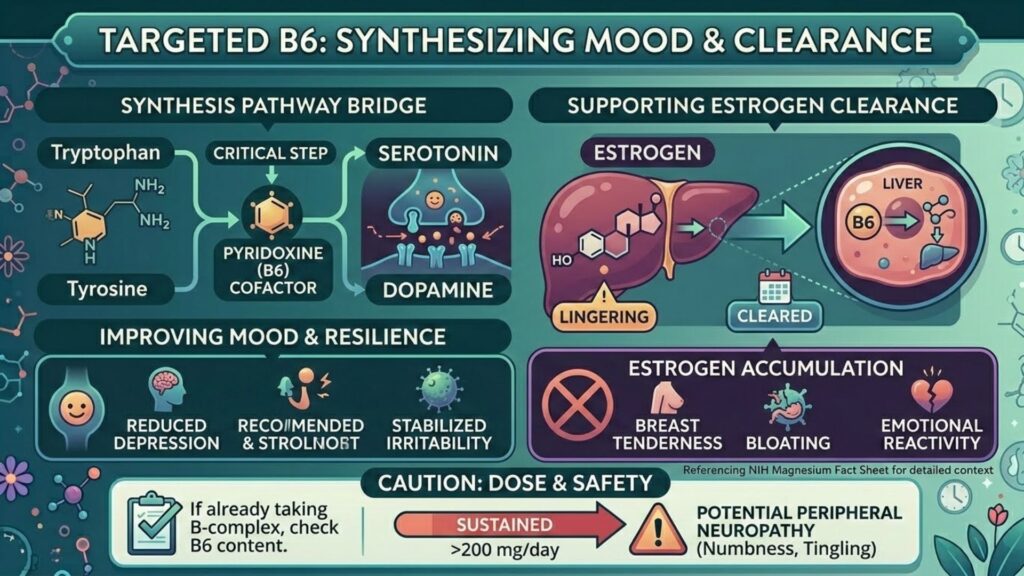
Pyridoxine is an essential cofactor in the synthesis of both serotonin and dopamine. Without adequate B6, those pathways simply cannot produce what the brain needs, regardless of how well everything else is functioning. Research published in the Annals of Clinical and Laboratory Science and replicated in subsequent trials found that women with pronounced premenstrual depression and irritability frequently test low in B6, and that supplementation at 50 to 100 mg per day during the luteal phase consistently improves mood-related symptoms.
B6 also supports hepatic estrogen metabolism, meaning it helps the liver clear estrogen more efficiently. This matters more than most women realize. Estrogen that lingers rather than clearing on schedule accumulates and amplifies symptoms like breast tenderness, bloating, and emotional reactivity.
One caution worth noting: if you already take a B-complex, check the B6 content before adding a standalone supplement. Sustained intake above 200 mg per day over long periods has been linked to peripheral neuropathy in some individuals, so more is not automatically better here.
Chasteberry: the supplement that requires patience
Vitex agnus-castus has centuries of use behind it and a few decades of clinical investigation. The evidence base is smaller than magnesium’s, but what exists is reasonably consistent and points in a clear direction.
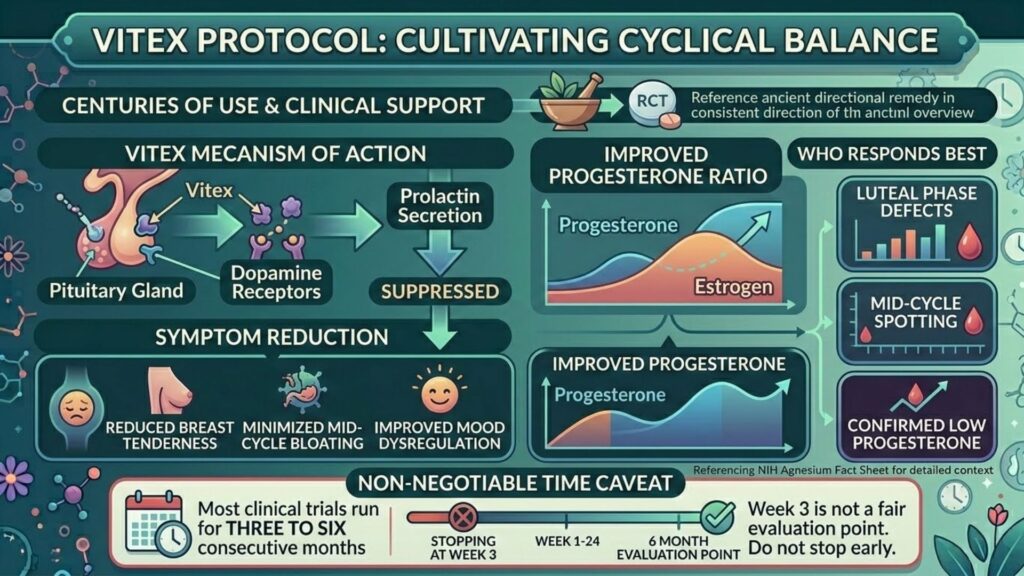
Vitex acts on dopamine receptors in the pituitary gland, which suppresses prolactin secretion. Elevated luteal-phase prolactin is one of the less discussed drivers of breast tenderness, mid-cycle bloating, and mood dysregulation. By reducing it, vitex creates hormonal conditions in which progesterone can rise more appropriately, improving the progesterone-to-estrogen ratio without introducing exogenous hormones.
Women with luteal phase defects, meaning a shortened post-ovulatory phase, mid-cycle spotting, or confirmed low progesterone on blood work, tend to respond most noticeably. The National Center for Complementary and Integrative Health’s chasteberry overview offers a grounded summary of where the current research stands.
The non-negotiable caveat: this supplement requires time. Most clinical trials run vitex for three to six consecutive months before measuring outcomes. Week three is not a fair evaluation point. If you stop before that window closes, you have not given it a real trial.
What about evening primrose oil?
It gets enough attention to warrant a direct answer.
For cyclical breast pain specifically, evening primrose oil has a reasonably solid evidence base. A few controlled trials show improvement in mastalgia with GLA supplementation. For broader PMS symptoms, including mood, cramping, and cognitive fog, the data is considerably thinner.
My honest assessment: evening primrose oil is a reasonable addition for women whose primary PMS complaint is breast tenderness, and the risk profile is low. But if you are prioritizing which supplements to actually commit to, magnesium glycinate and B6 deliver more consistent results across a wider range of symptoms. Start there.
A quick comparison of the core options
| Supplement | Primary benefit | Form to choose | Dose range | Time to notice effect |
|---|---|---|---|---|
| Magnesium | Anxiety, cramps, sleep | Glycinate | 300-400 mg/day | 2-3 cycles |
| Vitamin B6 | Mood, serotonin, estrogen clearance | Pyridoxine or P-5-P | 50-100 mg/day | 1-2 cycles |
| Vitex | Prolactin reduction, cycle regulation | Standardized extract | 20-40 mg/day | 3-6 months |
| Evening Primrose Oil | Breast tenderness | GLA-standardized | 1,000-2,000 mg/day | 2-3 cycles |
Building a stack that fits your specific symptoms
The most common mistake is treating PMS supplementation as a universal protocol. It is not.
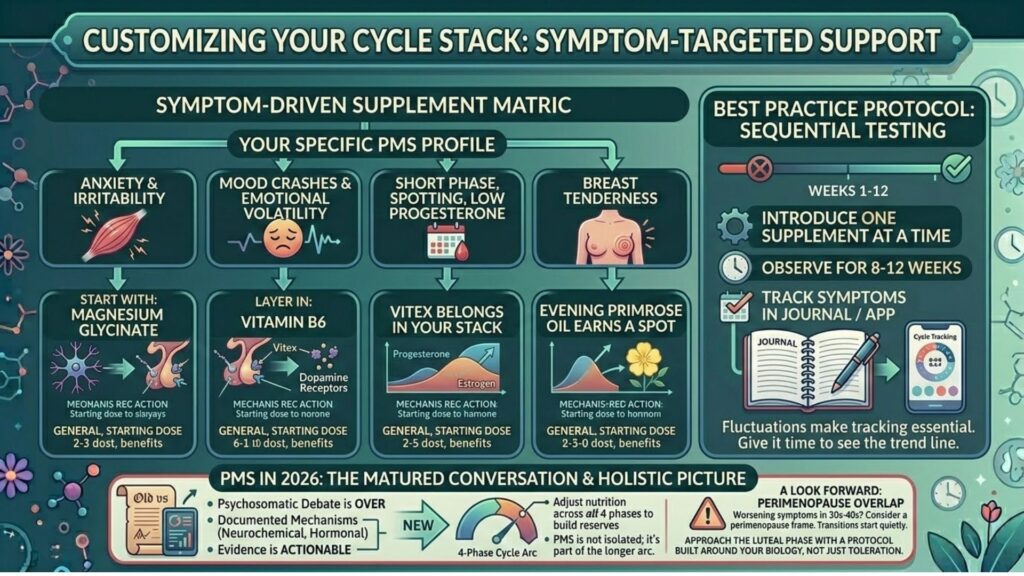
Anxiety and irritability dominate your luteal phase? Start with magnesium glycinate. Mood crashes and emotional volatility are central? Layer in B6. History of a short luteal phase, spotting between periods, or confirmed low progesterone? Vitex belongs in your stack. Breast tenderness is the primary complaint? Evening primrose oil earns a spot.
What you should not do is start everything at once. Introduce one supplement at a time, give it eight to twelve weeks, and track your symptoms with a journal or a cycle tracking app. Hormonal symptoms fluctuate month to month regardless of what you are doing, and a written record is the only way to see whether the actual trend line is moving.
It is also worth understanding that your luteal phase supplement strategy is only one piece of the monthly picture. Women who are also adjusting their nutrition and supplementation across all four cycle phases often find that the luteal phase becomes easier to manage simply because nutritional reserves have been building throughout the rest of the month.
What 2026 tells us that earlier years did not
The conversation around PMS has genuinely matured. Five or ten years ago, clinicians still debated whether premenstrual symptoms were clinically significant or primarily psychosomatic. That debate is largely over. The neurochemical and hormonal mechanisms are documented. The interventions are studied. The evidence is actionable.
What has also shifted is the understanding that PMS does not exist in isolation. It is one signal within a longer hormonal arc. Women who begin experiencing worsening premenstrual symptoms in their late 30s or early 40s may find that what works for perimenopause symptoms is actually the more relevant frame. Hormonal transition has a way of starting quietly.
PMS is not just an inconvenience to push through every month. It is a message from the endocrine system that something in the nutritional or hormonal environment needs support. In 2026, we have specific enough answers to take that message seriously.
If you have managed premenstrual symptoms for years without addressing the underlying mechanisms, what would it feel like to approach those two weeks with a protocol built around what your biology actually needs, rather than what you have simply learned to tolerate?