








The first time I encountered the concept of cycle syncing, I dismissed it as a wellness trend designed for people with more free time than responsibilities. Adjusting what you eat and take based on where you are in your menstrual cycle sounded, frankly, exhausting.
That was a significant misreading of what the science actually shows.
Your menstrual cycle is not one continuous hormonal state. It is four distinct biological environments running back to back every month, each with its own hormonal signature, its own energetic demands, and its own nutritional gaps. Estrogen peaks and falls. Progesterone rises and drops. Iron depletes and needs replacing. Ignoring those shifts does not make them go away. It just means you are running on a fixed supplement protocol through a moving hormonal landscape.
The concept of cycle syncing is grounded in real physiology, and once you understand the mechanisms, the protocol becomes far less complicated than it initially sounds. Women who want the broader hormonal context can start with the complete guide to supplements for women’s hormonal balance, which maps out how nutritional needs shift across every reproductive life stage. This article focuses specifically on the monthly cycle itself, phase by phase, supplement by supplement.
What cycle syncing actually is (And is not)
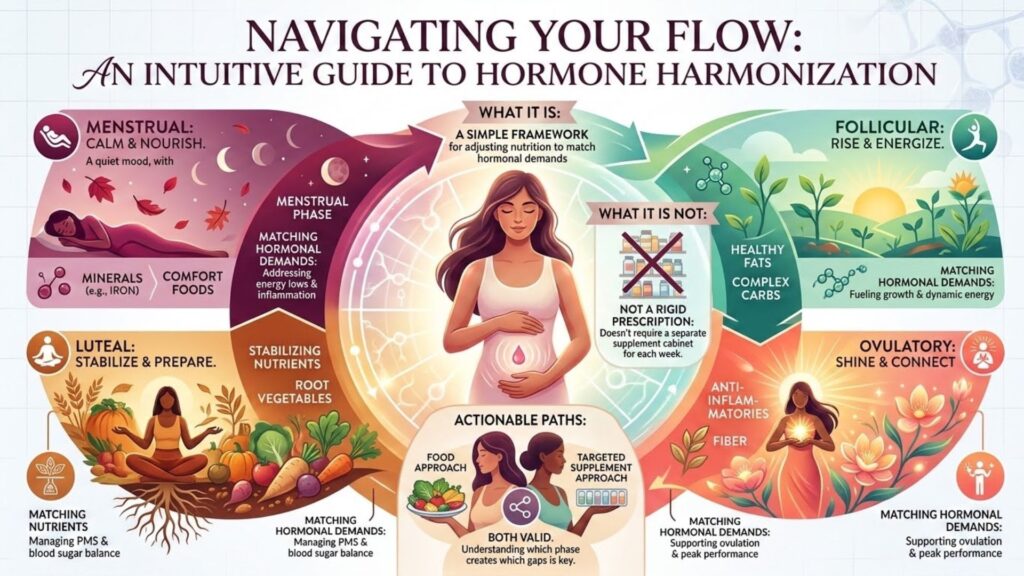
Cycle syncing, as a term, was popularized by nutritionist Alisa Vitti in the early 2010s and has since moved from niche wellness circles into mainstream health culture. In 2026, it appears in clinical nutrition discussions, fertility protocols, and functional medicine practices worldwide.
What it is not: a rigid prescription that requires an entirely separate supplement cabinet for each week of the month.
What it actually is: a simple framework for adjusting a small set of nutritional inputs to match the hormonal demands of each cycle phase. Some women do this with food alone. Others layer in targeted supplements during the phases where their nutritional needs are highest. Both approaches are valid. The key is understanding which phase creates which gaps.
The four phases most commonly used in cycle syncing frameworks are the menstrual phase, the follicular phase, the ovulatory phase, and the luteal phase. Each one has a different hormonal fingerprint. Each one responds to different nutritional inputs.
Phase one: menstrual phase (Days 1 to 5)
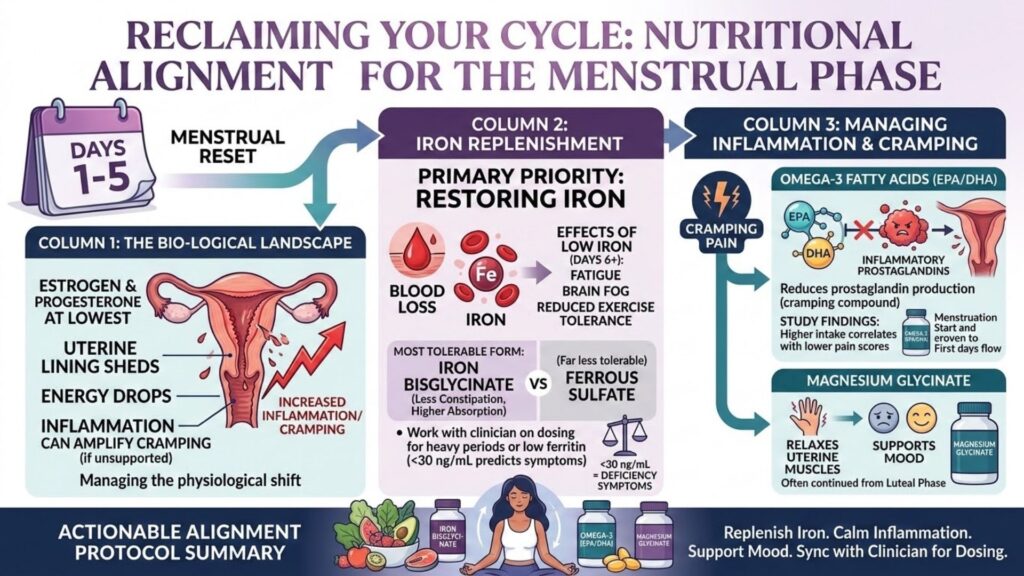
This is where the cycle resets. Estrogen and progesterone are at their lowest. The uterine lining sheds. Energy tends to drop. Inflammation, if the diet is not supporting it, can amplify cramping significantly.
The primary nutritional priority here is iron replenishment.
Blood loss during menstruation depletes iron at a rate that many women’s diets do not fully offset, particularly if periods are heavy. Low iron in the first week of the cycle translates to fatigue, brain fog, and reduced exercise tolerance in the days that follow. The NIH Office of Dietary Supplements iron fact sheet outlines how dramatically absorption rates vary between iron forms, which matters considerably when choosing a supplement.
Iron bisglycinate is the most tolerable supplemental form and causes far less constipation than ferrous sulfate. Women with heavy periods or confirmed low ferritin should work with a clinician on dosing rather than guessing. For context, serum ferritin below 30 ng/mL reliably predicts symptoms of iron deficiency even when hemoglobin remains technically normal.
Alongside iron, omega-3 fatty acids earn a specific role during menstruation. EPA and DHA reduce the production of inflammatory prostaglandins, which are the compounds most directly responsible for cramping severity. Studies have consistently shown that higher omega-3 intake correlates with lower menstrual pain scores. A dose of 1,000 to 2,000 mg of combined EPA and DHA starting a few days before menstruation and continuing through the first days of flow is the most commonly studied approach.
Magnesium glycinate is also useful here, both for cramping and for the low mood that often accompanies the first day or two of menstruation. Many women simply continue the magnesium they are using through the luteal phase rather than stopping and restarting.
Phase two: follicular phase (Days 6 to 13)
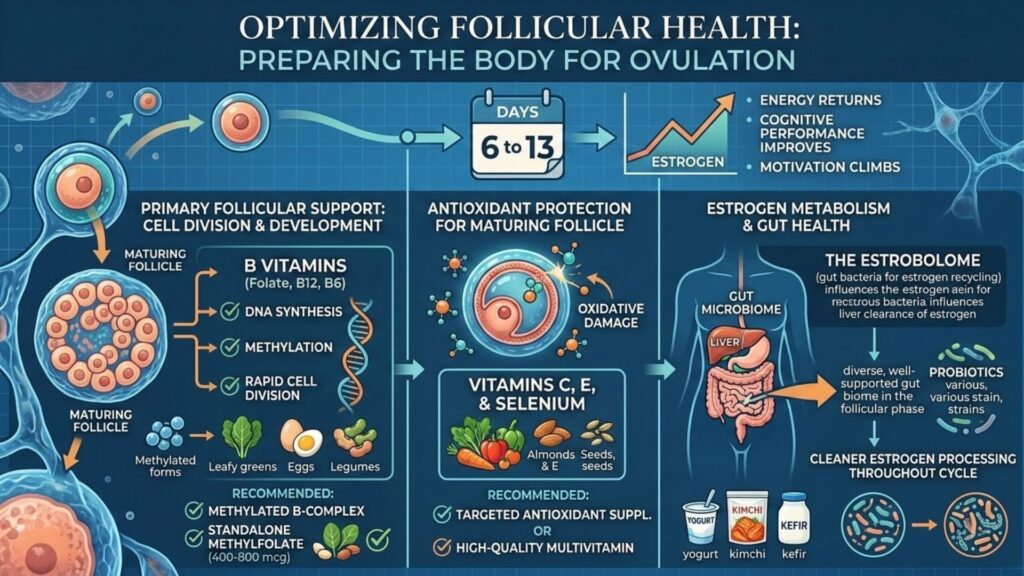
After menstruation ends, estrogen begins to rise steadily. Energy returns. Cognitive performance improves. Motivation climbs. This is the phase most women describe as feeling most like themselves.
The follicular phase is where your body is preparing a follicle for ovulation, a process that requires significant cellular activity and nutrient input. B vitamins are the primary support nutrient here, particularly folate, B12, and B6, which are required for DNA synthesis, methylation, and the rapid cell division involved in follicle development.
A high-quality methylated B-complex taken with breakfast covers most needs during this phase. If you are not eating enough leafy greens, legumes, or eggs, a standalone methylfolate supplement of 400 to 800 mcg is worth adding.
Antioxidants also become relevant during follicular development. Vitamins C and E, along with selenium, protect the maturing follicle from oxidative damage. Many women get adequate levels from food during this phase if their diet includes a reasonable variety of vegetables, nuts, and seeds.
Probiotics are an underappreciated follicular phase support. Estrogen metabolism depends significantly on gut microbiome health. The estrobolome, the collection of gut bacteria responsible for metabolizing and recycling estrogen, directly influences how well the liver clears estrogen between cycles. A diverse, well-supported gut biome in the follicular phase sets up cleaner estrogen processing through the rest of the month.
Phase three: ovulatory phase (Around day 14)
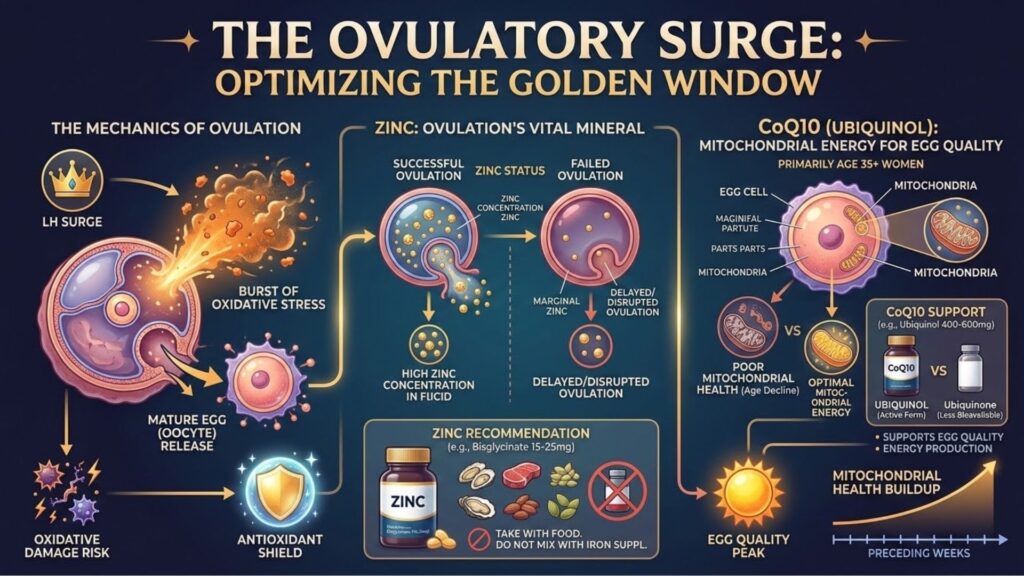
Ovulation is brief but biologically demanding. The LH surge that triggers the release of a mature egg also creates a burst of oxidative stress around the follicle. Antioxidant support is most relevant during this short window.
Zinc deserves particular attention here. It plays a direct role in the mechanics of ovulation itself. Zinc concentrations in follicular fluid are measurably higher in successfully ovulating follicles than in those that fail. Women with marginal zinc status, a common finding in those eating low-meat diets, may experience delayed or disrupted ovulation as a result.
Zinc bisglycinate at 15 to 25 mg taken with food is both well absorbed and gentle on the stomach. Do not take it alongside iron supplements, as the two compete for absorption.
The ovulatory phase is also where coenzyme Q10 earns its spot, particularly for women over 35. CoQ10 supports mitochondrial energy production within the egg cell. Egg quality peaks in the follicular phase and depends on the mitochondrial health built up over the preceding weeks. The ubiquinol form of CoQ10 is significantly more bioavailable than ubiquinone and is the more appropriate choice for women in their mid-30s and beyond.
Phase four: luteal phase (Days 15 to 28)
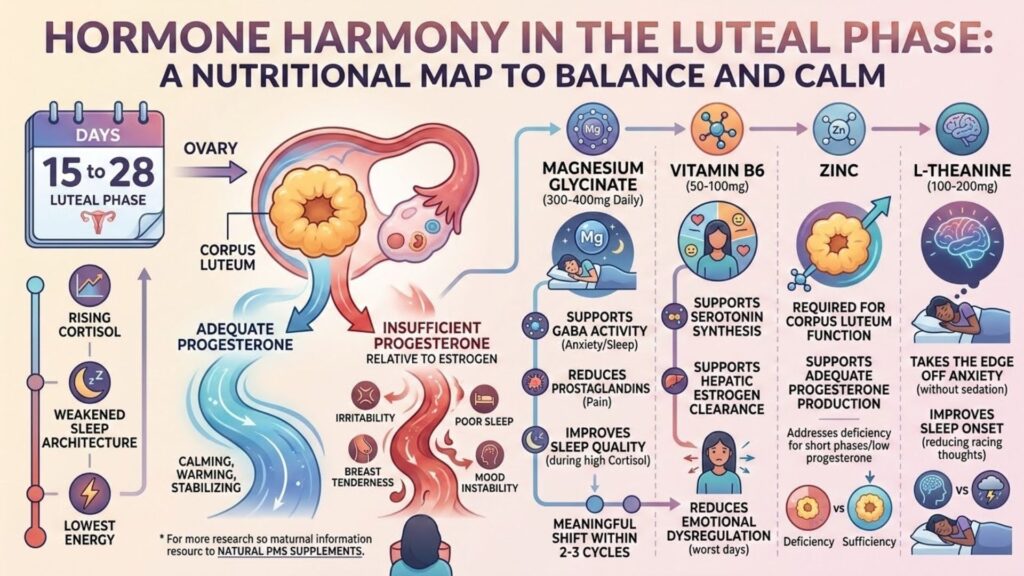
The luteal phase is where most supplement conversations about women’s health begin and end. That is understandable. It is the phase where the symptoms are loudest.
After ovulation, the corpus luteum, the temporary glandular structure left behind by the released egg, produces progesterone. Progesterone is calming, warming, and stabilizing when it is present at adequate levels. When it is insufficient relative to estrogen, the neurological result is the familiar pattern of irritability, poor sleep, breast tenderness, and mood instability.
Magnesium glycinate at 300 to 400 mg daily is the single most impactful supplement for this phase. It supports GABA activity, reduces prostaglandin production, and improves sleep quality during a phase when cortisol tends to rise and sleep architecture weakens. Most women notice a meaningful shift within two to three cycles of consistent luteal phase magnesium use.
Vitamin B6 at 50 to 100 mg supports serotonin synthesis and hepatic estrogen clearance. These two functions work together to reduce the emotional dysregulation that defines the worst luteal phase days for many women. For a deeper look at the clinical evidence behind these specific nutrients, the article on natural PMS supplements and what the research actually shows covers the trial data in detail.
Zinc again earns its place here. The corpus luteum requires zinc to function properly and produce adequate progesterone. Women who experience consistently short luteal phases or confirmed low progesterone on blood work often test low in zinc as well.
L-theanine is a less commonly discussed but practically useful luteal phase addition. At 100 to 200 mg, it takes the edge off anxiety without sedation and can meaningfully improve sleep onset in women who find the second half of their cycle characterized by racing thoughts at night.
The full cycle at a glance
| Phase | Days | Priority Supplements | Primary Goal |
|---|---|---|---|
| Menstrual | 1-5 | Iron bisglycinate, omega-3, magnesium | Replenish losses, reduce inflammation |
| Follicular | 6-13 | Methylated B-complex, probiotics, vitamin C | Support follicle development, gut estrogen metabolism |
| Ovulatory | ~14 | Zinc, CoQ10 (ubiquinol), vitamin E | Protect egg quality, support ovulation mechanics |
| Luteal | 15-28 | Magnesium glycinate, B6, zinc, L-theanine | Progesterone support, mood, sleep, GABA |
The mistakes that make cycle syncing feel impossible
Two things reliably derail cycle syncing protocols before they produce results.
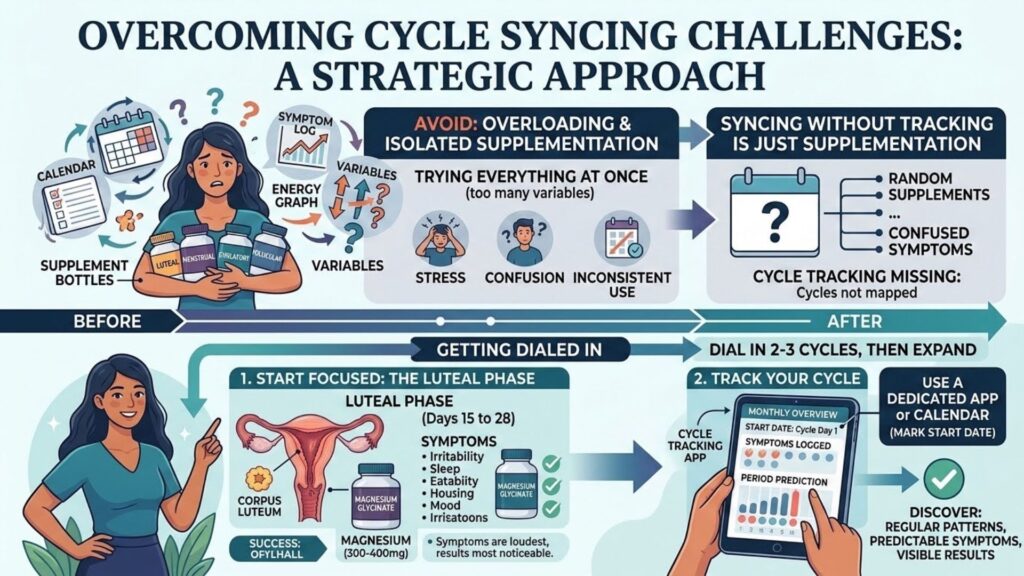
The first is trying to introduce everything at once. Switching supplements four times a month while also tracking your cycle, your symptoms, and your energy levels simultaneously is too many variables to manage. Start with the luteal phase. It is where the symptoms are most pronounced and where the intervention response is most noticeable. Get that phase dialed in over two or three cycles, then expand.
The second mistake is not knowing where you are in your cycle. Cycle syncing without cycle tracking is just supplementation. Use a dedicated app or a simple calendar to mark your cycle start date each month. Most women discover, once they start paying attention, that their cycles are less regular than they assumed, and that their symptom patterns are highly predictable once mapped correctly.
Who benefits most from this approach
Cycle syncing supplementation is not necessary for every woman. Women with naturally regular cycles and minimal premenstrual symptoms may find that a consistent daily protocol works well enough without phase-specific adjustments.
But for women with pronounced PMS, irregular cycles, suspected luteal phase defects, or ongoing fatigue that fluctuates with the cycle, phase-specific supplementation often produces results that a fixed daily protocol simply cannot replicate. The reason is straightforward. You are matching the nutritional input to the biological demand at the time it is actually occurring, rather than averaging across a month that is not biologically average at all.
Women who are actively trying to conceive may also find that the ovulatory phase supplements outlined here overlap meaningfully with preconception protocols. The fertility supplements for women article covers the full 90-day preconception nutrition window and explains how cycle-phase nutrition connects to egg quality, ovulation regularity, and uterine receptivity for women in that specific chapter of life.
Your menstrual cycle is one of the most information-rich signals your body produces. What would change in how you manage your health if you started reading that signal rather than just managing the symptoms it generates?