




Anxiety has a way of showing up uninvited. Mine used to arrive at 2 a.m., a tight chest and a racing mind over an email I had not even sent yet. If you know that feeling, you have probably wondered whether one of those trendy herbal supplements crowding the shelves could actually help, or whether it is all clever marketing. Fair question. In 2026, the adaptogen aisle is louder than ever, and most of it is noise.
So let me cut through it. As a nutritionist who has spent years watching clients chase calm in a bottle, I want to tell you which of these herbs have earned genuine respect for easing everyday, stress-driven worry, and which ones are riding a wellness wave they cannot support.
What “Adaptogens for Anxiety” Actually Means
First, a reality check that most supplement brands will never print on their label. Adaptogens are not sedatives. They will not knock out a panic attack the way a prescription might, and they were never designed to treat a diagnosed anxiety disorder. What they do is subtler and, honestly, more interesting. They help your body respond to stress more efficiently, so the everyday hum of tension has less room to spiral.
If you want the full picture of how these herbs work with your stress response rather than against it, the natural support for chronic stress framework lays out the biology in plain terms. Here, I want to stay practical. The question on your mind is simple: which ones actually work?
The Short List That Earns Its Place

Over the years, four adaptogens keep proving themselves for stress-related anxiety. Not because they are exotic, but because the research and the real-world results line up.
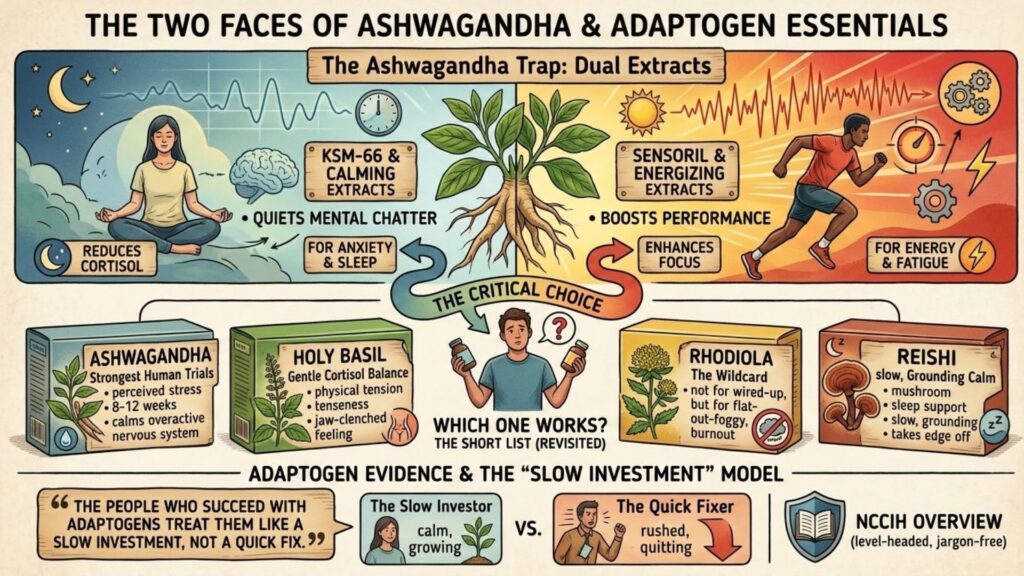
Ashwagandha is the one most people meet first, and for good reason. It has the strongest body of human trials behind it for lowering perceived stress and calming an overactive nervous system. It tends to quiet the mental chatter without dulling you. The catch is that not all ashwagandha is the same, which trips up more buyers than any other detail in this category.
Holy basil, or tulsi, is the gentle one. It works on the cortisol side of the equation, easing that jaw-clenched, tense-shouldered feeling that builds through a long day. I often suggest it to people whose anxiety shows up physically before it shows up mentally.
Rhodiola is the wildcard here. It is technically energizing, so it is not for the person who feels wired and needs to come down. But for the specific anxiety that comes wrapped in burnout, the flat, foggy, “I cannot cope anymore” kind, it can be quietly transformative.
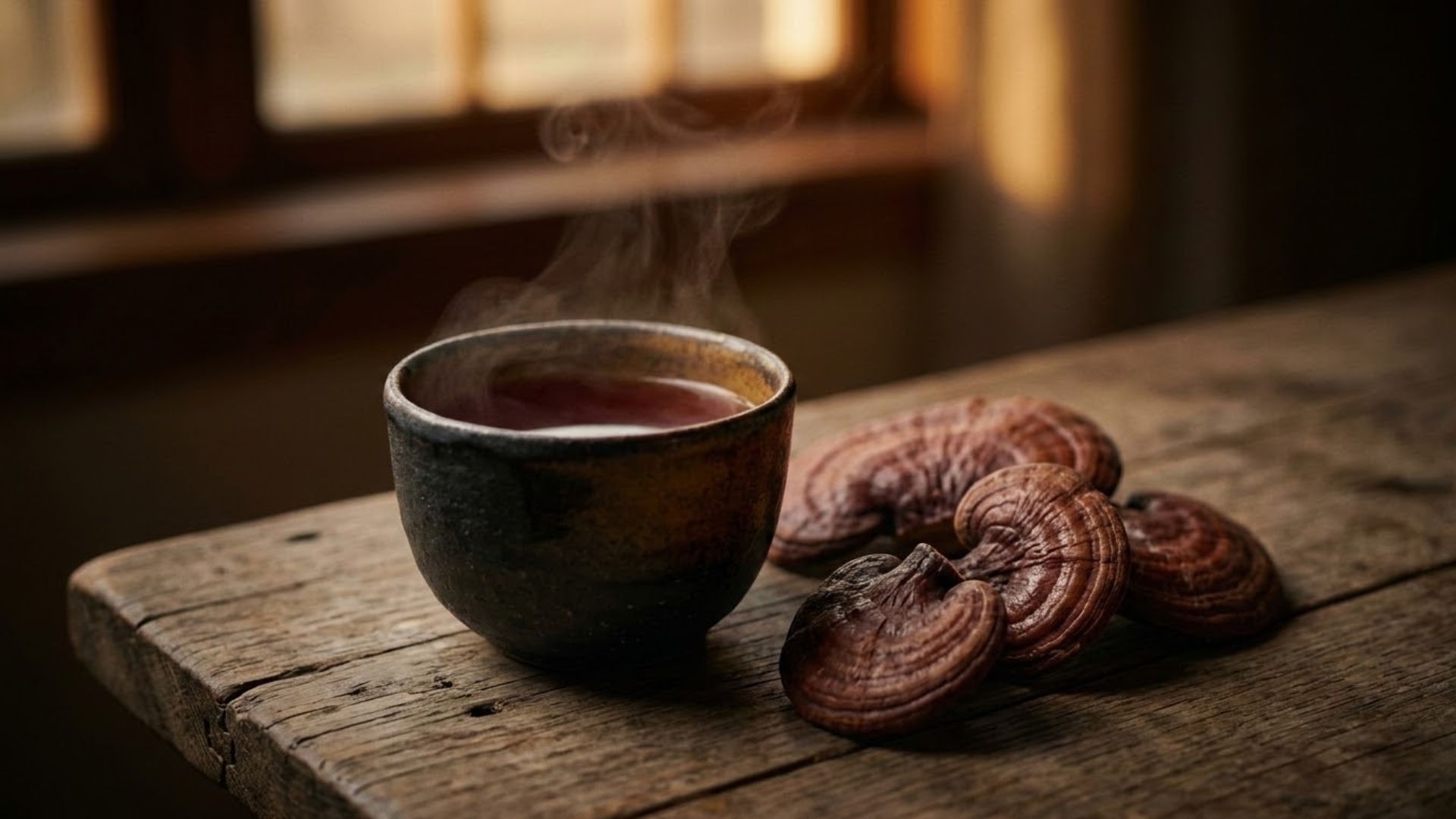
Reishi rounds out the group as the mushroom of the bunch. It is less about a fast effect and more about a slow, grounding calm that supports better sleep, which in turn takes the edge off anxious days.
A Simple Way to Match the Herb to Your Anxiety
Here is where most articles fail you. They list herbs without helping you choose. So let me be more useful.
| If your anxiety feels like… | Start with | Why it fits |
| A racing, buzzy mind | Ashwagandha | Best evidence for calming mental overactivity |
| Physical tension and clenching | Holy basil | Targets the cortisol-driven stress response |
| Exhaustion and dread combined | Rhodiola | Lifts the burnout layer under the worry |
| Poor sleep feeding daytime nerves | Reishi | Grounding, supports deeper rest |
Notice that none of these is a magic bullet. They are tools, and the right tool depends on what your anxiety actually feels like in your body. That distinction is the whole game.
The Ashwagandha Trap Nobody Warns You About
If you take only one thing from this piece, make it this. Ashwagandha is the most popular adaptogen for anxiety, and it is also the one people most often buy wrong.
There are two dominant extracts on the market, and they pull in opposite directions. One is formulated to energize and support performance. The other is designed specifically to calm and reduce cortisol. If your goal is quieting anxiety and you accidentally grab the energizing version, you may feel more amped, not less, and conclude that ashwagandha “does not work for you.” It works fine. You just bought the wrong one.
I have watched this exact mistake play out too many times to count, which is why I always send people to understand the difference between the two main ashwagandha extracts before they spend a dime. Five minutes of reading saves weeks of disappointment.
What the Research Actually Supports
Let me be straight about the evidence, because you deserve honesty over hype. The strongest human data sits with ashwagandha, where multiple randomized trials have shown meaningful reductions in perceived stress and cortisol over roughly eight to twelve weeks. Holy basil has a smaller but encouraging body of work, particularly for stress and mild mood complaints. Rhodiola shines in fatigue and burnout studies. Reishi has the least direct anxiety research but solid support for sleep and general stress resilience.
As one integrative physician I interviewed last spring put it, “The people who succeed with adaptogens treat them like a slow investment, not a quick fix. The ones who quit want a pill that feels like a switch.” That framing stuck with me. These herbs reward patience, not urgency.
For anyone who wants the clinical grounding, the National Center for Complementary and Integrative Health keeps a level-headed, jargon-free overview worth bookmarking.
The Part Where I Slow You Down
Enthusiasm is good. Recklessness is not. Adaptogens interact with medications, particularly thyroid drugs, sedatives, and immune-related treatments. Ashwagandha is not recommended in pregnancy. And if your anxiety is severe, persistent, or interfering with your daily life, no herb belongs at the top of your plan. A real clinician does.
There is also the temptation, once one herb helps, to start combining several and hope the benefits multiply. Sometimes they do. Often they cancel each other out or overload the same system. Doing it well takes a bit of strategy, which is exactly what a proper approach to combining adaptogens safely is built to prevent. More is not automatically better. It rarely is.
The honest truth about adaptogens for anxiety is that they are neither the miracle the influencers promise nor the scam the skeptics dismiss. They are a modest, legitimate tool that works best for the person willing to match the right herb to their own particular flavor of stress, give it real time, and keep their expectations grounded. That is not a sexy pitch. It is just an accurate one.
So before you add another bottle to your cart this week, ask yourself the question that actually matters: do you know what your anxiety feels like well enough to choose the right herb, or have you been treating “calm” as if it comes in only one shape?