




The golden spice sitting in your kitchen cabinet might be doing more for inflammation than you realize. A growing body of clinical research now shows that concentrated turmeric extracts can deliver pain relief comparable to common over-the-counter medications, often with a gentler safety profile. But the nuance matters here, and most conversations about turmeric gloss over the details that determine whether it actually works.
The clinical evidence worth knowing
A multicenter, double-blind randomized controlled trial involving 367 patients with knee osteoarthritis compared 1,500 mg per day of Curcuma domestica extracts to 1,200 mg per day of ibuprofen over four weeks. The results showed C. domestica extracts are as effective as ibuprofen for the treatment of knee osteoarthritis, with a similar side effect profile but fewer gastrointestinal adverse event reports in the turmeric group.
This was not some fringe study. It was peer-reviewed, conducted on humans rather than mice, and used therapeutic doses of both compounds. A 2025 network meta-analysis examining 17 studies further confirmed that all turmeric preparations significantly reduced WOMAC pain scores in osteoarthritis patients.
The active compound driving these effects is curcumin, which comprises roughly 2 to 5 percent of turmeric by weight. Evidence from in vitro studies revealed that curcumin has an inhibitory effect on substances involved in the inflammatory pathway, including lipoxygenase, cyclooxygenase (COX), phospholipase, collagenase, elastase, and hyaluronidase.
Why your kitchen Turmeric probably is not enough
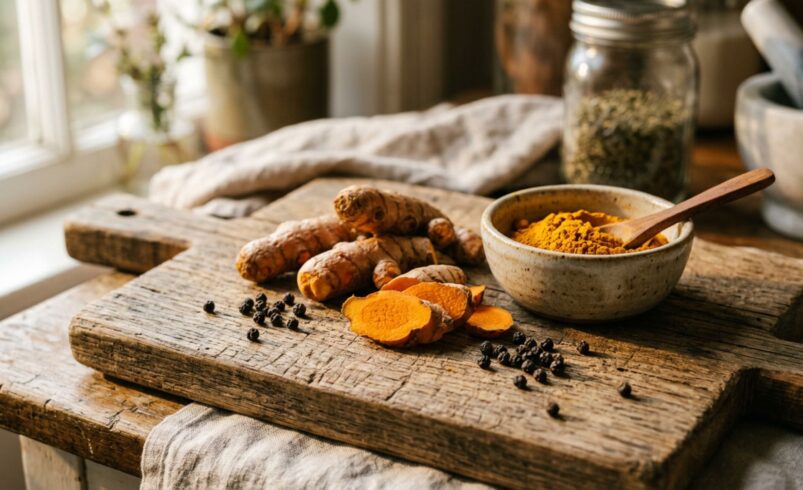
Here is where most people go wrong. Sprinkling turmeric on your eggs or adding it to curry provides flavor and modest antioxidant benefits, but the therapeutic doses used in clinical trials require concentrated extracts.
The bioavailability problem is real. In humans after a dose of 2 g curcumin alone, serum levels were either undetectable or very low. Your body metabolizes curcumin rapidly, leaving little time for therapeutic effects.
This is where black pepper enters the picture. Concomitant administration of piperine 20 mg produced much higher concentrations from 0.25 to 1 hour post drug, and the increase in bioavailability was 2000%. Piperine, the active compound in black pepper, inhibits the enzymes that break down curcumin before your body can use it.
Fat also matters. Curcumin is lipophilic, meaning it dissolves in fat rather than water. Consuming it with healthy fats like olive oil or coconut oil improves absorption significantly. Traditional Indian cooking has combined turmeric with black pepper and ghee for centuries, long before scientists understood why this combination worked.
The Ibuprofen trade-off
Ibuprofen remains effective for acute pain relief. Nobody disputes that. But the mechanism that makes it work also creates problems with long-term use.
Ibuprofen relieves symptoms by reducing the amount of prostaglandins your body can produce. But over time, the drop in prostaglandins can leave your stomach more vulnerable to damage. Prostaglandins protect your stomach lining and support kidney function. Block them, and you block both pain and protection.
The long-term use of painkillers like diclofenac or ibuprofen can lead to ulcers in the stomach or duodenum. Studies suggest that up to 70% of people taking NSAIDs long-term show stomach damage without warning signs.
The kidney risks add another layer of concern. Kidney damage can occur within days of use in dehydrated patients or those over 60, as ibuprofen reduces blood flow to the kidneys by blocking protective prostaglandins.
The practical approach
For occasional headaches or acute injuries, ibuprofen remains a reasonable choice when used as directed. The concerns emerge with chronic, daily use for conditions like arthritis.
If you are considering curcumin supplementation for inflammation, the research suggests targeting 500 to 1,500 mg of a standardized extract containing 95 percent curcuminoids, taken with piperine or in enhanced formulations designed for better absorption. Curcumin was demonstrated to be safe, even after high-dose ingestion of up to 8,000 mg per day for 3 months.
Whole food approaches also contribute. Dietary patterns emphasizing anti-inflammatory foods, including fatty fish, olive oil, leafy greens, and berries, address the root causes of chronic inflammation rather than just suppressing symptoms. Understanding how nutrition influences inflammation can help you build a foundation that reduces reliance on any single intervention, natural or pharmaceutical.
People already taking blood thinners, chemotherapy agents, or other medications should consult their healthcare provider before adding concentrated curcumin supplements. Interactions exist, and safety requires individual assessment.
The bigger picture
The comparison between turmeric and ibuprofen reveals something larger about how we approach pain management. Pharmaceutical interventions work fast but often trade one problem for another. Natural compounds work through multiple pathways simultaneously, typically with gentler effects and fewer side effects, but require more attention to dosing and formulation.
Neither approach represents a complete solution. Chronic inflammation usually signals underlying issues with diet, stress, sleep, or movement patterns that no supplement or medication fully addresses. The most effective strategies address root causes while using targeted interventions, whether pharmaceutical or botanical, as bridges during the healing process.
The science on curcumin has matured considerably over the past decade. What was once dismissed as folk medicine now carries weight in peer-reviewed journals. That does not mean every turmeric product works, or that concentrated extracts suit everyone. But for those seeking alternatives to daily NSAID use, the evidence deserves serious consideration.
What role does inflammation play in your daily life, and have you explored what might be driving it beyond the symptoms?